Filed under: Book reviews | Tags: Dashiell Hammett, detective genre, hard-boiled detective fiction, Philadelphia, Phillip Marlowe, Raymond Chandler, Sam Spade, Victor Carl, William Lashner
By William Lashner
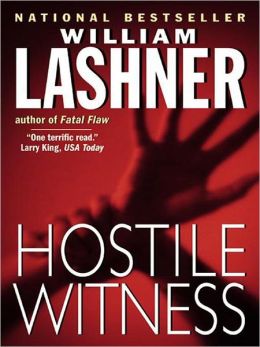 Hard luck Philadelphia lawyer Victor Carl yearns for the opportunity to get rich, be respected in the legal community, and have hot women begging to date him. Then William Prescott III, upper-cruster from one of the city’s most distinguished firms, comes knocking at his door. Prescott wants Victor to represent a councilman’s aide who is, along with his boss, accused of extortion, arson, and murder. It’s a high-profile court case that promises everything Victor longs for, and all he has to do is turn up and do whatever Prescott tells him to. But Victor can’t be quiet when it’s evident someone is setting him and his client up to take a nasty fall. He may be desperate, but he’s no one’s patsy.
I read a Victor Carl short story by this author, which inspired me to buy a book about him ‘cause it was well-written and I like the hard-boiled detective fiction genre, with characters such as Sam Spade and Phillip Marlowe. These guys were tough mavericks in violent, double-crossing milieus, who were unflinching in their determination to achieve justice. This book doesn’t disappoint in terms of its main character, plot, and setting, but it is overly long and consequently repetitive, while Hammett and Chandler’s novels are concise and to the point – just like their (anti) heroes.
Filed under: Book reviews | Tags: damanged people, Dark Places, fringe society, Gillian Flynn, Gone Girl, Kansas, mystery books, popular fiction, thriller books
 By Gillian Flynn
Libby Day was seven when her mother and two sisters were murdered in their home in an attack dubbed by the press as “The Satan Sacrifice of Kinnakee, Kansas.” Libby and her then fifteen-year-old brother, Ben, survived, and it was Libby’s testimony that sent Ben to jail on a life sentence for the monstrous murders.
As a youngster, Libby received a lot of money from strangers for having survived her ordeal (and for being cute). Twenty-five-years later, she’s broke, and hasn’t done anything with her life except grow angrier and more depressed. Then the Kill Club locates her. They’re a secret society obsessed with notorious murders, and they want to pump Libby for details because they believe Ben was wrongly convicted and want to find proof that will liberate him. In turn, Libby hopes to make a profit off of her tragic history. For a fee, she’ll reconnect with people associated with that night and her family at that time, and report her findings back to the club. When Libby begins this journey, she’s convinced her brother is guilty. But as her search takes her from decrepit Missouri strip clubs, to deserted Oklahoma tourist towns, and back to the site of the fatal killings, the inconceivable truth emerges, and Libby finds herself back where she started – running from a murderer.
This novel is a complex character study and an evocative portrait of people on the fringe of society. Told in sporadic flashback, Libby narrates the present-day chapters in first person, while the flashback chapters are told in third-person, describing the actions and perspectives of several key characters on the days leading up to, and on, the day that the family was murdered. Libby is not a particularly likeable protagonist – she’s bitter, tough, and selfish. Even so, you root for her, and you’re sad about her horrifying childhood. Similarly, Ben isn’t particularly appealing – he’s awkward, shiftless, impressionable, and irrational. Like Libby, you feel immense sympathy for him. Each of the characters in the book are compelling, even if they’re not agreeable, and Flynn expertly weaves their stories together. The narrative is consistently developed, compelling, and absolutely suspenseful throughout (I had to resist reading the last chapters to find out how it ended!). The best aspect of this book, however, is in Flynn’s ability to create a vivid picture or a situation in a phrase or two, giving the reader a believable glimpse into a world we might never see otherwise.
This is an insightful, poignant, and well-written book. Its ability to affect its reader is also impressive. I was troubled for several days after finishing it – I found myself checking on my sleeping child in the night, hugging him more during the day, and double-checking that the front and back doors were locked when I went to bed. Would I read it again? Not for some years. Do I recommend reading it? An emphatic yes!
Filed under: Book reviews | Tags: books on motherhood, identity crisis, modern motherhood, Polly Williams, self doubt, yummy mummy
By Polly Williams
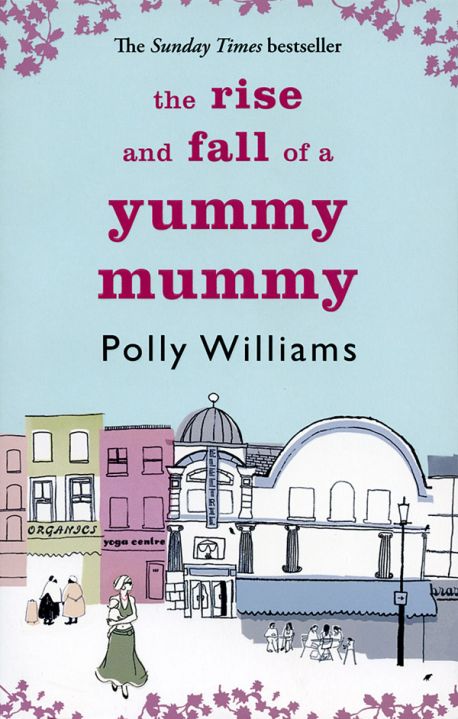 Amy Crane is in crisis mode. Many months after giving birth she still looks five months pregnant and can’t remember the last time she shaved. Or wore something other than sweatpants. Or had an orgasm for that matter. She suspects her boyfriend is cheating on her, but motherhood has brought up issues she has with her own childhood, and she’s wallowing in self-doubt. Then she meets Alice, a yummy mummy of the highest order, who takes it upon herself to revamp Amy’s image and her love life. As Amy transforms from scummy to yummy, and climbs out of depression, her libido awakens and then things get complicated…
While I appreciated aspects of this book — it’s colloquially written, our heroine is candid and self-deprecating, and it made me feel less like an alien ‘cause I’ve struggled (and continue to struggle) with my new identity as mommy and wife — I thought it was often glib, and consequently trite. I also found it 100 pages too long. Even so, this book is better at most at honestly covering the contradictions at the heart of modern motherhood.
 Victoria Jelinek