Filed under: Published film reviews | Tags: Annette Bening, Comedy Drama film, Julianne Moore, Lisa Cholodenko, Mark Ruffalo
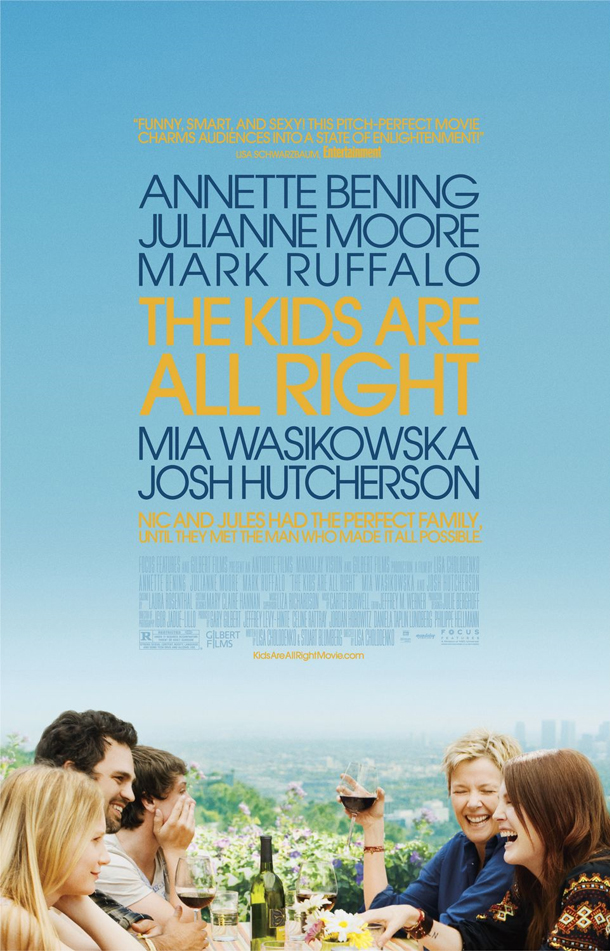 A comedy drama: teenage siblings Joni and Laser live with their two mothers, Nic and Jules, lesbian life partners who both used the same sperm donor to have them. Laser convinces Joni to contact the donor, she does, and he bonds with the teens. Hard-working Nic is wary of the donor, while free-spirited Jules creates a tentative rapport with him and agrees to landscape his garden.
Annette Bening (American Beauty) and Julianne Moore (Children of Men) play Nic and Jules and are completely convincing as a couple. Child-rearing and two decades of marriage has put a strain on their relationship, which is only exacerbated when the sperm donor, Paul, played by Mark Ruffalo, (Shutter Island) enters the picture. The kids are well-adjusted and okay with the inevitability of change, signalled by the entry of Paul, but the adults have a harder time coping.
Astutely directed (Lisa Cholodenko, High Art), this is a keenly observed portrait of marriage tested, and of human behaviour in the face of change. A taut, modern, relevant and funny film whose characters and their actions are utterly relatable.
Filed under: Published film reviews | Tags: Belleville Rendez Vous, Edinburgh, film review, Jacques Tati, Sylvain Chomet
 The Illusionist is eking out a living during the dying days of the music halls. Travelling to the Scottish islands for one of his performances, he meets a girl called Alice who’s convinced he’s a real magician and follows him to Edinburgh. The Illusionist is reluctant to disappoint her, but as she begs for gifts that she’s convinced he can magically provide, he has to come to terms with the fact that he has little money coming in and no means of keeping her illusions alive.
Directed by Sylvain Chomet (Belleville Rendez Vous), this is an animated, near wordless, tale for adults. The story was written decades ago by the great French comedian Jacques Tati, who found absurdity and pathos in the minutiae of everyday life. Apparently, however, Tati found this script too personal and shelved it during his lifetime, but Chomet has taken it and revived it as homage to Tati, to cinema, and to Edinburgh.
This is a bittersweet, poignant film about loss, grief and shattered illusions. However, like life, it’s also humorous and beautiful.
Filed under: Published film reviews | Tags: Claude Mendibil, film review, French film, Jean-Dominique Bauby, Julian Schnabel
 In December 1995 Jean-Dominique Bauby, Editor-in-Chief of French magazine Elle, suffered a massive stroke and became the victim of “Locked-in Syndrome.” Unable to move anything other than his left eyelid, he collaborated with book editor Claude Mendibil on his memoir, dictating by blinking his left eye. He died two days after the book was published.
This film is unique proof that personal tragedies really can inspire. It’s nearly impossible to imagine the will power it took for Bauby to dictate his memoir literally blink-by-blink. The result is a gloriously wry description of his inner world. Equally wonderful is how Director Julian Schnabel (Before Night Falls) realises this film. Much of it’s shot through the perspective of the left eye of bedridden Bauby, though we sometimes see external shots of Bauby with his family and friends, as well as memory sequences of Bauby pre-stroke. Through voice-over we hear the words that are in Bauby’s mind but which never pass through his lips.
This film, like its subject, is brave. We leave it full of admiration for Bauby’s mental vivacity (the ‘butterfly’) and his physical limitations (the ‘diving bell’), as well as some understanding of what it means to be alive.
Filed under: Published film reviews | Tags: Ben Affleck, Boston, Charlestown, Chris Cooper, film review, The Town
 After a heist, professional thief Doug MacRay (Ben Affleck) keeps an eye on bank manager Claire, the only witness who could identify MacRay’s gang. The couple fall in love with each other, and as FBI agent Jon Hamm (Mad Men) closes in on him, McCray begins to question the life he’s been leading.
This is Affleck’s second directorial feature after the critically acclaimed Gone Baby Gone. The themes aren’t particularly original – bad guys wanting to change their ways, kidnapper getting involved with his hostage, a neighbourhood ruled by a criminal fraternity – but Affleck has a feel for the one-square mile district in Boston that accounts for 300 robberies a year and where even children can spot undercover cops.
The film jumpstarts with a slick, well-practiced robbery, but none of the action is overblown, and while the fights are brutal, they’re also always believable. This is a fantastic crime thriller and drama, with pitch-perfect performances, that serves as confirmation of Affleck’s ability as a director.
Filed under: Published film reviews | Tags: Berlin, Bob Fosse, Cabaret, Christopher Isherwood, film review, Liza Minnelli
 The story takes place in 1920’s Berlin. After having a fling with a British writer, American chanteuse Sally Bowles tries to create a career as a gold-digger, making overtures to a handsome aristocrat, while the Nazi rise to power puts dampers on their swinging lifestyle.
Based on English author Christopher Isherwood’s autobiography Berlin Stories, the book opens with the lines “I am a camera with its shutter open.” These lines signify a snapshot of a lost world, the cosmopolitan Berlin of the 20’s and 30’s, where cheerful expats dance and revel, whirling faster and faster in the hope that it will save them from the rise of the Nazis. In the film, Isherwood’s character, the audacious and tragic Sally Bowles (Liza Minnelli), takes centre stage.
Liza Minnelli, whose later work included Arthur, is great in this role and looks fabulous in her 20’s fashions. Director Bob Fosse’s (Chicago, Lenny) choreography and camera work is dazzling. This film holds up as a great musical that’s exceedingly enjoyable even as it’s also sometimes chilling. Released in 1972, the film won eight Academy Awards.
Filed under: Published film reviews | Tags: A prophet, film review, French crime film, Jacques Audiard, Un Prophet
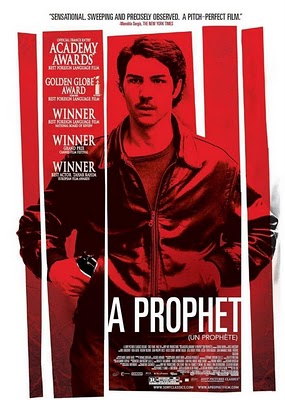 Imprisoned for six years for an unspecified crime, illiterate French-Arab teen Malik (Tahar Rahim) is initiated into the prison’s criminal underworld. A ‘quick study’, he soon plots his ascendancy through the extremely brutal hierarchy of his fellow inmates.
Perceived as a greasy Corsican by the Arab inmates and a dirty Arab by the Corsican criminals, Malik is our guide through the violent and nightmarish labyrinth of the French penal system and its network of warring tribes. Lead actor Rahim gives a masterful performance, conveying different parts of his character – from keen student to wary tough guy – in the shift of his brow. Malik as our ‘hero’ is an empathetic character whose choices, or lack of choices, are understandable, even if they’re not relatable.
This is an excellent, albeit disturbing, film – director Jacques Audiard has created a modern French crime film and a gritty prison drama that’s ambitious and thrilling.
Filed under: Published film reviews | Tags: film review, Gemma Arterton, Posy Simmonds, Stephen Frears, Tamara Drewe
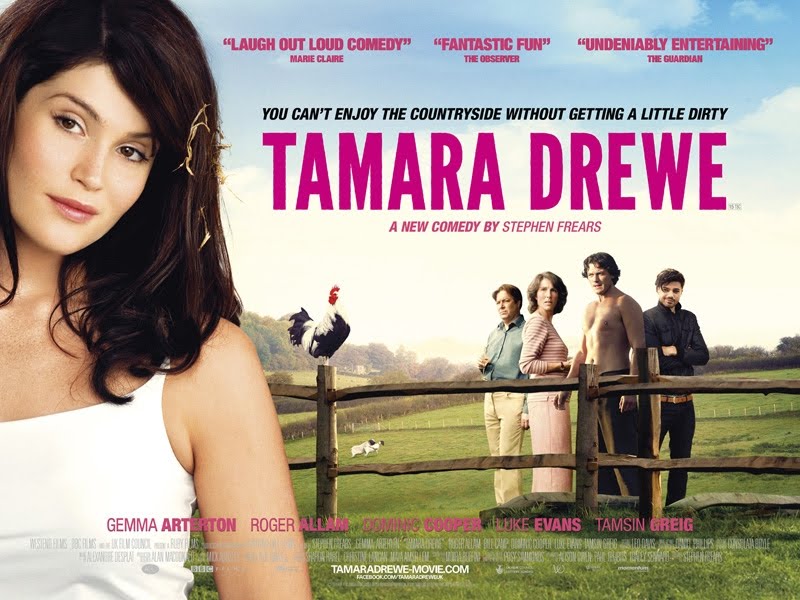 A young newspaper columnist returns to her hometown in the English countryside, where her childhood home is being prepared for sale, and causes a stir with her flirtatious ways.
Tamara Drewe is based on Posy Simmonds’ comic strip, which was inspired by Thomas Hardy’s book Far from the Madding Crowd, and ran in The Guardian from 2005-2007 before being collected into a graphic novel. And this was a pure graphic novel in the sense that the text, which gently satirizes the English middle class, was given equal footing with Simmonds’ illustrations.
Director Stephen Frears’ (The Queen, High Fidelity) film is fond of its characters even as it pokes fun of them (“takes the piss”) and is immensely humorous – you leave the cinema with a smile. This is also an excellent showcase for Gemma Arterton (Quantum of Solace, St. Trinian’s 1 & 2), who shows us that not only does she have poise, she can act. (Certificate 15)
Filed under: Published film reviews | Tags: Christopher Nolan, film review, Inception, Leonardo Dicaprio, science fiction movie
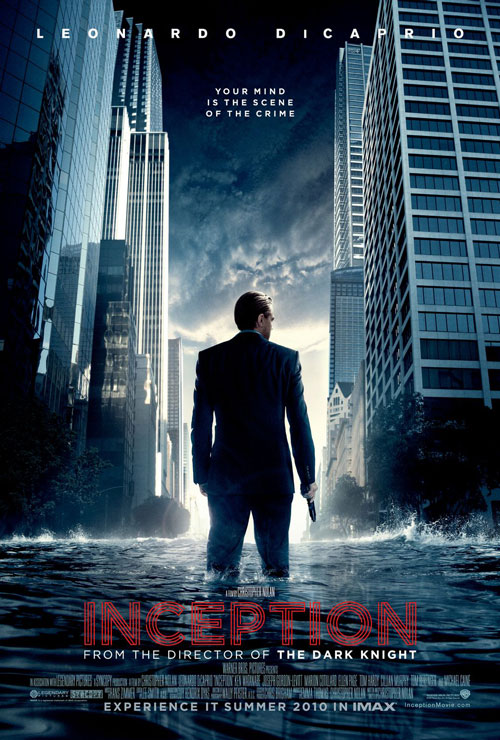 Spy-for-hire Dom Cobb (Leonardo Dicaprio) steals ideas in dreams for corporate espionage. Then he’s hired to achieve the ‘impossible’ of planting an idea in the mind of a target, an “inception.”
This film is about life and death and what might be there in between. It’s a huge-event film that is also about grief, faith, and the desire for an after-life so that we can be reunited with those we love and have lost. But Director Christopher Nolan (Memento, The Dark Knight) doesn’t tell us exactly what this film is about and this isn’t a sombre meditation on existentialism. Once again Nolan manages to combine an incredibly cerebral and imaginative concept with blazing gun battles, zero-gravity-fist-fights, and sexy stars.
Like any truly convincing science-fiction, there are rules and boundaries that can’t be broken – but in this film, the boundaries are pretty expansive, as they’re the limits of each character’s imagination. Dicaprio is amazing in this role – he shows a depth of feeling here that appears effortless and entirely anchors the whole film. You’re not aware of Dicaprio the actor, you believe him as the character of Cobb.
This film is gigantic in scale and style – you’re on the edge of your seat for the entire 2.5 hours. The themes are there to be explored (pay attention), but you can just as well sit back and enjoy the glorious spectacle of this thunderous action-packed, heart-wringing original of a film.
Filed under: Published film reviews | Tags: Casey Affleck, film review, Jessica Alba, Jim Thompson, Kate Hudson, The Killer Inside Me
 Deputy Sheriff Lou Ford is a respected member of his community even as he’s also a shrewd and sadistic sociopath. However, after the son of a local mogul is found dead with the beaten body of a local prostitute, suspicion falls on Ford.
The film, which takes place in Texas 1952, is adapted from Jim Thompson’s psycho-noir novel of the same title. Fifty years after the book was written, this portrait of small-town America and its depiction of violence against women is deeply unsettling. Directed by Michael Winterbottom, this is a darkly disturbing film that’s brutal and visceral but not gratuitous. Ford’s Southern manners, baby face, and bland homilies are the epitome of evil.
From Casey Affleck’s sociopath Ford, to Jessica Alba’s sad and compelling role as witness, to Kate Hudson’s moving performance as Ford’s girlfriend, the ensemble cast are the best elements of this movie. This isn’t a film for everyone, and this writer didn’t like the ending, but it’s nonetheless a very good film.
Filed under: Published film reviews | Tags: Elsa Zylberstein, film review, French film, I've Loved You So Long, Kristin Scott Thomas, Philippe Claudel
 Juliette (Kristin Scott Thomas) is released from prison after 15 years and goes to live with her sister. There, Juliette attempts to cope with the burden of her incarceration and the gravity of her crime.
Pale, chain-smoking Scott Thomas delivers a stellar performance (and shows off her fluent French). She inhabits the character of Juliette with warmth and vitality as she throws off the judgement of others and the horrible shackles of her past. Elsa Zylberstein, who plays Juliette’s earnest and caring sister who takes her in, also gives an excellent performance.
This isn’t a ‘comfortable’ film to watch, with its themes of regret, grief and alienation, but in the hands of debut Director Philippe Claudel, this is a truly affecting film. It’s also a very French film in its subtlety, philosophy, and pacing. 115 minutes running time.
 Victoria Jelinek