Filed under: Published film reviews | Tags: Beatrice Dalle, Betty Blue, film review, French cinema, Jean-Jacques Beineix
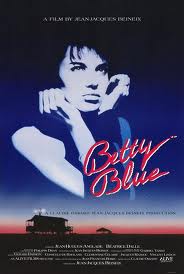 Zorg, a handyman, is living a peaceful life in rural France, working diligently and writing in his spare time. Then Betty, a vivacious and unpredictable woman, walks into his life. Initially, her wild ways are fun and spontaneous and Zorg falls in love with her, but Betty’s behaviour slowly gets out of control as she spirals into insanity.
The film opens on a shot that creeps up on a couple making love on a bed – their sweating intimacy is contrasted by a voiceover telling us that they’ve only known each other a week. Every frame of Jean-Jacques Beineix’s film carries the seal of its country of origin as well as the era in which it was made. Only in the 1980’s could such a tragic film be created with such a visually-gorgeous-but-empty style. Only in France could a story of passionate love open so erotically. Only in France could a film’s tone be misogynist, seeming to blame Betty’s insanity on the inherent ‘madness’ of the female of the species, and yet seem authentic.
Betty’s descent into insanity and destruction is well paced and compelling. Beatrice Dalle (Betty) never made another film worth noting again, but this film alone was enough to make her an icon of late 20th century cinema. 183 minutes.
Filed under: Published film reviews | Tags: Charlotte Gainsbourg, film review, Julie Bertucelli, L'Arbre, The Tree
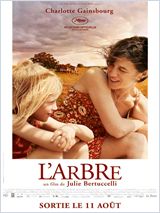 When her father dies suddenly, eight-year-old Simone tells her mother that her dead father speaks to her through the leaves of her favourite tree, a huge Moreton Bay fig. But when her mother, Dawn, starts a relationship with George after he’s called in to remove the tree’s troublesome roots which are going to wreck the house, the bond between mother and daughter is threatened.
This sounds like a ‘downer’ of a movie, but it’s not. The notion that there is a spirit within the tree is nicely played out and leads to some lovely moments for members of the family, who are all ‘getting on with their lives,’ but who are also coping with their respective loss. French director Julie Bertucelli handles the material with compassion and sensitivity that is, in the French manner, developed slowly; she also draws good performances from her cast (inclusive of the wonderful Charlotte Gainsbourg).
Filmed in Queensland, Australia, the cinematography in The Tree is gorgeous and complements this tale of grief and recovery by using nature as a metaphorical and literal character; the stunning landscapes that fill the screen are evocative and marvellous.
Filed under: Published film reviews | Tags: animated film, Belleville Rendez Vous, film review, Sylvain Chomet, Triplettes de Belleville
 During the Tour de France, expert cyclist Champion is kidnapped by the Mafia and taken to the megalopolis of Belleville. Champion’s doting grandma, Mme. Souza, mounts a daring rescue mission aided by three ageing music hall stars and a geriatric dog. A Portuguese ‘old dear’ with a clubfoot, Mme. Souza is an unlikely cartoon heroine, but her relentless, resourceful spirit and her unyielding desire to protect her grandson is completely compelling.
From the opening musical number, French Animator Sylvain Chomet throws in amazing set pieces and creates an original and enchanting world, with great supporting characters (hulking mobsters, sad-faced cyclists), and subtle cultural commentary (Belleville is a thinly-disguised USA).
Les Triplettes de Belleville is not a new release, but it is an absolute must see. This is Chomet’s first full-length feature and it’s a wonderful adventure tale with a hymn for times lost. Chomet’s film maintains an emotionally resonant core as it mixes sadness with satire and complexity with nostalgia. Humorous and moving, this is an absolutely unique film that is arguably pure genius.
Filed under: Published film reviews | Tags: film review, J.M. Coetzee, John Malkovich
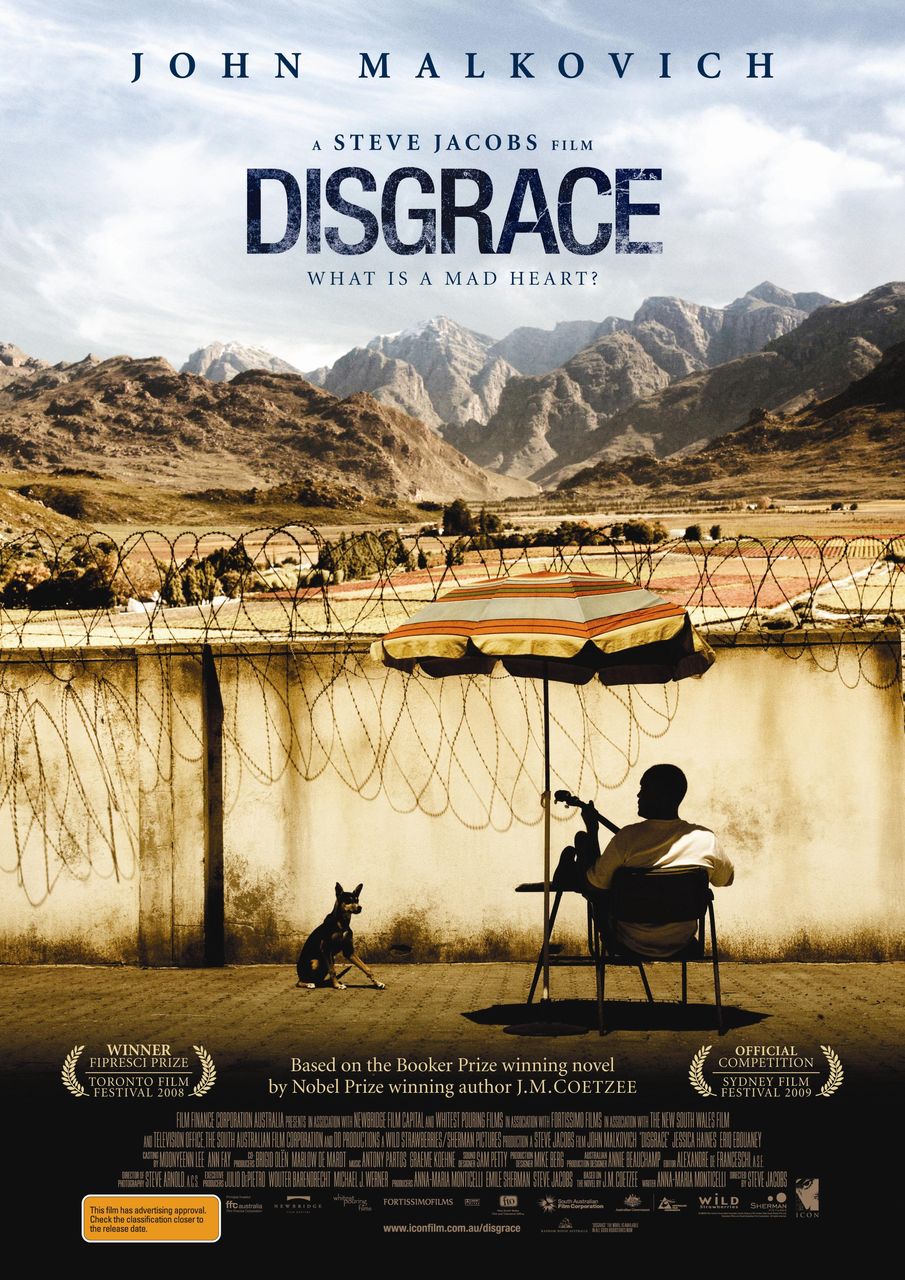 David (John Malkovich, Burn After Reading, Changeling) is dissatisfied with his job as a professor in post-apartheid South Africa. When he cruelly seduces one of his students, he is dismissed and goes to live with his daughter on a farm in the Eastern Cape. For awhile, his daughter’s influence and the natural rhythms of the farm promise to bring his life calm, but the balance of power in the country is shifting and in the aftermath of a vicious attack on the farm by three black youths, he is forced to come to terms with the changes in society – as well as with his own disgrace.
The film, like the book it’s adapted from (J.M. Coetzee’s Booker Prize winner) is brilliant.
Filed under: Published film reviews | Tags: Abbie Cornish, film review, Jane Campion, John Keats
 If you’re in the mood for a love story that leaves you both devastated and uplifted, then BRIGHT STAR is the movie for you.
London 1818. Fledgling poet John Keats (Ben Whishaw, LAYER CAKE) meets neighbour Fanny Brawne (Abbie Cornish, CANDY) and they fall intensely in love, much to the irritation of Keats’ best friend (Paul Schneider, ELIZABETHTOWN), who schemes to break them up – but it’s a more daunting opponent that kills their relationship in the end.
Similar to her most famous film THE PIANO, Writer/Director Jane Campion tells us that it’s through the unlikely pairing of Fanny and Keats that the passion in his poetry is exposed.
This isn’t a creaky costume drama or Keats from a dusty old book – this is a buxom and touching ode to love.
Filed under: Published film reviews | Tags: film review, Johnny Depp, The Doors, Tom DiCillo, When You're Strange
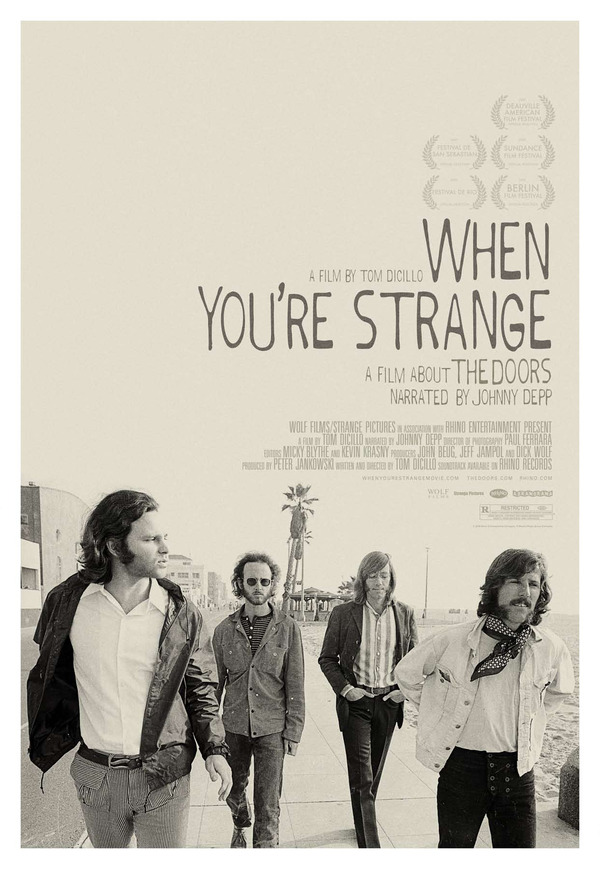 This big screen documentary follows the band The Doors from their formation in 1965 to Jim Morrison’s death in Paris in 1971 (he’s buried in the world famous Pere Lachaise Cemetery).
Writer-director Tom DiCillo (JOHNNY SUEDE, LIVING IN OBLIVION) avoids talking heads retrospective interviews, with contemporary footage and still images throughout and a wry commentary read by Johnny Depp. It’s amazing that so much footage of The Doors at work and play exists (rare in the 1960’s), and there are even sequences from an unfinished underground film Morrison starred in.
Di Cillo covers the bad behaviour many rock bands are famous for, but his focus is on the music and he even takes the trouble to analyse The Doors’ unique sound (no bass, extra keyboards) and to assess what other members of the band contributed to the mix.
Ultimately, WHEN YOU’RE STRANGE is an essential film for Doors fans, but it’s enlightening to the uninitiated, too. Not only is there great music, it’s a compelling story of a troubled creator whose charisma was preternatural, and it captures a moment in time that will never be replicated.
Filed under: Published film reviews
 The story is about three sisters’ search for happiness: Trish is separated from her incarcerated paedophile husband Bill, and hoping for a new life with Harvey, when her husband is released from prison; virginal Joy is haunted by ghosts of her dead lovers; while Helen lives a life of empty Hollywood wealth with her lover.
Director Todd Solodz drew on his New Jersey upbringing to craft dark social comedies that gave voice to America’s forgotten suburbanites and their lonely, isolated lives in his previous films Welcome to the Dollhouse and Happiness. In Life During Wartime, Solodz extends these stories and covers topics such as paedophilia, abortion, and the Holocaust; the moral being that trauma can prompt a person to change their identity.
A dark and surreal film, this is a brave venture for Solodz. The cast is competent across the board, with Allison Janey (Juno, The West Wing) and Ciaran Hinds (Harry Potter, Road to Perdition) giving exceptional performances (UK 15).
Welcome to WordPress.com. This is your first post. Edit or delete it and start blogging!
Filed under: Published film reviews | Tags: film review, Ridley Scott, Robin des Bois, Russell Crowe
 Richard The Lionheart and his right-hand man, Loxley, are slain in France when returning from the Third Crusade (1199). It’s left to one of their archers, Robin Longstride (Russell Crowe), to return Richard’s crown to London and Loxley’s sword to Nottingham. There, compelled to pose as Loxley, Longstride finds himself embroiled in politics and tackling a French plot that’s abetted by the traitorous Sir Godfrey.
It’s been a long time since there’s been a summer release that feels like an event film, and this is it. Darkly shot and Medieval in feel, Director Ridley Scott’s (GLADIATOR) film is a huge production that’s simply fun. It cost $200 million dollars to make and it’s already earned this money back in its release in the states and the UK alone.
While Crowe’s accent meanders (though never as bad as Kevin Costner’s, nor is there a mullet in sight), his often-seen scowl is replaced, here, with a twinkle in his eye and a sense of bonhomie. As an aside, Crowe spent four months learning how to shoot a bow and arrow, and can hit a target from 45m.
This film is action-packed but not juvenile – grown up without taking itself too seriously – and a summer ‘event film’ release that leaves you wanting more. (12A)
Filed under: Published film reviews | Tags: Chris Cooper, film review, Lena Olin, Pierce Brosnan, Remember Me, Robert Pattinson
 Rebellious and sensitive New York rich kid Tyler (Robert Pattinson, Twilight) picks up Ally, a working class kid from Queens, on a dare. Little does he know that he’ll fall madly in love with her, creating a situation that will force their respective family traumas to the surface.
Despite their different upbringing, each has serious father issues: he thinks his big shot father doesn’t give a damn, and she’s burdened by an overprotective father who’s a city cop. And both of them have serious trauma from their past: for him, the suicide of his brother, and for her, the murder of her mother.
With a few months free from acting as the agonised teenage vampire Edward Cullen, Pattinson undoubtedly wants to prove himself in a more serious film. Whatever your opinion is of The Twilight Saga, there is much in this film to be impressed about, though Pattinson may not be at the forefront of your mind – he plays the role well in the sense that he’s mopey and distant, but he’s pretty much the same character as when he plays the vampire. That aside, while the story is arguably clichéd, it’s played with conviction, and it’s a loving tour of both the wealthy lanes and the seedier branches of New York City.
Filed under: Published film reviews | Tags: film review, Green Zone, Matt Damon, Paul Greengrass
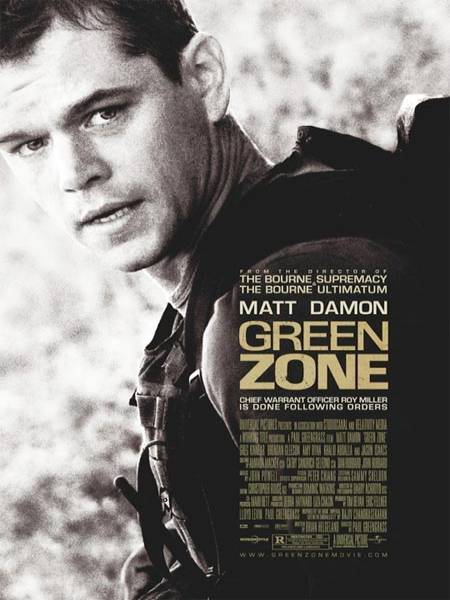 Officer Roy Miller (Matt Damon) is posted to Iraq to justify the US invasion by finding weapons of mass destruction. When his search proves fruitless, he begins asking tricky questions, and soon even his own side are out to kill him.
Director Paul Greengrass (The Bourne Ultimatum) has always had an eye for hot topics: in the 80’s he wrote a book about an inside story of the M15 so explosive that Thatcher tried to ban it. In this film, Greengrass has combined politics and popcorn – the film provokes thoughts while it thrills with breakneck-speed action. Damon is perfectly cast; he’s playing a patriot, not a left-leaning hand wringer, but a soldier trying to do his duty and struggling with the malice and incompetence around him; and he shows not just the blows to his body, but also to his mind.
This is an honest and smart blockbuster that dares to deliver on several levels.
 Victoria Jelinek