Filed under: Published film reviews | Tags: Ama Dablam, Baltasar Kormakur, Emily Watson, Everest, Himalaya, Jake Gyllenhaal, Keira Knightly, Nepal, Sam Worthington
 Base Camp Everest, 1996. Climbers from two commercial expeditions begin their final ascent to the summit. With little warning, a violent storm strikes the mountain and envelops them. The teams endure severe winds and subfreezing temperatures in their struggle to survive against the seemingly insurmountable odds.
Everest appears to have it all. A great locale, it’s set on the world’s mightiest mountain. It’s based on a real-life cliffhanger. The cast is stellar. The director is a cool Icelandic fellow. And, the co-screenwriter wrote Slumdog Millionaire and The Full Monty. Yet despite these elements and the filmmakers desire to create a spectacle, this movie is distinctly unthrilling.
It could have been gorgeous visually. In the least, a good landscape film. Instead, the mountains look like the sulphurous crust of an alien planet or a silty oceanic floor. The camera focuses on the individual actors in their color-coordinated outdoor gear, rather than what they’re seeing, which means context and visual possibilities are lost.
The storyline is presented as immutable fact, while various members of the ensemble cast make their way up the mountain in what is already their preordained fate. But why do they go? The film doesn’t seem to be interested in what might drive these characters up the side of a feral mountain to potential death. Is it for the views? In order to breath the thin air? To say that they’ve been there? We don’t know. We’re repeatedly told that the reason for these characters risking life-and-limb to climb Everest is the pseudo mountaineering philosophy, “Because it’s there.” But that doesn’t work for cinema. We have to feel like we’re there or it doesn’t send the chill up our spines. We have to feel as though we’re invested and relating on some level and if we don’t know anything, really, about the characters, how can we? It also infuriates me that Emily Watson and Robin Wright are relegated to playing the “mother hen” and the sidelined spouse, respectively.
As a caveat for my lackluster review, I concede that I may simply be the kind of person that doesn’t get into stories and films about mountains and mountaineers. It’s ironic, too, because I live in an alpinists ‘mecca.’ However, I watched this film with a friend who is a mountain guide, and who has climbed in the Himalayas (Ama Dablam). As the credits rolled and we made our way out of the cinema, I asked him what he thought. He softly chortled and replied, “It was totally unbelievable. Their clothes, hair, and equipment would have been really dirty…”
Filed under: Published film reviews | Tags: Barbara Alberti, D.H. Lawrence, Edoardo Gabbriellini, Flavio Parenti, Italian director, Italy, Luca Guadagnino, Luchino Visconti, Michelangelo Antonioni, Tilda Swinton
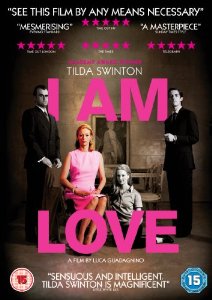 Emma Recchi (Tilda Swinton) left Russia to live with her husband in Milan. Despite being a member of a powerful, ancient, industrial Italian family and the esteemed mother of three, she is unfulfilled. Then, a chance meeting with her son’s friend, a talented chef, Antonio (Edoardo Gabbriellini), revitalizes her.
One gets the sense you are watching a bygone era with the formality of tradition and the grace of luxury that pervades this film, supported by beautiful cinematography that sweeps over the tapestries, stones, tiles, chandeliers, polished tables, and the white gloves of servants. In the style of prior Italian directors, such as Antonioni or Visconti, the visual style is lush and sensual. While the plot is not original, and the movie is arguably melodramatic (one thinks of many stories about a working class ‘stud’ who rekindles passion in an aristocratic malcontent, namely D.H. Lawrence), the visual display and Tilda Swinton’s acting make this film fresh and authentic. From the opening scenes in which her face is controlled while she manages a grand family party, to the climax of the film in which it is in ruins, your gaze is absolutely fixed on her alabaster face. Long after its conclusion, her expressive face and its subtle reactions to the events and circumstances of the story, haunted me.
Filed under: Book reviews | Tags: Amsterdam, bestselling book, Calvinism, Calvinist, dollhouse, Good books, Great books, Jessie Burton, The Miniaturist
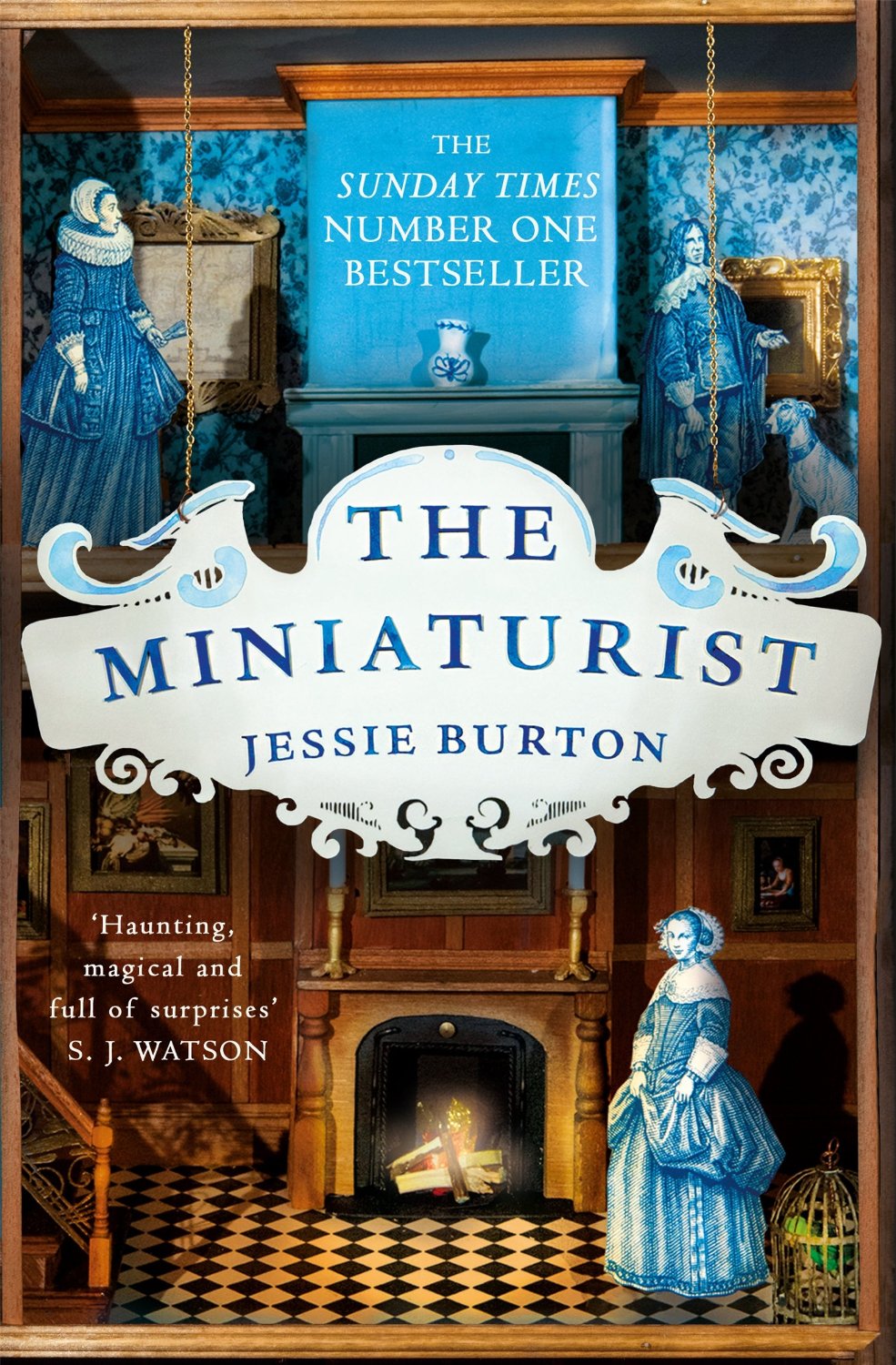 The year is 1686 and the locale is Amsterdam. Eighteen-year-old Nella Oortman arrives at the imposing house of her new husband, Johannes Brandt, a successful and wealthy shipping merchant. A marriage arranged because of her name and his wealth, Nella finds herself overwhelmed with loneliness and by her new surroundings. Due to the Calvinist authorities, the people in Amsterdam are repressed and colorless – they even eat their sugar in secret. Johannes’s peevish sister frightens her. The maid disrespects her. And his manservant, a former slave, alarms her. Moreover, Johannes never visits her in her rooms during the night or at any other time, leaving her doubtful and confused about herself and marriage in general.
He does, however, give Nella an exquisite dollhouse that is the exact replica of his grand home, and invites her to fill it with miniature furniture at his expense. To this end, she commissions a miniaturist to make a few initial items for the dollhouse. What ensues for Nella are a series of puzzles as the elusive miniaturist sends Nella items which are exact replicas of the people and things in her home and which Nella has not ordered. How does the miniaturist know so much about her and the other members of the Brandt household? Does the miniaturist know the future? What secrets are Johannes and his sister keeping from Nella?
What should have been a charming book given its plot, its vividly drawn setting (having been impressively researched by the author, Jessie Burton), and some beautiful passages, left me feeling indifferent. While our heroine exhibits an exhilaratingly modern attitude as the story unfolds, I didn’t feel compelled by any of the characters or their events and circumstances. We discover each of their tastes, and we’re even told about each character’s failings, but we never learn what is in their hearts or what motivates any of them. As a consequence, I felt the characters lacked depth and the novel was a lukewarm experience rather than the passionately engaging one promised by many reviewers.
Filed under: Published film reviews | Tags: Benecio del Toro, cartel, Columbian, Denis Villeneuve, Emily Blunt, Josh Brolin, Taylor Sheridan, War on Drugs

When FBI specialist Kate Macer (Emily Blunt) starts working with two dodgy defence advisors, she finds herself on the ethically blurred front of America’s War on Drugs.
I was so excited to see Sicario because publications whose opinions I respect hailed it one of “the best” movies of the year, and a “must see” film. Additionally, the cast, namely Benecio del Toro and Josh Brolin, are excellent actors I admire immeasurably. While I’d concede that my high expectations played some part in the disappointment I felt when I did see the film, Sicario goes on my list of movies (which are only a handful out of hundreds viewed) worth walking out on. And I would have, too, had my friend not refused to leave due to the expense of our cinema tickets. The only redemptive element in my opinion was the cinematography, but coupled with the cliché-ridden script, it becomes an accomplice in the hackneyed story and its characterisations.
Josh Brolin is meant to be a government operative whose cynical experience and daring makes him a cowboy who ‘always bags his man’. This is conveyed in a flat-footed manner, with farcical direction and no dialogue to support the idea that he’s actually a shrewd hunter. Benecio del Toro plays a shadowy character that we’re not sure is on the ‘good side’ or the ‘bad side,’ but it doesn’t matter, because, once again, his lines are so vapid and the plot is so thin that you don’t really care. And Emily Blunt. Good grief. She’s meant to be a young, up-and-coming ‘shit-hot’ FBI agent, but there is absolutely nothing in terms of dialogue, action, or her acting that supports the idea that she’s astute, capable, and one you’d want to be ‘in the foxhole with’ under fire. Instead, she comes across as a self-righteous blowhard, and, moreover, a hindrance to any real action that does take place in the film.
I’m perplexed as to how this movie is such a hit with critics…In this viewer’s opinion, if your keen to see it ‘cause of the reviews you’d thus far read, the tagline, concept, or the cast, then I’d recommend waiting till it’s on DVD.
Filed under: Book reviews | Tags: 19th century Iceland, Alias Grace, debut novelists, Hannah Kent, Iceland, Icelandic stories, Margaret Atwood
 The novel, based on a true story, takes place in Iceland in the early 19th century. Agnes, a housemaid, has been charged with murdering her former master and is sentenced to death. But as the ground is too hard to bury a body till the spring, she awaits her execution at an isolated farm located in the valley where she grew up.
Initially, the family who own the farm are horrified that a convicted murderess will be living with them and they avoid her as much as is possible. It is only Toti, a young, inexperienced priest Agnes has chosen to be her spiritual guardian, who listens to and attempts to understand her. Despite being a pariah to the family on the dilapidated farm, however, Agnes finds the routine of its chores comfortingly real, and slowly opens up to Toti about the circumstances surrounding the murders. It is through her telling of these details that the family – overhearing her in the small shack of a farmhouse – learn that there is another side to the scandalous story they’ve heard.
A dear friend who recently visited left this behind for me to read. Hungry for English, I devoured it. I found it lyrical, haunting, and quietly dramatic, particularly as it takes place in the harsh environment of Iceland among the impoverished (majority). So I truly did enjoy it and I appreciate that this is author Hannah Kent’s debut novel, which is a great accomplishment. Even so, its primary tale (a convicted housemaid kills her masters), based on a true story, as well as its circa (early 19th century), keenly recalls Margaret Atwood’s book Alias Grace. As a result, I couldn’t help but read Burial Rites in a critical fashion, comparing it to Atwood’s book throughout. In my opinion, while a good read in a very similar ‘vein’, this book is not as good as Atwood’s in terms of literary prowess, insight, wisdom, and cultural and historical knowledge and complexity.
Filed under: The Baby Diaries | Tags: Bah Bah Black Sheep, Georgie Porgy, Goosey Goosey Gander, Humpty Dumpty, Jack and Jill, Jack Spratt, Kilkenny cats, Little Bo Peep, Little Boy Blue, London Bridge, Lucy Locket, lullabies, Mother Goose, Nursery rhymes, Old Mother Hubbard, Peter Peter Pumpkin Eater, Polly Flinders, Ring around the Rosie, Rock a Bye Baby, Simple Simon, Sing a Song of Sixpence, The Old Woman Who Lives in a Shoe, Three Blind Mice, Tommy Tucker
I like to tell people I have the heart of a small boy. Then I say it’s in a jar on my desk.
Stephen King
 A favorite book of mine is The Real Mother Goose. I’m not the most enthusiastic proponent for motherhood as a ‘path’ for every woman, but I will say that a great thing about being a mother is getting to re read all the beloved books from your own childhood. But I must have missed the fact that Mother Goose is rather dark when I was a child, which is something that amuses me now as I read these to my young son who is also entertained by them, though likely for different reasons.
Take the “Three Blind Mice” for example: they run after the farmer’s wife who’s terrified and cuts off their tails in retaliation. And they’re blind mice. On the other hand, their mischievous chasing after the woman means they are not such “aw, shucks” pitiable little creatures–they undoubtedly know their effect on women who discover mice underfoot and start screaming in terror and are daring and provocative.
Or “Georgie Porgy.” He’s a predator. He chases the little girls around kissing them and causing them to cry, then runs away like a coward when the boys come out to play.
“Humpty Dumpty” falls off of a wall and despite the best efforts of the king’s men, is left in pieces.
“Rock-a-bye Baby” is calmly lolled to sleep in a tree before dropping to the ground with the bough, cradle and all.
Jack breaks his head open trying to get some water and is patched up with vinegar. Talk about infection.
“Little Bo Peep” goes looking for her sheep and finds their tails detached from their bodies and can’t put them back on her “lambkins.”
“Little Boy Blue” lazily sleeps through his chores. He’ll be fired (unless, of course, he lives in France). Meanwhile, Wee Willie Winkle is a total busybody.
“Peter Peter Pumpkin Eater” keeps his poor wife captive – what a control freak – until he becomes less ignorant. But at least he changed. Wonder if it was therapy or a police threat?
“The Old Woman Who Lives in a Shoe” regularly beats her children after giving them only broth for their dinner.
“Bah Bah Black Sheep” has three bags of wool and makes a point of telling us he’s not giving a bag of it to the little boy who lives down the lane from him (ostensibly the little boy is a brat).
How about the old man in “It’s Raining, It’s Pouring” who bumps his head and can’t get up in the morning?
And poor “Tommy Tucker” has to sing for his food…
Everything goes wrong for “Simple Simon.”
Jack Spratt’s wife only eats fat and while they lick the plate clean betwixt the two of them, his wife will die of cardiovascular disease.
In “Ring Around the Rosie” everyone has a pocket full of posies then falls to the ground in ashes.
“Goosey, Goosey, Gander” throws an old man down the stairs by his leg for not saying his prayers.
“Lucy Locket” has no money in her purse, the loss of which she cries for.
Little Polly Flinders gets whipped for messing up her new clothes when she’s trying to warm her toes at the fire.
“Old Mother Hubbard’s” dog takes her for granted, even after she goes out searching for food for him.
A beggar steals a moppet pet from a child.
“Tom Tom, the Piper’s Son” steals a pig, eats it, and is beaten for it.
The maid gets her nose taken off by a blackbird in “Sing a Song of Sixpence” while the king is counting his money and the queen is eating bread and honey (talk about social disparity).
“The Kilkenny Cats” fight till there’s nothing left of either of them except their nails and the tips of their tails.
Does London Bridge actually fall down?
I went online to find out if there are any comments on this subject. What I found surprised me. There are books published about “the darker side” of nursery rhymes. There are chat forums in which parents are talking about the words to some of these beloved rhymes I’ve mentioned, above, and they say that NOW that they realize it, it’s neglectful and ‘wrong’ to read these stories to your children. Oh dear. My son can recite many of them aloud already – I’ll be found to be a negligible mother. But I maintain they’re humorous, and that means something, right? Besides, The Real Mother Goose has been on the bestseller list for children’s books since the early 20th century. Are these parents lying about not reading these rhymes to their kids nowadays? Is it a reflection of how uptight and moralistic and overly vigilant we’ve become, especially as it pertains to our children? Do many modern parents really want to expurgate Mother Goose? I mean, the old woman does fly in a basket up to the sky to clean the cobwebs out – you know what that means – she’s likely a witch!
Filed under: Book reviews | Tags: Devil, Faust, Gideon Mack, God, James Robertson, near-death experience, Satan, Scottish folklore, Scottish writing
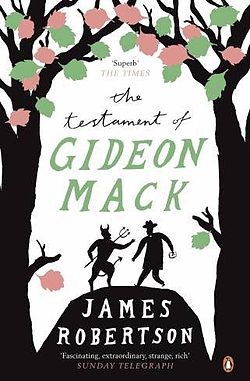 Reverend Gideon Mack is a troubled man, an unfaithful husband, and a theological skeptic. For him, the existence of God, the Devil, heaven and hell are on par with the existence of fairies and ghosts. Till he nearly dies and is rescued by someone who seems to be Satan himself.
Inspired by a Scottish folk story, this novel is an intriguing blend of legend, history, memoir, and fiction. The subject matter is compelling and the writing is exceptional. I love the concept of a conversation with the Devil (very Faustian and potentially epically moralistic) borne of the Scots, who are down-to-earth, wry, and irreverent. I also appreciate that while the story is focused on Gideon’s experience in life, death, and resurrection, it also prompts the reader to consider the very nature of faith. All this said – and allowing for the possibility that my mind wandered too easily from the lyrical pacing of the book – I found the tale overly long and felt it was a bit of a chore to finish the last several chapters…
Filed under: The Baby Diaries | Tags: Bill McKibben, China one child law, Emma Kennedy, France, French childcare, G. Stanley Hall, lonely children, only child, only children, The Guardian, Time Magazine
Being an only child is a disease in itself. G. Stanley Hall
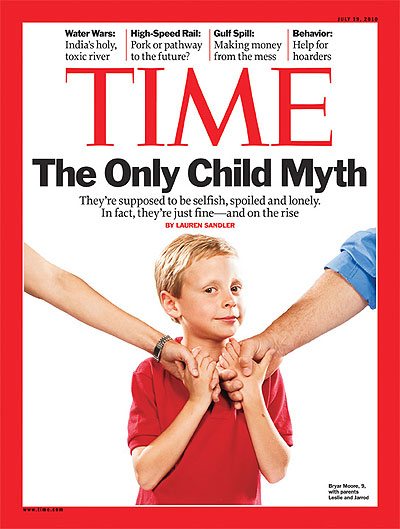 The other day I was surprised to hear from a long-lost friend that she’d given birth to her third child. I never would have taken her for a mother in the first place. When I told my husband about my old friend, much to my surprise he suggested that we have a second child. I find myself astonished that he wants a second child and seems to have kept his mouth shut due to my own opinion on the matter. And now I’m confused, particularly as there is a lot of social pressure to have more than one child in France…likely due to the amazing programs available to help you care for them. On the one hand, despite my flawed relationship with my own siblings, I’m grateful they exist and feel bad that my son will not have this ‘record’ of his early life at home, or camaraderie on holidays or later in life, particularly as my husband and I will likely be dead by the time he has his own family. Moreover, I’ve bought into the stigma around only children as lonely, indulged, and neurotic creatures. On the other hand, the single children I know tend to be rather independent and strong-willed, traits I admire. And, also, there are too many people in this world already. I didn’t have a maternal instinct until I had my own child. In fact, I was skeptical of the whole motherhood route for a variety of reasons. I also had a very problematic pregnancy, and am not too keen to repeat the experience. If I were to try to get pregnant again, and to have a child, I would be doing it for my child and my husband only…I don’t want to be selfish, however, so I started talking to friends here in Chamonix and abroad, and doing a bit of research on the subject.
My friends in Chamonix told me that if there is even a seed of doubt in my mind, and if there is any chance that if the circumstances were different and I COULD have a baby in five years, once I’ve rested from the previous pregnancies, then I SHOULD try to have another baby now and just ‘grin and bear it.’ Two of these friends were only children themselves, and they went on to have three kids precisely because they were only children. Two other friends who were only children told me that they never knew any differently while growing up. Reassuring, except that they have two kids each.
Two close friends in the US who are also only children had a different take on the matter. Both of them say that they love and value their time alone. That they were raised to make the best of their ‘alone’ time or go crazy. Both say that they are self-reliable and self-entertaining. Both say that if there were any ‘problems,’ then it would be that it was harder for them to make friends, be outgoing. Both also admitted that they often wished that they’d had a brother or sister to share things with as they grew older, especially as their parents aged, but both remark that it’s likely that my child will a great spouse and/or loads of friends to share the burden and joy of life with, as they do. Both said that it’s arguable that being an only child results in various traits and issues, such as being headstrong, but who doesn’t have something ‘wrong’? It’s what makes us all special. They advised me to teach kindness and a desire to understand and learn from others, which will counter any negative aspects commonly associated with single children. Interestingly, both posed a question to me: “The real question is, would you be willing to go through all that you did to have another child?”
After much thought, I’m not willing to go through the stress of trying-to-get-pregnant sex, likely more miscarriages, and another difficult pregnancy. Whether my son (and husband) know it or not, this would hinder our relationship now and in the foreseeable future, and I feel it’s primarily motivated by the fear that our kid MAY be lonely and spoiled. I found an interesting article in The Guardian by an only child named Emma Kennedy entitled “Who Needs Siblings?”
She writes: A friend of mine recently sat down with me and asked me in all seriousness whether I was happy about being an only child. It was if she were asking me what it was like to cope with a disability. But she had an agenda. She has got an only child and she is concerned that if she doesn’t have another one, her currently happy and well balanced three year old is somehow going to mutate into a gorgon of bitterness and despair.
My experience of being an only child has been unequivocally positive, and I was happy to put my friend’s mind at rest. Sometimes I wonder what it would be like to have a sibling, of course, but rather than wondering what he or she would have been like, I find myself wondering if I would have turned out to be a fundamentally different person. There is no way of knowing. But there are several things I know about myself and I am convinced they stem directly from being an only child. First, I love my friends beyond words. I have a huge circle of acquaintances, I am an incredibly social beast, but there are a handful of people to whom I am devoted to the point of madness…. Second, because I grew up with no experience of sibling rivalry, I have no professional jealousy. I have never, not once, looked at one of my peers and begrudged them their success…The only negative I can ever come up with when I am quizzed about the downside of being an only child is that, when the time comes, I shall bear the burden of my parents’ old age and inevitable decline on my own. While this will be difficult and stressful and heartbreaking, I can think of no greater privilege than being asked to look after the two people to whom I owe everything… I like being an only child. I am guessing that other only children like being the way they are, too. So, please, stop treating us as if we are birds with broken wings…There is a reason China is now the most successful country in the world. It is because it is run by an entire generation of only children. Coincidence? I think not. Let the world take note.
In a review of 141 studies examining the personality traits associated with only children, the spoiled, selfish, lonely stereotype had no basis in fact. Only children also rate significantly higher in achievement and motivation, due to increased parental scrutiny. Studies also indicate that only children score higher in adjusting to new environments, exerting self-control, and interpersonal skills – all skills I hold dear. But, it was my mother who both made me laugh and made me realize that for-better-or for-worse, my dear boy will be an only child; she told me that my siblings and me always wanted to be only children. Indeed. So, I will pull up my socks, get on with life as I have it, and simply love my single, and certainly singular, child.
Filed under: Book reviews | Tags: England, France, Jacobite, Scotland, Scottish crown, Scottish Highlands, Stuarts, Stuarts in exile, Susanna Kearsley, The Winter Sea
 In 1708, a fleet of French and Scottish soldiers almost succeeded in landing the exiled Stuart prince in Scotland to reclaim his crown. In the present day, author Carrie McClelland wants to turn this story into her next bestselling novel. Settling into the shadows of an ancient castle in the highlands of Scotland, she creates a heroine named after one of her own Scottish ancestors, and begins to write the tale. Soon after, she finds that the details she’s intuitively including in the book are factual, and she ponders whether she’s dealing with ancestral memory, making her the only person alive who knows the truth about what happened over 300 years ago.
I was skeptical about reading what looked like a tome of historical fiction, but my doubt was quickly allayed. The concept is great – a writer has characters and their actions, circumstances, and dialogues, coming to her as memories, blurring the lines between fact and fiction. The locale is vividly, but not overly described, and the Scottish landscape is romantic. The characters – both in the present day and during the 18th century – are compelling. The story is suspenseful (and there’s a twist at the end that I didn’t see coming). Finally, without being drawn into tedious text-book-type writing, I learned a great deal about the Jacobites, the feuds between Scotland and England, and the alliance between France and Scotland, which is immensely interesting and explains a lot about the social politics between these three countries today.
Filed under: Published film reviews | Tags: Anna Camp, Anna Kendrick, Brittany Snow, Cameron Crowe, Glee, good soundtracks, John Hughes, Mickey Rapkin, musical films, Rebel Wilson, Skylar Astin
 Beca (Anna Kendrick) is cajoled into joining a female acapella singing group when she arrives for her first year at Barden University. Despite her initial scepticism about the troupe, Beca finds herself invested and wants to help them break their losing streak.
I’m not into musicals, and never got the attraction to the hit TV program Glee, but I love this film. Sure, there’s singing, but the choices are slick and the soundtrack, combined with the story’s milieu and simple plot, remind me of the John Hughes and Cameron Crowe films I grew up on and adored. The acting is as an ensemble, with characters that are astutely observed and well-written. The script is clever, and a catty wit abounds (thank goodness in these days of political correctness). Arguably, the film swerves from one daffy set-up to the next, but the characters and cast keep it anchored, it never loses sight of its story, and it’s really funny.
 Victoria Jelinek