Filed under: Book reviews | Tags: 19th century, Charlotte Bronte, Emily Bronte, feminism, Gothic fiction, historical romance, Jane Eyre, religious fervor, Rochester, romance, romantic novel, Victorian era, Victorian novels
 For Valentine’s Day, I thought I’d write about one of my favorite romantic novels, which I just happened to re read recently. It’s good that I re read it, too, because when I had to read it in high school, I was not impressed – I found it decorative, stilted, and, well, boring. This time, decades letter, I realize how much I didn’t understand in the first reading (as well as how badly my English teacher taught the book!). Jane and Rochester’s relationship is ‘saucy’ and risqué, with motifs of masochism. Moreover, Jane is not the dull woman I initially thought she was, but a spirited and thoughtful feminist who challenges the status quo of society.
Set in nineteenth-century England, the novel begins with the story of young Jane, an orphan who lives with an aunt who dislikes her and doesn’t show her any kindness or affection. When she’s ten, Jane is sent to Lowood, a charity school; despite the cruelty of its headmaster, Jane develops physical, intellectual, and emotional strength. She leaves Lowood School to become a governess for Adèle, the ward of Edward Rochester of Thornfield Hall. Jane and Rochester fall in love despite the difference in their ages and social positions. Mystery surrounds Rochester, however; strange sounds and occurrences abound in his manor. Jane leaves Rochester after the revelation that he is married and his wife, who is insane, is being held captive in the attic at Thornfield. After much suffering, Jane becomes the mistress of a village school. She later discovers that she has living relatives and inherits a fortune, which enables her to return eventually to Rochester as an independent woman.
Jane’s life unfolds as a dramatic adventure within an atmosphere of psychological dread and the constant threat of ruination, typical of Gothic novels. Even as there is mystery, suspense, and horror, which define the genre, the novel addresses social issues of the day. Throughout the narrative, Charlotte Bronte raises questions about the limited education provided in church schools, the expectations and opportunities for women, the value of family connections, and the importance of romantic love even when it conflicts with personal principles or the strict values of Victorian society. As a biographical note, which I think enhances one’s understanding of the book, Brontë incorporated into the narrative several elements from her own life. After Brontë’s mother died, an aunt assisted in caring for the Brontë sisters (Charlotte, Maria, Elizabeth, and Emily). The sisters were sent to Cowan Bridge, a school for clergymen’s children. The cruel and hypocritical fervor of the headmaster in Jane Eyre is based upon the evangelical minister who ran Cowan Bridge. Jane’s loss of her dearest friend at Lowood School to tuberculosis recalls the deaths of Brontë’s two sisters who died of tuberculosis at Cowan Bridge. Like Charlotte Brontë, Jane becomes a governess, which was often the only professional option for an educated woman at the time. The role of governess provided a good vantage point for Brontë to observe and write about the oppressive social practices of nineteenth-century Victorian society. Reflecting Brontë’s early feminist ideals, Jane is rebellious at a time when women were expected to be docile and obedient. Through Jane Eyre, Brontë challenges Victorian mores by suggesting a woman’s merits demand the same respect as a man’s; moreover, she challenges the conventions of Victorian literature by creating a well-developed heroine with a rich inner life.
But even as Jane questions gender expectations, societal conventions, religious practices, and the importance of love in marriage, this is not a didactic or dogmatic book. It is, ultimately, a passionate and seemingly impossible love story set within a spooky atmosphere, whose central tenet is the individual’s quest for an independent identity (still very relevant today), which is why it’s one of the most widely read novels all time.
Filed under: Published film reviews | Tags: 1960's culture, Carey Mulligan, Coen brothers, counterculture, Dave Von Ronk, folk music, folk scene, John Goodman, Justin Timberlake, Llewyn Davis, New York, The Mayor of MacDougall Street, West Village
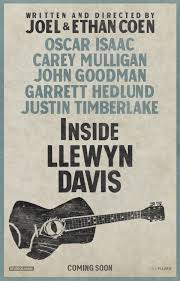 1961, the West Village, New York. Singer-songwriter Llewyn Davis (Oscar Isaac) skulks at the fringe of the folk-revival scene, bothered by the memory of his dead partner, and hoping for a big break to land in his lap. Meanwhile, the unwelcome pregnancy of a brief liaison with Jean (Carey Mulligan) and the accidental adoption of a cat, create a series of mishaps that lamentably fail to alter anything about Llewyn’s life.
Inspired by the memoir of real-life folk hero, Dave Van Ronk, Inside Llewyn Davis is one of the Coen brothers’ serious films. While the film is quirky and darkly comic, primarily via Llewyn’s expressions to the absurd people and circumstances around him, the film is based upon an unsexy musical scene and infused with melancholy. Additionally, its hero is not likeable. For example, he tries to borrow money from a friend (played by Justin Timberlake) for an abortion when the friend is the boyfriend of the said girl. He laments the suicide of his partner in their flourishing musical duo, but he’s the one left suffering, right? He’s a man who doesn’t deign to connect with others, yet he can’t function alone. He takes responsibility for the ginger Tom, but he alienates everyone around him, even long time fans.
That said, Llewyn is captivating. His observation of the absurd injustices in the world around him, is as relevant today as is was then.
Filed under: Published film reviews | Tags: 19th century America, abolition, abolitionist, Brad Pitt, Chiwetel Ejiofor, colonial America, Michael Fassbender, Paul Giamatti, Sarah Paulson, slave trade, slavery, slaves, Solomon Northup, torture
 Circa 1841. Solomon Northup (Chiwetel Ejiofor) is a free black man living with his family in Saratoga N.Y., earning his living as a violinist. He is lured to Washington DC by two entertainers promising work. After a night of drinking with them, Northup wakes up in chains and is sold into slavery. Following Solomon’s kidnapping, he’s owned by different plantation owners. The first offers him some responsibility, some kindness, and a violin, and consequently might be the most brutal of Northrup’s owners. It is Edwin Epps (Michael Fassbender), however, who is the most colorfully cruel. Fassbender introduces Epps as a sadistic drunk, but he becomes a more complex character as the tense relationship with his wife (Sarah Paulson) and his self-loathing are revealed and manifested in his obsessive affection for a young slave girl.
12 Years a Slave is an absorbing film – intelligent and starkly severe. In line with director Steve McQueen’s background as a fine artist, it is also beautiful. Practically every shot could be a still photograph or a painting. There is gorgeous metaphorical imagery in contrast with the violent and physical reality for the slaves. And, as is evidenced in his previous films, McQueen does not shy from human physicality, with scenes, here, of beating, lovemaking, and working, which are visceral, humiliating, and horrifying. This adaptation could have been a feel-good film, a survivor-who-beats-the-odds sort-of-thing, but it’s not, which is appreciated. From the ‘get-go’ this film is despair incarnate that does not make you feel like crying by its conclusion, but, rather, leaves you stupefied.
This is not a common evocation today. I applaud McQueen’s effort, and I value the skill of his refined and remote approach while dealing with potentially incendiary subject matter. But it is for the same reasons that 12 Years a Slave is being heralded as a masterpiece – its ‘objective’ gaze, its aesthetic, its treatment of the subject matter- that I have issue with…the film feels self-conscious, contrived, and didactic. What feels fresh and authentic about this film is its cast: the hero, Chiwetel Ejiofor, his tormentor, Michael Fassbender, the cruel wife, Sarah Paulson, the hideous slave broker, Paul Giamatti, and even Brad Pitt’s Canadian abolitionist (though I swear he begins the scenes he’s in with a southern U.S. accent and ends with a northern one).
Filed under: Published film reviews | Tags: Ben Stiller, Danny Kaye, farcical comedy, Forrest Gump, humorous film, humourous film, James Thurber, Kirsten Wiig, Life magazine, Sean Penn, Shirley MacLaine, The Cable Guy, Tropic Thunder, Zoolander
 Walter Mitty (Ben Stiller) lives a quiet and timid life. He’s afraid of change, he’s afraid to stand up for himself when his job at LIFE magazine is threatened, and he’s afraid to confess his feelings for his co-worker, Cheryl (Kristen Wiig). Then he loses the photo needed for the cover of Life’s final issue, and the only way to get it back is to go find the photographer (Sean Penn), an adventurer who could be anywhere in the world.
An adaptation of James Thurber’s 1939 short story in which a man escapes his drab existence with flights of fancy, Walter Mitty is the consummate wallflower. Here, he’s a man who goes unnoticed as he moves through the world, working quietly in the picture department of the once monumental magazine that’s now closing due to changing markets and financiers who are unable to see beyond the bottom dollar. But inside Walter is a world of wonderment and adventure — he daydreams he’s the hero who rescues a puppy from a burning building, or a courageous champion who battles futuristic villains, or a powerful mountaineer who boldly claims the girl.
The Secret Life of Walter Mitty has frequently been compared to Forrest Gump, a film I don’t like (and felt like an alien when it was released and everyone in the world loved it and I secretly wondered what was wrong with me). Sure, both are feel-good movies with optimism at their core and dorky lead characters. I believe, however, that this film is more thoughtful and relevant – this is a story about the journey to change oneself, not the external world, and to find personal truth, perspective, and confidence in a global environment that often seems dishonest, unreal, and disheartening. As both the director and lead, Ben Stiller is sincere, revealing to us that he’s a huge romantic with a subtle side. I love the films Stiller has previously directed, such as The Cable Guy, Zoolander, and Tropic Thunder, but they had an indulgent, farcical comic style, along with a huge dollop of cynicism. The Secret Life of Walter Mitty is funny, but the humor is situational rather than comedic, and it’s also unabashedly hopeful. This isn’t likely to be the best movie that you’ll ever see, but it is a touching and timely one worth watching.
Filed under: Published film reviews | Tags: GoodFellas, Jonah Hill, Jordan Belfort, Leonardo Dicaprio, Margot Robbie, Martin Scorsese, Mathew McConaughey, modern greed, Oscars 2014, Raging Bull, Taxi Driver, Wall Street
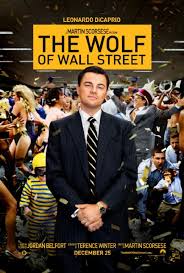 Jordan Belfort (Leonardo DiCaprio) dreams of being super rich, but after losing his Wall Street job in the crash of 1987, his hopes are dashed. Inspired by a shifty local operation that sells “penny” stocks to working class stiffs, Belfort starts his own dealership, hires a group of his degenerate buddies from high school to work for him, exploits those willing to invest in his firm, and manipulates the market, culminating in outrageous profits for him and millions spent on his decadent lifestyle.
The Wolf of Wall Street has been heralded as the first Scorsese film in a long time with the energy and substance of his early greats, such as Taxi Driver, Raging Bull, and GoodFellas. This is certainly the material of Scorsese’s classics – a criminal survivor story with an antihero who pushes the audience to the limits of its empathy. Jordan Belfort could be the worst of ‘em, too, as he exploits the poor and revels in his obscene wealth. The movie clocks in at just under three hours long, also, which is typical of Scorsese. What is different about this Scorsese film is that it’s funny. Jonah Hill, who plays Belfort’s sidekick, is consistently and effortlessly hilarious as a hedonistic dipshit. Mathew McConaughey is comedic, and despite being in the film for only a short time, he leaves an indelible mark on it. It is DiCaprio’s performance, however – versatile, commanding, relaxed, powerful, complex, and humorous – that makes this movie magnetic. This film simmers in one’s thoughts long after leaving the cinema. Yes, it arguably glamorizes drugs, money, sex, arrogance, and selfishness, but I think that this is missing the point. Scorsese isn’t blaming Wall Street for its excesses, he’s pointing the finger at us for allowing the world to become so disturbingly greedy, with its aspirations for wealth and notoriety at any price. This is an invigorating and timely film.
Filed under: The Baby Diaries | Tags: American doctors, American medicine, baby blues, birth, British doctors, depression, French doctors, French medicine, insomnia, new infant, post partum, Susan Sontag
Depression is melancholy minus its charms…Susan Sontag
 Having a baby triggers a heap of emotions both good and bad – pleasure, joy, enthusiasm, apprehension, anxiety, and, often, depression. Yes, that’s right. I’m daring to talk about the elephant in the room. The one that Brits don’t generally like to talk about and Americans talk too much about. When Brits talk about depression, their views often reflect their ignorance and outdated myths (or repression): it’s a sign of “weakness,” it’s self-indulgent, and one needs to keep their “chin up,” be positive, and all that. One thoughtless English ‘friend’ recently said to me, “Oh, I simply don’t have the luxury of depression!”
Regarding depression following the birth of a baby, rest assured it’s a complication of birth, not narcissism or an inadequacy on the part of the mother. It can happen a week or two after giving birth, it can happen a year after giving birth, or it can happen after nursing stops. Experts no longer regard depression’s cause as being purely physical, circumstantial, or emotional, but, rather, a combination of reasons. Physically speaking, after a woman gives birth, there’s a dramatic drop in hormones (estrogen and progesterone), and other hormones produced by the thyroid also drop sharply. There are changes in blood volume and pressure. Changes to the metabolism and the immune system. The mother’s lifestyle and emotional circumstances also can prompt depression. Perhaps the baby is demanding. Maybe there are other siblings. Perhaps she has difficulty breast-feeding. Or there’s a lack of personal and practical support. Her body changes, she feels less attractive. She struggles with her sense of identity as she feels a loss of control and independence.
The most common form of depression is called “the baby blues.” This lasts for a week or two, and causes the new mom to be moody, anxious, irritable, tearful, and unable to concentrate (though what new mother doesn’t feel this?). The second type is called “postpartum depression.” Symptoms include a loss of appetite, insomnia, intense irritability and anger. Overwhelming fatigue. No interest in sex. No sense of joy in life. Feelings of shame, guilt, and inadequacy. Severe mood swings. Withdrawal from friends and family. Thoughts of harming oneself or one’s baby. Difficulty bonding with the baby. The third type, and the most severe type of postpartum depression, is called “Postpartum Psychosis.” Symptoms include confusion, disorientation, hallucinations, delusions, paranoia, and serious consideration about harming yourself or your baby.
As mentioned, there has historically been a stigma to speaking about depression, so one is understandably reluctant and embarrassed to talk about it. But it is important for your own health, as well as your baby’s health, to talk to your doctor (in the first instance) about any combination of the aforementioned symptoms you may feel. Left untreated, each of these depressions can become more severe in nature and can lead to a chronic depressive disorder. Even when they’re treated, there’s an increase in a woman’s risk for future episodes of severe depression. Also, left untreated, the depression will affect your child negatively: studies show that the children of mothers with untreated postpartum depression have an increased likelihood of developing behavioral problems, such as sleeping and eating disorders, hyperactivity, temper tantrums, delays in learning development, language, and socialization skills.
The good news? It’s not your fault if you’re feeling depressed. And, contrary to the US, where doctors are so used to people asking for help with depression that there is an inadvertent “business as usual” approach, and contrary to the UK, where the whole “keep calm and carry on” myths prevail (it’s ironic to me that this British slogan was first used during WWII, and Winston Churchill was depressive and quite open about this fact), and one must beg for help with depression, the French are incredibly sympathetic, and they believe in a comprehensive approach. One that incorporates modern medicine, such as anti-depressants and sleeping pills, as well as holistic care such as acupuncture, meditation, vitamins, and yoga. So, if you’re feeling bad, and you suspect that you may be depressed, go talk to your local French doctor and read up on the maladie. Discover what it entails and how common it really is – you’ll be surprised at how much better you feel afterward, if only by learning that you are not unique in your feelings after all.
Filed under: Published film reviews | Tags: 1970's, Amy Adams, Bradley Cooper, Christian Bale, cool production design, David O'Russell, Elton John, Jennifer Lawrence, Robert DeNiro, Silver Linings Playbook, The Fighter
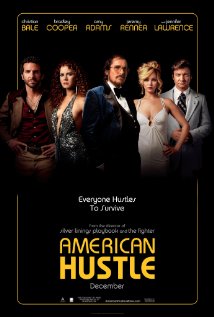 Circa 1978. Skillful con artists Irving Rosenfeld (Christian Bale) and Sydney Prosser (Amy Adams) cut a deal with FBI agent Richie DiMaso (Bradley Cooper) to catch other swindlers in return for clemency. But Irving is having an affair with Sydney, and his wife (Jennifer Lawrence) is a loose cannon, creating a powder keg of a situation that could derail the whole sting.
Nominated for several key awards at the Oscars this year, namely the coveted Best Picture, this film has been given a lot of positive press. Writer/Director David O’Russell has delivered fine films, such as The Fighter and Silver Linings Playbook (and the leads, here, were in those films, too) but this isn’t as good as it’s touted to be. Sure, the actors are charismatic and capable, the production design is entertaining, the soundtrack is nostalgic, and there are fun costumes, as well as a lot of time devoted to amusing hairstyles – Bale’s disco comb-over, Coopers tiny curlers, Lawrence’s sweep – but there’s little point or suspense to this film. The elaborate plot attempts to address corruption in America, but repeatedly gets lost self consciously in its own chicanery. And who are the bad guys? Con men, errant politicians, and Mafia bosses are more likeable and upright in this film than the FBI operatives out to take them down. While the friend I watched American Hustle with relegated it to one of the most boring movies he has ever watched, I think it’s worth watching, particularly if you’re into slick visuals, and it’s definitely worth renting on DVD.
Filed under: Book reviews | Tags: Dashiell Hammett, detective genre, hard-boiled detective fiction, Philadelphia, Phillip Marlowe, Raymond Chandler, Sam Spade, Victor Carl, William Lashner
By William Lashner
 Hard luck Philadelphia lawyer Victor Carl yearns for the opportunity to get rich, be respected in the legal community, and have hot women begging to date him. Then William Prescott III, upper-cruster from one of the city’s most distinguished firms, comes knocking at his door. Prescott wants Victor to represent a councilman’s aide who is, along with his boss, accused of extortion, arson, and murder. It’s a high-profile court case that promises everything Victor longs for, and all he has to do is turn up and do whatever Prescott tells him to. But Victor can’t be quiet when it’s evident someone is setting him and his client up to take a nasty fall. He may be desperate, but he’s no one’s patsy.
I read a Victor Carl short story by this author, which inspired me to buy a book about him ‘cause it was well-written and I like the hard-boiled detective fiction genre, with characters such as Sam Spade and Phillip Marlowe. These guys were tough mavericks in violent, double-crossing milieus, who were unflinching in their determination to achieve justice. This book doesn’t disappoint in terms of its main character, plot, and setting, but it is overly long and consequently repetitive, while Hammett and Chandler’s novels are concise and to the point – just like their (anti) heroes.
Filed under: Book reviews | Tags: damanged people, Dark Places, fringe society, Gillian Flynn, Gone Girl, Kansas, mystery books, popular fiction, thriller books
 By Gillian Flynn
Libby Day was seven when her mother and two sisters were murdered in their home in an attack dubbed by the press as “The Satan Sacrifice of Kinnakee, Kansas.” Libby and her then fifteen-year-old brother, Ben, survived, and it was Libby’s testimony that sent Ben to jail on a life sentence for the monstrous murders.
As a youngster, Libby received a lot of money from strangers for having survived her ordeal (and for being cute). Twenty-five-years later, she’s broke, and hasn’t done anything with her life except grow angrier and more depressed. Then the Kill Club locates her. They’re a secret society obsessed with notorious murders, and they want to pump Libby for details because they believe Ben was wrongly convicted and want to find proof that will liberate him. In turn, Libby hopes to make a profit off of her tragic history. For a fee, she’ll reconnect with people associated with that night and her family at that time, and report her findings back to the club. When Libby begins this journey, she’s convinced her brother is guilty. But as her search takes her from decrepit Missouri strip clubs, to deserted Oklahoma tourist towns, and back to the site of the fatal killings, the inconceivable truth emerges, and Libby finds herself back where she started – running from a murderer.
This novel is a complex character study and an evocative portrait of people on the fringe of society. Told in sporadic flashback, Libby narrates the present-day chapters in first person, while the flashback chapters are told in third-person, describing the actions and perspectives of several key characters on the days leading up to, and on, the day that the family was murdered. Libby is not a particularly likeable protagonist – she’s bitter, tough, and selfish. Even so, you root for her, and you’re sad about her horrifying childhood. Similarly, Ben isn’t particularly appealing – he’s awkward, shiftless, impressionable, and irrational. Like Libby, you feel immense sympathy for him. Each of the characters in the book are compelling, even if they’re not agreeable, and Flynn expertly weaves their stories together. The narrative is consistently developed, compelling, and absolutely suspenseful throughout (I had to resist reading the last chapters to find out how it ended!). The best aspect of this book, however, is in Flynn’s ability to create a vivid picture or a situation in a phrase or two, giving the reader a believable glimpse into a world we might never see otherwise.
This is an insightful, poignant, and well-written book. Its ability to affect its reader is also impressive. I was troubled for several days after finishing it – I found myself checking on my sleeping child in the night, hugging him more during the day, and double-checking that the front and back doors were locked when I went to bed. Would I read it again? Not for some years. Do I recommend reading it? An emphatic yes!
Filed under: Book reviews | Tags: books on motherhood, identity crisis, modern motherhood, Polly Williams, self doubt, yummy mummy
By Polly Williams
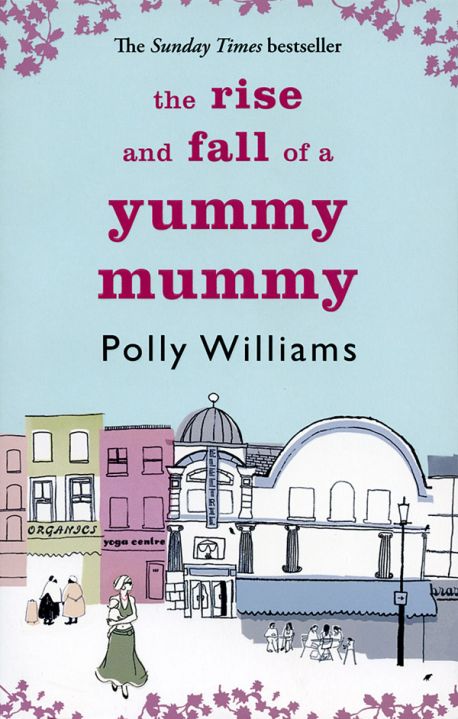 Amy Crane is in crisis mode. Many months after giving birth she still looks five months pregnant and can’t remember the last time she shaved. Or wore something other than sweatpants. Or had an orgasm for that matter. She suspects her boyfriend is cheating on her, but motherhood has brought up issues she has with her own childhood, and she’s wallowing in self-doubt. Then she meets Alice, a yummy mummy of the highest order, who takes it upon herself to revamp Amy’s image and her love life. As Amy transforms from scummy to yummy, and climbs out of depression, her libido awakens and then things get complicated…
While I appreciated aspects of this book — it’s colloquially written, our heroine is candid and self-deprecating, and it made me feel less like an alien ‘cause I’ve struggled (and continue to struggle) with my new identity as mommy and wife — I thought it was often glib, and consequently trite. I also found it 100 pages too long. Even so, this book is better at most at honestly covering the contradictions at the heart of modern motherhood.
 Victoria Jelinek