Filed under: Letters to Leo | Tags: Christmas, infant Christmas, Pere Noel, Rhone Alps, Santa Claus
 It was your first Christmas this year. Since spending the winter holidays with Danny (your cousin) when he was just under two years old, I’ve believed that Christmas is best when shared with children. The wonder and the magic of it all…the lights, the decorations, the gifts, the music, the stories, the cartoons, and the celebratory spirit shared with family and friends.
Your father and I took you to see the Christmas tree and Maire’s office lit in the town square, and enjoyed a glass of vin chaud while you shook your little legs in excitement at the crowds and watched all the kids running around. We took you to see Pere Noel as he sat in the back of a horse-drawn cart (really!) while you rather rudely stared at the people behind us smoking. We took you to see carolers and a flutist while you played with my scarf. We bought you your first sled and took you out for a wee slide in the first, big snow of the season while you chuckled as Oscar (our family cat) bounded around in the snow and “harrumphed” at us for making you wear mittens. We kept you up past your bedtime on both the 24th (your father’s Christmas) and the 25th (my Christmas) so that you could eat with us while you dangled a straw from your high chair for Oscar to play with.
While you certainly enjoyed the fact that your father, me and Oscar were with you all day, and you enjoyed the ribbons on and from the presents (as Oscar does), I’m not convinced that you understood or cared that it was Christmas, with all the attending activities, and that you got some new clothes and toys. You’d go nude if you could, my little savage, and anything to bite on will do to play with.
Being a spring baby like your cousin Danny (your four days apart in terms of the month born), you, too, will be just under two years old next Christmas. I’m positive the greediness of later childhood will not have set in yet (or ever, I hope) and like him, you’ll marvel at the lights, the decorations, the gifts, the music, the stories, the cartoons, and the presence and activity of family and friends. I look forward to our future Christmases together, particularly in the picturesque Alps, and to introducing you to this ‘season of the heart.’
Filed under: Travel pieces | Tags: Arne Jacobsen, Copenhagen, Danish, Danish Modern Design, Denmark, Dogme 95, travel, travel poetry, travel review
 Narrow 17th century apartment buildings, white-paned, in yellow, green, pink. Boats and ships. A stone mermaid. 1960’s suburban houses. White, low, thatch-roofed houses with tiny, narrow windows throughout the countryside. Churches with steeples dotting city and country. The Royal Guards, barracks, crown jewels, monarchy. A noble, honest history. Niels Bohr. Bikes, bike paths, lanes. Ponds, lakes and ocean. People swimming in cold seas. Jellyfish. Strong winds. Chill. Flat. Forests of Birch and Beech. Simple, elegant design. Bang & Olufsen, Arne Jacobsen, Poul Henningsen. High-concept boutiques and toy stores. Driving the speed limit. Mostly white. Mostly good-looking. Tall. Clean. Dull. New-looking cars. The happiest people in Europe. Julefrokost or Christmas lunch. Smørrebrød. Herring. Schnapps. Rice pudding. Tiborg’s yearly TV commercial. Food, services, clothes, expensive. Incomes high. Smoking indoors. Shoes off in the house. House-proud. Wood floors and good use of space. Fur coats. Tall. Large WWII style prams used by all. Strange letter combinations (Nyhavn?). Dogme 95. Great film directors. Movies subtitled, not dubbed.
Filed under: Letters to Leo | Tags: infant cold and flu, infant communication, Infant illness, WWII cribs
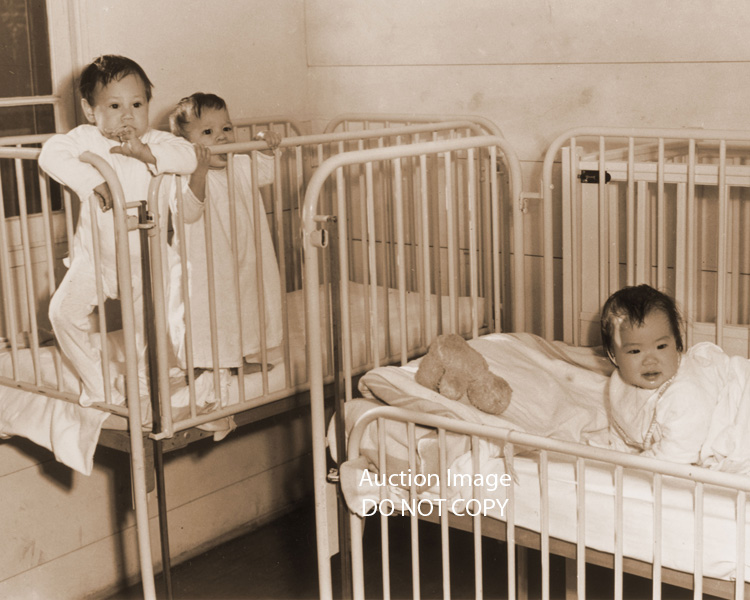 When we flew to Seattle (20 hours door-to-door, despite a direct flight from London), you didn’t sleep at all. Your father had returned home from his summer of work in the mountains with a virus that we were told in the USA, later, had ‘impacted’ in your ears during the flight, causing not only the virus itself but an ear infection. Your breathing was shallow. You were listless and sleepy all of the time. Your nose was alternately runny or clogged, requiring regular suctioning and steam showers. Your sleep was disturbed, to say the least. The doctors stateside gave you a round of antibiotics. Seven days later you weren’t better. I returned to the doctor and after much discussion because a new ‘vogue’ in the Western USA among ‘intellectual’ parents is not to give their children antibiotics (?! good job I’m not an intellectual) we decided to give you another round of a stronger antibiotic because of the flight home and potential discomfort for you. You were lying on the table in the doctors office playing with your toes when the two nurses came in with a shot of the new, more powerful, antibiotic to inject into each of your lovely, pudgy thighs simultaneously. You watched them put on their blue, plastic gloves with growing alarm in your eyes (oh, my trusting child!), then they shot you and your cried. I took you into my arms to console and feed you (it was the first time you bit me on the nipple, and this despite having six teeth for months!). They kept us in their offices an hour to make sure that you did not go into shock (?!). You did get better for the return flight, and were your jolly, calm, self again, but it was short-lived.
One night just after returning to France, you were softly crying and moaning in your sleep and could not be comforted. It was terrifying because your father and I didn’t know what was wrong. We changed you, I tried to feed you, but it was the first time you rejected my breast in your short seven months – truly alarming. Then you projectile vomited all over me and we took your temperature…it was 39.5 c (103.1 f). We dressed you warmly and put you (and a bottle of water and biscuits/cookies) into the car and headed immediately to the hospital. You were admitted. The cribs in the Paediatric ward were like something from WWII – iron, with high walls, reminding me of how a cartoon might depict a lion cage. They gave me a single fold-out cot to sleep in and you a dose of paracetomal, took your blood and your urine (three times, hey ho) but otherwise left us alone. Your father brought me a pizza to eat and the three of us played with ‘found objects’ such as a plastic cup from the vending machine, a straw, a spoon. You were a very good sport and didn’t cry. You even seemed better. You went to sleep, as did I (there wasn’t much else to do) but with the nurses coming in regularly to check your temperature, and the sound of children and babies crying, sometimes screaming, it was difficult going. So I took you into my little bed and while you’d intermittently look to make sure I was still there, you finally slept. Despite the circumstances, and you were released the next evening with a mild lung infection, it was a poignant night for me, the two of us on a single cot with a patch of bright light from the hallway, the sound of the nurses walking to and fro, the crying, and the two of us comforting each other through the night in a foreign hospital.
It’s horrible not being able to communicate with you now, or you to me, other than on a visceral and basic level (are you too warm or too cold? Are you hungry? Are you wet or soiled?) especially when you’re not well ‘cause it’s all guesswork – you can’t tell me where or what hurts….and it’s because of this that I write these notes to you.
Filed under: Letters to Leo | Tags: death, father, Jasper Johns, regret, son
 Today is my father’s birthday, your grandpa…he died the day before his and my mother’s 48th wedding anniversary…August 22nd, 2001. I was there. Me, (my brother and sister) M and J had given him a sponge bath the night before – rather ceremonial…that same evening, my dad’s last evening alive, though he wasn’t conscious, my ex-husband, T, had cooked salmon lasagna and brought a bottle of absinthe from GA (not sold in the states – it’s said Toulouse Lautrec, the painter, went crazy on it) and he, my mother and me drank that, firing up spoons of sugar to put into it, talking quietly. Your aunt J sang ‘Bohemian Rhapsody’ by Queen, in it’s entirety, to her little daughter, your cousin K, to get her to sleep on the couch nearby…her voice was like a flute. It was a lovely, somber evening. We had ‘shifts’ to administer morphine to my father – groups of two – and T and I went to bed with a shift to come up two hours later. But an hour after we went to bed, your uncle M came to the door of our bedroom and said that I was to come downstairs. I went and my father was dead. We stood in a circle around his hospital bed in the den, our arms around each other encircling him. I remember thinking he looked smaller….that maybe there was something to a soul ‘inflating’ a body.
I remember it started to rain heavily then…the hospice workers came in the dark and in the rain, in a type of white cargo van with no windows; it was a woman with really fried-out 80’s-type hair and a run in her pantyhose, and a man in a cheap suit. They put my father’s body on a gurney in a black plastic bag, zipped him into it and took him away into the rainy night. I went upstairs and cried and cried in bed. The next morning, I stood on the front porch, it was still raining, and called family and close friends to let them know what had happened. I’d borrowed a dear friend L’s old VW convertible bug (as I came from LA) and drove that day back to the airport in it, the rain coming through holes in the ceiling of the car – the whole world seemed to be crying.
T and I boarded a plane for LA. I was in shock. We couldn’t get seats together and no one would move to let us sit next together and it was started to dawn on me that my father had just died. Silent tears started rolling down my face. T was up and trying to convince the stewardesses to move us, to do something, that he needed to be near me to comfort me. I remember this man and woman who were flirting with each other across the aisle, the woman sitting next to me as I sat in the middle seat, saying ‘Oh dear! Now look at him, he’s walking around as we’re taxi-ing’ as a ‘dry’ sort of comic making-fun-of-others for the benefit of the man, and I quietly said ‘My father died today. He wants to sit next to me.’ This shamed them enough to stop talking but not to offer up their seat. Then quietly a woman at the window said ‘He can have mine.’ By the time I got to LA – only about a 2.5 hour flight – I was a mess and really regretted flying back ‘home.’ I called my family’s house in McMinnville from the LA airport and my mother put my father’s brother D – who had just arrived from Nebraska that day, but not in time to see his brother – on the phone. I remember being shocked, and soothed, and saddened because my Uncle D sounded exactly like my father – there was a certain accent, Midwestern USA, but soft, too…it’s hard for me to explain it but I’d recognize that voice anywhere…
In the weeks and months that followed my father’s death I had this irrational desire to talk to him for even just an hour…I would beg the gods I didn’t believe in for this hour. I wanted the opportunity to apologize for being such a willful, often unappreciative little brat growing up…I wanted him to know that I missed him, and that I’d not realized how much I would…that I was sorry for not appreciating him more while I still had the opportunity. Finally, I gave myself solace remembering three very poignant telephone conversations with my father that last year: one was from LA and I remember speaking to him about his living will, his wishes to ‘live and die with dignity’ and the humanity of this…the other was from Cologne and I’d had a breakdown feeling that I’d wasted my life, squandered the opportunities available to me, and he’d told me that I hadn’t, that he was proud of me…and the other was in McMinnville as he’d shown me where all his sketches and paintings were and complimented me on my understanding of his work. I still ‘sting’ at the memory of a couple of times that I was hateful in the wake of his being kind and thoughtful, vulnerable, particularly during his last trip to LA, but I couldn’t do more than I did at the time with what I knew…and I believe, I hope, that he knew that I loved him.
Filed under: Published film reviews | Tags: Doug Liman, Naomi Watts, Richard Armitage, Sean Penn, Valerie Plame
 Fair Game is based on Valerie Plame’s memoir in which Plame’s status as a CIA agent was revealed by White House officials allegedly out to discredit her husband after he wrote a 2003 New York Times op-ed piece saying that the Bush administration had manipulated intelligence about weapons of mass destruction to justify the invasion of Iraq.
Plame’s career was essentially ended when Washington Post journalist Robert Novak, with information obtained from Richard Armitage at the US State Department, revealed in his column her identity as a CIA operative. This story is terrifyingly relevant. It is also very frustrating – and this is a credit to the compelling story, the acting, and the direction – to watch as the Bush (2) administration road roughshod over anything, and anyone, in their way.
Starring Naomi Watts (Mulholland Drive, 21 Grams, Eastern Promises) as Valerie Plame, and Sean Penn (Harvey Milk, The Game) as her husband. As mentioned, the story is relevant in its depiction that too much power corrupts, and the direction is well-paced by Doug Liman, who also directed The Bourne trilogy.
Filed under: Published film reviews | Tags: Henry Lee Lucas, Macabre cinema, mockumentary, serial killers
In honour of Halloween and all things spooky, I’ve chosen to review two very scary films, C’est Arrivé Près de Chez Vous (Man Bites Dog) & Henry: Portrait of a Serial Killer: one is Belgian, one is American; both are pseudo documentaries on serial killers (‘mockumentary’ does not seem appropriate here); both take place in small towns; both are well done technically; both are absolutely grisly; and even as both raise the question “why make a film on such morally reprehensible subject matter?” they are also original and memorable films.
C’est Arrivé Près de Chez Vous (Man Bites Dog)
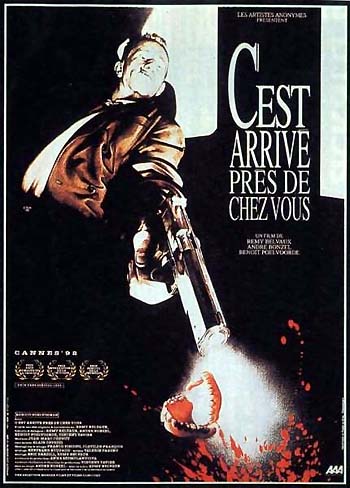 A group of student filmmakers make a ‘fly-on-the-wall’ documentary about a serial killer and are gradually drawn into his perverse world. The serial killer expounds on art, music, nature and society as he kills mailmen, pensioners and other random people.
Written and Directed by Remy Belvaux, who also co-wrote the script with Angre Bonzel and Benoit Poelvoorde, this is arguably one of the most disturbing films ever made. Pitched as a documentary chronicling the exploits of a Belgian serial killer at work, rest and play in his provincial home town, the film’s grainy black-and-white photography, hand-held camerawork and messy murders make for a sick and twisted piece of work that haunts the consciousness long after you’ve finished watching the movie.
While initially the film is a searing black comedy that questions the complicity of the media in its portrayal of violence, it degenerates into a numbing series of increasingly shocking scenes. This is a harrowing and uncompromising feature debut that is definitely not for the squeamish.
Henry: Portrait of a Serial Killer
 Henry, a serial killer, shares an apartment with Otis. When Otis’ sister comes to stay, both sides of Henry’s personality emerge and there are fatal consequences.
Henry seems to be an ‘everyman.’ He’s also an ex-con who drifts from city to city. He’s lodging with an old prison buddy, Otis, when Otis’s sister turns up to stay and she and Henry form a close relationship. Meanwhile, Otis discovers Henry’s dark secret and becomes his willing partner in murder.
The plot (though there really isn’t one, Otis and Henry simply go about their lives with detachment) development of Henry and Otis partnering up defies believability given the solitary nature of a serial killer. The film, inspired by the true case of Henry Lee Lucas who claimed to have murdered over 300 women, is truly shocking and sick. All that said, the script is spare and authentic; it’s a masterful evocation of small town low life; and the acting is performed with brilliant restraint, truth and power.
Filed under: Published film reviews | Tags: Brian de Palma, Chicago Prohibition, David Mamet, Kevin Costner, L'humanite, Robert DeNiro, The Triple Entente, WWI
This month I’ve chosen to review two gangster films for you to compare and contrast. Both stories are based on true events that took place in the early 20th century; both films are adapted from popular TV series in their respective countries, the US and France; and both films’ groups of heroes have catchy nicknames – Les Incorruptibles and Les Brigades du Tigre.
Les Incorruptibles (The Untouchables)
 FBI agent Elliot Ness (Kevin Costner) is going to bring down Al Capone (Robert De Niro), a powerful gangster and bootlegger in 1920’s Chicago.
Based on a 1950’s television series, which was itself based on the true story of the treasury agents who took on organised crime in Prohibition Chicago, this is an amazing film that in ‘old school’ Hollywood fashion, is a collaboration of great talent: it’s written by David Mamet with simply drawn heroes and villains, and crisp, clever lines; it’s directed by Brian De Palma and shot on an epic cinematic scale; the soundtrack is Ennio Morricone; Giorgio Armani designed the costumes; it stars Sean Connery, always wonderful, and who won an Oscar for this role; Kevin Costner is perfectly cast as the classically good looking ‘everyman’; and De Niro–in typical fastidious method acting, took himself to Italy just before filming to devour pasta, bloating out his face to match the famously lurid beach-ball head of Al Capone, and found the tailors that Capone used and had identical suits and silk underwear fitted–is pitch perfect as Capone.
Even as this film has a great script, exquisite direction, superb performances, and creates an authentic feel of 1920’s Chicago, it’s fundamentally a hugely entertaining crime drama and simple escapism.
Les Brigades du Tigre (The Tiger Brigades)
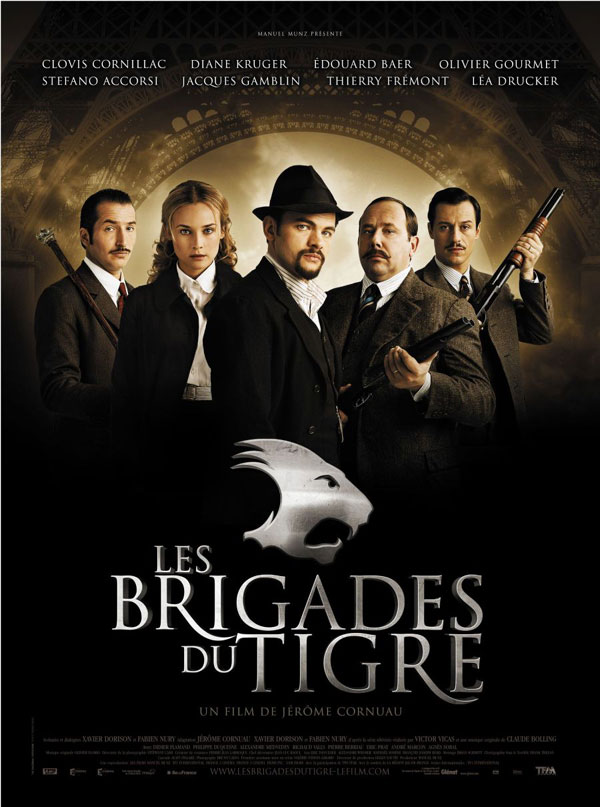 Set in 1912, this film is about the exploits of France’s first motorized police brigade, nicknamed the Tiger Brigades, and in particular, the daring group’s first assignment to neutralize crime leader Jules Bonnot and his gang of anarchists.
Based on a hugely successful French TV series in the 1970’s, the script is well-written (Claude Desailly, who also wrote for the TV series) and blends huge parts of history and historical figures into the film, such as Minister Jean Jaures and his journal L’Humanite; The Triple Entente; the Russian Revolution & Russian Loans to France; and the ‘premices’ or reasons/situation of WWI. And the direction, by Jerome Cornuau, covers the emergence of a new type of criminality, the innovative ways to fight this new type of crime, and the rivalry between the Brigades, the Parisian Police and other Prefectures throughout France.
While the ending felt abrupt, as though they’d run out of time, this is a fun, informative, and well cast film well worth watching (also, there’s meant to be a sequel in the pipeline, so one must catch up!)
Filed under: Published film reviews | Tags: Lake District, Michael Winterbottom, Rob Brydon, Steve Coogan
 Steve Coogan has been asked by The Observer of London to review six of the finest restaurants in Northern England. He plans to take his pretend girlfriend Mischa, but after she backs out he is forced, with demonstratable reluctance, to take his best friend and source of eternal aggravation, Rob Brydon.
The Trip was a six-part BBC2 series last fall, and almost everything – the title, premise, the duelling funnymen (also from Tristram Shandy: A Cock and Bull Story, an earlier film of Michael Winterbottom’s) are the same except for the abbreviated length for the movie and some gags consequently lost in the process of shortening. In between the food, the vocal caricatures and Lake District landscapes, the duo goad each other with smiling insults and prickly jokes, all the while comparing their successes. Sometimes the camaraderie edges into aggression but this is soon stifled by laughter and good humour; lots of tears and laughs.
Filed under: Published film reviews | Tags: Berlin Film Festival, Best British Comedy, Cannes Film Festival, Joe Dunthorne, Richard Ayoade, Sundance Film Festival, Toronto Film Festival
 Oliver Tate is besotted with a feisty girl in his class at school, Jordana. But as he embarks on his first relationship, he also frets over the troubles in his parents’ relationship, problems exacerbated by one of his mother’s exes moving in down the street.
This is Richard Ayoade’s directorial debut and he has hit it ‘right on the money’ with savvy visual references, a good script and cast. Adapted from Joe Dunthorne’s novel, the script is humorous and sly. Aiding the script are well-cast actors in all of the roles whose characters offset the quirky, dark tendencies of the movie with a warmth and likability.
A coming of age tale that blends cool, quirky comedy with warm-hearted drama.
Filed under: Published film reviews | Tags: best actress, Cannes Film Festival, Charlotte Gainsbourg, Danish film, Kiefer Sutherland, Kirsten Dunst, Lars Von Trier
 Justine (Kirsten Dunst) and Michael (Alexander Skarsgard) are celebrating their marriage at an extravagant party in the home of her sister (Charlotte Gainsbourg) and brother-in-law (Kiefer Sutherland) just as the planet Melancholia is heading towards earth. As the planet threatens to collide with the earth, the two sisters find their relationship challenged and their sense of the world and their place in it in question.
Danish Director and Writer Lars von Trier is no stranger to difficult subject matter as seen in his previous films Dogville, Breaking the Waves, Dancer in the Dark and The Kingdom. Melancholia is about the tension between appearances and ‘reality,’ happiness and sadness, ‘good’ and ‘evil.’ Von Trier is also a man who upsets people both with his work and his words – it premiered at the Cannes Film Festival this year (May) where it won Kirsten Dunst a Best Actress Award (a long way away from her role in Spiderman) even as Von Trier was ejected from the festival for offending someone with something he said.
However, as with Von Trier’s previous films, the work speaks for itself: complex, gorgeously shot, beautifully scored, and wonderfully acted, this is a very good film.
 Victoria Jelinek