Filed under: The Baby Diaries | Tags: accompagnateur, assistante maternelle, babies, Chamonix, creche, existential struggle, exotic, famille garder, France, motherhood, mountain leader, nanny, nursery, P.J. O'Rourke, toddler
Everybody knows how to raise children, except the people who have them.
P.J. O’Rourke
 I took my baby boy to the lovely Welsh assistante maternelle today. She’s still undecided about whether she’ll return to being an assistante maternelle after the last three years in which she’s spent under the famille garder while raising her young son. Even so, she’s kindly agreed to watch my boy for a few hours a day, a few days each week, while my husband is away working as an accompagnateur, and I’m grateful.
So today I dropped him off at hers for the first time, went home to write, and attempted to have something to eat at a leisurely pace. But all I could think about was how I really am a different person now that I’ve had my baby boy and this unsettles me. I feel as though I’m more emotionally tender, and consequently more vulnerable than I’ve ever been in my entire life. A little person depends deeply on me now and I am completely responsible for him. I realise, now, that my life has been relatively carefree thus far. I’ve cared about jobs, work, boyfriends, husbands, sure, but ultimately I’ve always been free to do as I wish. To go out to a dinner at midnight. To sleep till 10am. To miss the last train and take the night bus home or stay with friends. To travel to exotic places with my only concern being to get the correct inoculations beforehand. To leave a job or a place or a man because I’m unhappy. To do most personal things on an impromptu basis. To do most things selfishly.
I’d been so cavalier before having my boy about putting him into care as soon as it was possible so I could resume my professional interests. I was so cavalier about taking him with me on travels to places I want to visit and revisit in the second and third worlds. But now that he is in day care and not with me, I find myself feeling nervous, agitated, and I have an enormous, nebulous sense of guilt. As for traveling to obscure locales with him, I think ‘No way!’ I suddenly fear excessive heat, uncomfortable lodgings, bad water, food poisoning, malaria, typhoid and hepatitis!
I’m not the easy-going mother I’d hoped to be, taking my child everywhere with me and not particularly concerned about dangers, and more carefree. I fear I am conventional. That said, maybe things will change with time as he ages and becomes less vulnerable? Although, from what I hear from my elders, one’s child never really seems grown-up even when they are. Maybe as I learn to trust that my boy is happy in care, or at least not unhappy, I will be able to relax and concentrate on other things. Maybe with time I’ll better remember warm days and nights, exotic food, and the stars of the Southern Hemisphere, rather than its heat, poverty, and potential for bad stomachs.
Filed under: The Baby Diaries | Tags: baby in France, Chamonix, French Alps, French babies, Geneva, happy mothers, hovering mothers, infant, motherhood, newborn
It’s the friends you can call up at 4am that matter. Marlene Dietrich
 My close friend of 20 years has come over from London to help me with the baby while my husband is off to work as an accompagnateur en montagne for the first time this summer season. E was a highly paid nanny for many years, working for an illustrious broadcaster and a journalist, respectively, before moving to another profession. Shortly after arriving at my door via transfer from Geneva, she exclaimed that she’d expected me to look like the crazy cat woman from The Simpsons, but was relieved to discover me showered, dressed, and composed. She told me that as she’d been traveling from the airport, gazing out the window of the van, she’d kept noting it was ‘gorgeous, gorgeous scenery, yet completely not Victoria’s natural habitat.’ C’est vrai, mais je dois etre ici pour maintenant.
E happily cooed and exclaimed over my ‘beautiful, beautiful’ boy, and he immediately took to her with her large bosom and animated face. We went out for lunch and a walk, which is a mission with an infant in tow because one must bring every conceivable item one might need for an excursion. Lunch was a good catch up. E made me laugh by not even attempting to speak French with the waiters, instead, she irreverently mimed her needs, such as putting her hands to her lips and making the noise ‘num, num, num, num’ to indicate she wanted to eat. I work so hard to be polite to the French, aware of their disdain for the outsider, and am often met with blank or disdainful looks for my efforts. When I began breastfeeding the boy at the table, E quickly raised my scarf to shield the world from my breast, which she declared is like a woman in National Geographic: “Jesus H Victoria! The size of that nipple! It’s the size of my little finger! Good grief woman, cover that up, you’ll cause a traffic accident!’ That said, she stopped nursing her own boy when he started giving her (what she thinks were) lascivious looks. After lunch and during our walk, my boy pooped three times. I worried we’d run out of nappies and wipes and have to wipe his bottom on the grass, or dip it in one of the basins provided in the countryside for the animals to drink from.
Over the course of her stay, E has been most useful as a sounding board for my thoughts and worries. I can completely be myself with her at a time when I’m not sure who I am anymore. She advocates a mother maintaining her sense of self and her own interests, even as she puts her child, or children, first, which I’m receptive to. E encouraged me to have fun with the boy, and to do things the way I want to, and when I want to, in order to ‘create the child you want.’ To this end, she’s encouraged me to let him cry and not to jump at his every cry, in order to retain my sanity and to allow him to soothe himself. She’s been teaching me to get him to sleep alone. Thus far, I have had to hold him, or sit touching him while he falls asleep, and its almost as though he has a sensor because he realises when I move away and then wakes up. E has shown me to sit with him for a moment or two, coo and talk softly to him about sleep, and then slowly move away. The first couple of times I’ve tried this he cried, but E encouraged me to stay away for five minutes, go in, assure him, then leave, and repeat in ten minute intervals. It’s really difficult to hear your baby cry for you and not to go to him, but it’s well worth the liberty of being able to go and do things while he sleeps. That said, I still check on him every two minutes, despite a baby monitor at hand, causing E to laugh at my expense and telling me ‘You won’t be like that for long! You’ll let sleeping dogs lie soon enough!’ Further encouraging some semblance of autonomy for us both, E has also taken to feeding the boy with formula once in the night so that I can sleep. This is very helpful, I feel revived, and my boy doesn’t seem to mind. During a trip to Italy, she taught me to simply let him cry when we’re driving, particularly as stopping just makes a journey tedious. Knowing I’d need some logic to back up my doing this, she would remind me to note the checklist: ‘Is he hungry? Is he sullied? Is he ill? Is he cold or hot? If none of these apply, he just wants you and there’s nothing to be done for it while you’re driving…’ I do see the sense that an attentive mother is not the same as a hovering mother. And that a happy mother contributes to a happy baby.
Filed under: The Pregnancy Diaries | Tags: birth, c-section, caesarean, Chamonix, France, iodine, midwife, midwives, sage femmes, Sallanches
“Don’t tell your kids you had an easy birth or they won’t respect you. For years I used to wake up my daughter and say, “Melissa, you ripped me to shreds. Now go back to sleep.” Joan Rivers
 I’m actually in the hospital room in Sallanches waiting for them to take me to the operating theatre for my C-section. My husband and I got to the hospital at 6am with the operation scheduled for 8:30. I had an iodine shower, necessary in France before my procedure, and not one of my finer moments. I felt like a prisoner being scrubbed. My husband did the iodine as I’m too huge to bend and can’t see my nether regions, so it was a very practical wash. While he was doing it in this little bathroom to the side of my hospital room, there were nurses, sage femmes, and the cleaning woman, who came to the door of the bathroom to enquire about this-or-that, inform us of something, or simply to take the rubbish bin.
My good doctor with the great ham hands who has overseen two of my three pregnancies, came in from Chamonix to do the procedure. While I’m sceptical about the size of the incision he’ll leave with his huge hands, I am touched that he bothered to do this because he’s so busy. It’s weird to see him outside his office and particularly in scrubs. He tells me that I’ll go into the operating theatre. I’ll be given an epidural. The incision line will be so tiny and low that I’ll be able to wear a bikini again “if you lose your baby weight,” he notes. The baby will be pulled out and he’ll sew me back up. I will not be given the baby after the operation. Instead, it will be given to my husband while I go into a recovery area for two or three hours. The French believe in the importance of skin-on-skin after birth, so my husband will be asked to hold and keep the baby against his bare chest while I am in the recovery area. Knowing my incompetence regarding babies, he assures me the sage femmes will instruct me how to do everything from nursing to changing his diapers. I let him know that I’m prepared – I brought an eye mask, earplugs, and sleeping pills.
It’s 9:30am now. There is apparently some kind of emergency that takes precedence over me (imagine!). As a result, my good doctor is arguing with the staff and trying to arrange a new time. He’s just informed me that he will have to return to his office and begin his workday. He’ll leave me his mobile number. “You’re going to leave me with all these Frenchies? I don’t know anyone here!” I start to panic. His manner is calm, competent and jovial. “I’m going to have a baby by the end of the day for god’s sake!” I remind him. “Peut-etre…” he jokingly replies. Grumpily I say, “Forget your office hours. This has been two years in the making.” He smiles and reminds me that he’s French and they’ll take care of me or else have him to answer to or worse yet, a lawsuit waged by an American woman. A man with a thick gold chain around his neck and a lot of dark chest hair unfurling upwards from his white coat walks in. My good doctor introduces this man and tells me that he will be doing the procedure and he’s a very fine doctor. I’m too stunned to even catch the gold-chained-doctor’s name and too scared to ask him to repeat it. He doesn’t speak any English. He’s wearing a gold chain for god’s sake! And that chest hair doesn’t seem hygienic! I have to do an iodine scrub and this man has a bale of black hair emerging from his whites? I’ll also have to concentrate on French at the same time a baby is being pulled out of my womb like a sleeping bag from its case. Rather rudely, I smile up at him, tell him I have no questions other than to be informed of when it will happen, and continue typing on my laptop. I hope he views this as typically French behaviour and doesn’t go light on the pain relievers in retribution.
It’s 12:30. I’m starving but they won’t allow me to eat before my procedure. Dangerous to leave a hugely pregnant woman hungry like this. I’ve been here for six hours and I haven’t eaten since yesterday’s dinner. I might bite someone’s hand or sneak (not too stealthily mind you) down to the candy machine to get a Snickers. The doctor with the gold chain has just come in. They’re going to give me a C-section at 1pm. He indicates a gurney in the hallway and asks me to get on top of it. It’s time. I hope to whatever fates and gods there are that the baby is fine and that all goes well. I’m scared. It hits me that I’m about to deliver a baby. So much can go wrong. And now I don’t have my good doctor there and my husband is not allowed into the operating theatre. Tears have started rolling down my face. “Be strong, Victoria. Try to have faith that things will turn out well,” my husband tells me (easy for him to say). I’ll close my laptop and say “good bye” for now.
Filed under: The Pregnancy Diaries | Tags: Aldous Huxley, Chamonix, collectivism, Dystopia, Dystopian, environmental disaster, France, George Orwell, global politics, Hollande, hypocrisy, individualism, Ray Bradbury, societal avarice
Be the change you wish to see in the world. Mohandas Karamchand Gandhi
 One of the reasons I was reluctant to have a child was because I worried about the state of the world. My husband told me these worries were a rationalisation for my greater concerns like my not wanting to forfeit naps. He argued that negative global events are precisely the reason that thoughtful individuals should have children. But as I go into the last several weeks of my pregnancy I find myself fighting my previous trepidations about bringing a child into this world which I believe is only getting worse. I’m a glutton for news, even as it upsets me (both the topics and the reporting). My father used to advise me not to take it all so ‘personally,’ but I find it all to be a personal affront because I find all of the worries and incidents of the world to be indications of greater philosophical issues such as selfishness, avarice, corruption, hypocrisy, inequity and aggression.
Globally, I see the fact that the Syrian leader won’t step down, even as his Russian allies tell him the situation is untenable and he should help implement a new regime and transition government, as the sign of universal greediness and hunger for power regardless of which country one cites. Many people in the Philippines are living and being schooled on houseboats due to rising water levels (and I won’t even go into the animals and vegetation and desertification throughout the world) yet apart from a few developed countries like Denmark, there doesn’t seem to be any real initiative to aid the environment by using sustainable energy supplies, which I see as a sign of universal selfishness and lack of foresight because it seems no one wants to compromise their way of life even in small ways. There was that huge shooting in the US last week of almost 40 people – there are now so many families grieving – and gun sales went up in the days that followed. The American government signed in a new fiscal deal, and while it’s certainly good that something has managed to happen in an ideological bi-partisan country, the very rich – and even the middle and lower classes – do not seem to object to the fact that there is not health coverage and educational opportunities for all, which can only be had with more money coming into the coffers, which means higher taxes. If the US continues in this manner of individualism and capitalism at all costs, it will not be able to proclaim that it’s the land of opportunity for all. Yet other countries are equally as bad. Since Hollande proposed the 75% tax for the upper 1%, 5000 rich folks have left the country, even Gerard Depardieu, who owes the French people for his money and fame. In the UK, despite the fact that banks were bailed out by the government, which is ostensibly for the people, the banks have not passed on their savings to customers in recent years and despite their rising profits. And, while many folks are not able to live in major cities like London anymore, meaning they often must commute for work, transit costs in the UK have gone up 50% in the last ten years.
Perhaps opportunity and resources only for the few is the crux of the matter? Capitalism versus Socialism? Perhaps it’s a sign of collectivism versus individualism run riot? Is this the fault of Thatcherism and Reaganomics? Is it simply human inclination? I often see people operating in their own interests to the detriment to others in all manner of ways on a daily basis even in a little mountain town like Chamonix, particularly during the high season when there are many holiday makers: no one wants to cede their way on the roads, making it dangerous in the snow and ice; no one wants to give cuts in the cue at the grocery market to a heavily pregnant woman with two items or a young mother with a toddler when they’ve just fought to get their huge grocery carts full of food; folks don’t clean up after themselves in the cinema, or they throw rubbish on the ground, or they don’t pick up their dogs poop; and I was recently told by a few women here that I was attempting to discuss politics with that they don’t know who Romney was/is and they don’t ‘bother’ to read the papers or watch the news ‘cause it’s ‘too depressing.’ Indeed. Why be informed? Why vote? Why should we look out for anyone else’s interests when it’s so damn hard to assert our own in this rat race of a world? I see the dystopian novels of Philip K. Dick, Anthony Burgess, Ray Bradbury, Aldous Huxley and George Orwell moving from science fiction to reality. The only thing that is keeping me going right now is another thing my father told me before he died – that we cannot affect others because they don’t want to be proselytised to, but we can live our lives the way we would like everyone to live their lives. Simple advice that’s not easily followed…it’s hard to remain patient and kind and to take the ‘right action’ when one is tired, or worried, or over extended, or highly emotional and pregnant!
Filed under: The Pregnancy Diaries | Tags: Chamonix, dentist, doctor's offices, France, London, mature pregnancy, pregnancy, pregnancy in France, toothache, waiting rooms
I told my dentist my teeth are going yellow. He told me to wear a brown tie. Rodney Dangerfield
 It seems as though I’ve spent this entire pregnancy in doctor’s waiting rooms. Even so, I’ve had a toothache for about six years and if there’s one pain I can potentially get rid of right now, then I’m going to try.
Several years ago in London I had a cavity filled. I didn’t have a dentist there so I ‘simply’ went to one of the Boots with one. What a mistake. The dentist carved my tooth so deeply and so widely there was barely any tooth left and it still hurt. On my next visit to the U.S.A., I visited the family dentist. I’ve had the same dentist for over three decades, and when I’ve visited other dentists where I’ve lived, they have always commented on the positive state of my teeth…I attribute this to my good doctor, because I eat too much sugar and am not conscientious about flossing. My mother tells me she and my father prepared me for my first visit to the dentist, aware that I might be freaked out and be a bother to him. Instead, I promptly fell asleep in the chair. The dentist told my mother afterward I was “the most relaxed child” he’d ever seen. I’d like to believe this was true, but I attribute this to the fact that as a child my parents tried an “experimental method” of sleeping with me in which they would allow me to tell them when I was tired and wanted to sleep…my mother admits I regularly would “go and go, then simply slump somewhere and sleep.” Nice. During this last visit to the family dentist a year ago, he dug up the cavity and replaced it, telling me he’d filled in some “space” created between the teeth so I wouldn’t get “food packing” in between the teeth which causes pain (yech!).
But the pain has remained, so I went to the dentist in Chamonix recently. My body is becoming huge, my stomach is regularly cramping, my eyesight is blurring, and I have regular heartburn, so if there’s a pain I can do something about then I’m going to do something about it. Except that I couldn’t really. But it took several visits to ascertain this. I went the first time and she explored the tooth but was hesitant to take x-rays because of my pregnancy. She asked me to get an “okay” from my doctor regarding her taking x-rays and kindly booked me in for an appointment (it took me six months to get one in the first place!). My good doctor looking after my pregnancy replied when I asked whether it was okay, “Bof! Bien sur!” However, the dentist did not believe me upon my next visit to her and telephoned his office. Of course he said it was fine. She took the x-rays and declared my roots were dying, however, it would be best to see if we could revive them rather than diving into a root canal. At the next appointment, she gave me local anaesthesia twice (I don’t like pain, but I couldn’t drink my coffee afterwards, I felt as though my lips were paralyzed) and dug up the old cavity and filled the roots with clove derivatives…it felt nicer, and I did hope the tooth would revive. I returned this last week and discovered the roots are still dying and it will be best to do a root canal, but she doesn’t want to do this while I am pregnant. So, she took out the old cloves and packed the roots with more cloves and sent me on my waddling way, instructing me to call her when the wee one is out. Between the weekly visit to the laboratoire for blood samples, the weekly visit to my doctor for a check-up and an ultrasound, the intermittent visits to specialists and recently to the dentist, I feel as though I’ve spent my entire pregnancy in a doctor’s waiting room.
Filed under: The Pregnancy Diaries | Tags: advances, boobs, bottom, breastfeeding, Chamonix, France, labor, labour, pregnancy, pregnant, touching, unwanted touching
‘I allow no one to touch me.’ Paul Cezanne
 It’s the weirdest thing, but ever since I’ve looked obviously pregnant, people have been touching it, often without asking to first! This goes hand-in-hand with people of all kinds offering me unsolicited advice about my pregnancy and tales about their own.
I’ve always been a ‘touchy-feely’ American type – affectionate, demonstrative, and open– but I’ve never been one to touch someone that I don’t know, or even to touch someone that I don’t know well. Yet people are touching my pregnant mound as though it’s the most natural thing in the world to do, and I feel like a prude that it bothers me so much. I feel like asking them if they’d also like to feel my seins…or, perhaps, my newly rounded cul? But I fear that this may come across as rude. And it goes against all the non-confrontational qualities that I’ve learned after living over a decade in England. I realise that folks touching me have good intentions, are excited about pregnancy in general, and I realise that pregnancy has become a communal property sort-of-thing in recent decades (whereas prior to the 1970’s, women often stayed at home, were hidden while pregnant, or wore modest outfits to hide their pregnancy in public) prompting the touching and the advice, but what to do if it makes me uncomfortable? And it does.
I read one blog about it and the author states that she has directly asked people to stop touching her belly, at the risk of being a ‘kill joy,’ because it’s presumptuous and it ‘creeps’ her out. I can’t quite say this even as I’d like to. She also writes that she doesn’t want the unsolicited advice or the myriad of questions about her pregnancy and birth because she’s not interested in justifying every decision she makes on her pregnancy, birth, and parenting with a long explanation. Again, I completely empathise with the sentiment, and like the approach, but it’s not me…normally, anyway…perhaps with increased hormones and fatigue I can muster the couilles (so to speak) to ‘just say no.’ Then I read from Dr. Sears’ website about the unwanted touching of the belly. A Dr. Bennett writes that it’s important to try to emotionally guard yourself against advances, meaning that even if you feel your life is an open book because you’re pregnant, you can send off ‘vibes’ to folks that you do not invite intimacy in this way. She advises, however, to be on the safe side and put as much physical distance between yourself and others as is possible – remembering your head may be a good distance away from the next person on the train, but your belly isn’t.
Regarding the intimate questions and unsolicited advice, such as whether or not the conception was natural, or whether I plan to have a C-section, or to breastfeed, Dr. Bennett advises a pregnant woman to answer vaguely and to deflect with a question towards them. Dr. Bennett writes: ‘I think women in general, but pregnant women in particular, feel a certain sense of vulnerability that makes us think that just because someone asks us a question, no matter how inappropriate it is, we have an obligation to answer it. But in fact, this just isn’t true.’ So, when others share their horror stories about labour, I’ll simply muster up my courage and tell them that I’ll look forward to my own horror story, thank you very much.
Filed under: The Pregnancy Diaries | Tags: big boobs, big breasts, boobs, boredom, breasts, Chamonix, drinking, drunk, lactating, London, maternity bras, pregnant abstinence, pregnant drinking, Rodney Dangerfield
‘I found there was only one way to look thin: hang out with fat people.’ Rodney Dangerfield
 Given the ‘all clear,’ or ‘tout va bien,’ from my doctor regarding my pregnancy last week, I headed to London to visit friends. While there, I’ve experienced a metamorphosis of my body and in my perspective.
I left Chamonix with a slight curve to my belly – nothing particularly noticeable unless you know I’m pregnant – and suddenly my stomach has exploded and I look pregnant! It’s as though I’m a cartoon figure that has blown up an inflatable belly through my thumb or something. My boobs, usually very small, have suddenly become full and round. I walked into a friend’s house and she exclaimed ‘Jesus, Victoria! Wear a bra! You look like a sow!’ Being flat-chested, and to this point, not in need of a bra, I’m startled to discover that I’m, arguably, obscene now without one! In my shame, I scurried to Marks and Spencer and thankfully had a solicitous friend with me to help me to get the right size, so I’m now contained and respectably pregnant.
Being pregnant, I’m not drinking. I don’t judge those that do…if I were younger and didn’t have a history of miscarriages, I’d have the odd glass of wine, but I’m not taking chances given my age and circumstances. As a result, I’ve been dashing about meeting friends and acquaintances for the inevitable lunches and dinners, and what I’ve discovered is that many of my pub buddies (aka acquaintances) are dead boring when I’m not drinking. Worse, these folks are irritating, and there is nothing worse than being boring and irritating. I’ve suffered through so many ‘existential’ confessions, sober, this last week, that I’m wondering if I was as bad pre-pregnant, or whether it’s truly ‘cause I’m not in an altered state? Or, rather, not in the same altered state brought on by many late nights and midnight falafels…
Filed under: The Pregnancy Diaries | Tags: Chamonix, complications in pregnancy, diabetes, France, gestational diabetes, glucose intolerance, glucose intolerant, high risk pregnancy, laboratory, pregnancy, pregnancy tests, tests
“Seize the moment. Remember all those women on the Titanic who waved off the dessert cart.” Erma Bombeck
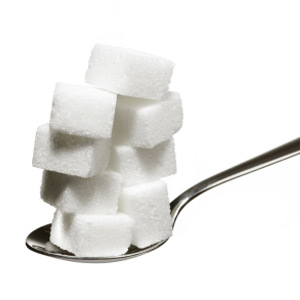 It turns out that my glucose test for gestational diabetes reflected high sugar levels. I’d taken it earlier than most women ‘cause I’m over 35 and have a history of diabetes in my family. Between 2-10% of women develop gestational diabetes in pregnancy, making it the most common health problem for expectant mothers. Apparently, and if I’ve understood my good doctor correctly (who good naturedly was annoyed that I asked for an explanation – “Ah, if only you were French…”), when you eat, your digestive system breaks your food down into a type of sugar called glucose. Glucose enters your bloodstream and with the help of insulin – a hormone that your pancreas makes (where’s my pancreas again?) your cells use the glucose as fuel. But, if your body doesn’t produce enough insulin, or if your cells don’t respond well to the insulin, too much glucose moves into your blood instead of into your cells…the ones that convert it to energy (whew!). Hormonal changes in your body during pregnancy can make your cells less responsive to insulin.
If I do have gestational diabetes, I’ll have to alter my diet, and have more prenatal visits to monitor the baby’s growth, movement and heart rate. If the baby becomes too big nearer to my due date, I’ll be induced, or have a C-section. It isn’t definitive that I have it…only 2/3rds of women who test positive on the first test actually have it. I knew that I was eating too much sugar but I can’t help myself; I’m a total Coca-Cola addict even as I know that Coke can take blood off of pavement, take the crud off of your car battery, and render mince meat soaked in it overnight, to shreds (this knowledge is courtesy of a Russian friend who said that they did these types of experiments in his chemistry class in secondary school in 1970’s-1980’s Soviet Union to prove, further, that products from the West are poisonous). Coke is the only bad thing I do now, and I don’t have too much of it…I’m even drinking decaf for goodness sake, but now this…
Anyway, I was ordered to take the longer, more definitive exam called a ‘glucose tolerance test’ this week – my results will be back next week. I went to the lab – they’ve seen me every week for the last four months (and even before that for the two other pregnancies) and still the receptionists are not friendly to me! I couldn’t eat or drink for fourteen hours before I went, so the last meal I had was dinner. I went in, they took my blood, and then gave me 50g of a very nasty sugar solution that tasted like a soda pop you’d buy in South America. I’m told that it’s sweeter than the first test ‘cause the solution is, actually, twice as sweet and ‘cause there’s fasting before. An hour later, they took another blood test. An hour after that, another blood test. An hour later, one more. All the while I had to stay in the lab reception – they wouldn’t even let me leave for a wee walk ‘cause they didn’t trust me not to eat or drink! To be fair, I might have. I’m ashamed to say I carried on like a baby. My bestie and I have been joking about my ‘need’, and other expectant mothers’, to eat for two as an excuse for pregnant women to eat like pigs…but I was frantic without food! I started crying after the first hour and the second prick, and I never cry – I felt so sick, shaky and faint. By the second hour and the third prick, the lab tech took pity on me (or the receptionists complained about my visible misery) and let me lie down in a room by myself where I cried and felt sorry for myself. Jeez louise. No ‘stiff upper lip’ on this one. Maybe I am what my good doctor says, a ‘woosie’ (or as he pronounces it, ‘ah wooz’).
Filed under: The Pregnancy Diaries | Tags: assistante maternalle, Chamonix, child care, creche, Elisabethe Badinter, feminism, France, French childcare, guilt, modern mothers, nanny, nu nu, The Guardian, The Washington Post, womens rights
“Guilt: the gift that keeps on giving.” Erma Bombeck
 I recently went to the two crèches in the valley and signed my impending baby up for care – a crèche is a nursery from three months of age till they walk. There are only ten spots in each. Both tell me that their waiting list goes back to 2008!
Filed under: The Pregnancy Diaries | Tags: alpine, alpine guides, birth, Chamonix, climbing, France, mont blanc, mountain cimbing, outdoor life, pregnancy, risk in pregnancy, risk sports, single mothers, summer sports, winter sports
‘Courage is rightly esteemed the first of human qualities…because it is the quality which guarantees all others.’ Winston Churchill
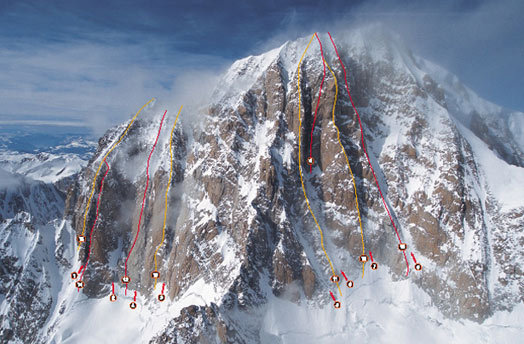 Most of the women I’ve met in Chamonix are here because of their husbands. Sure, they may like it here and have some semblance of a community, but it’s because their husbands are keen outdoorsman, or simply want to be here, that they live and remain in Chamonix, away from their families. My circumstances are the same. Within this breed of women in the Chamonix valley, are the alpine guides’ wives. The guides work very hard throughout the winter and the summer. Their primary work is hauling ‘punters’ up and down the Mont Blanc. They’ll be gone for several days at a time for a given tour, sleeping in huts and climbing by day. Then they’ll return home, unpack, rest a little (though many of them are so avid they go out and cycle or ski, depending on the season), re pack, and do it again. What this means is that these women are, for all intents and purposes, single mothers.
Not my bag at all. An apartment dweller throughout my adulthood, I still feel that I live on some sort of farm by living in a house in the middle of nowhere, with necessary ‘chores’ to be performed each day to keep the house going. But my chores are nothing compared to these women. They’re chopping wood with an axe, changing gas for their hobs, fixing fuses, shovelling snow, on top of all the daily things. They’re the ones collecting and dropping their kids at school always, organising their children in the morning, shopping for groceries, carrying groceries, cooking, getting their kids to bed, day after day, alone. Most of them say, “it isn’t nice…but what can you do but get on with it?” A typical English ‘chin up’ thing to say. One woman has a quote from Churchill on a postcard prominently displayed on her fridge that reads, “Keep calm and carry on.”
On top of these daily trials, there are the perils that a guide faces: death, skin cancer, injury before an already early retirement (then what?!). I saw a study online conducted by German doctors. It states that ‘for reasons of their outdoor work, mountain guides are heavily exposed to ultraviolet radiation.’ In their study of 283 men, precancerous lesions were more frequent in guides than in the general population (25% vs. 7%). I then tried to find some statistics on death by climbing in various places, but the information online is disparate – there doesn’t seem to be one central information source, an organisation that oversees such matters. What I did find is that according to the American Alpine Club, there are only 25 climbing deaths on average a year throughout the U.S.A. When I asked a guide here about this, he snorted and said, “Humph. Amateurs. That many die in a winter here. Mostly in avalanches.” Of course he was joking, but it’s not far off. I’ve read in the local newspapers over the last couple of winters in Chamonix repeated reports of folks dying up on the mountain. I’ve seen the rescue helicopters carrying a body on the outside, in a flat plastic gurney, which isn’t a good sign. That said, one of the ‘8000’ers, (mountains above 8k meters), Annapurna in Asia, a desirable mountain for climbers to try out, has a death rate of 38%! That means 38% of those who climb it die. But that’s not Mont Blanc. And most of those who die here are not guides, though the general consensus is that it’s about three or four a year who do lose their lives.
But then I saw something that put all this danger into perspective again – the British government assembled these statistics when comparing various activities:
* Maternal death in pregnancy 1 in 8,200 maternities
* Surgical anaesthesia 1 in 185,000 operations
* Hang-gliding 1 in 116,000 flights
* Scuba Diving 1 in 200,000 dives
* Rock climbing 1 in 320,000 climbs
* Canoeing 1 in 750,000 outings
* Fairground rides 1 in 834,000,000 rides
* Rail travel accidents 1 in 43,000,000 passenger journeys
* Aircraft accidents 1 in 125,000,000 passenger journeys
Mountain climbing isn’t even on the list! And note what IS the highest rate of casualty – and with a huge frequency! Geez, here I thought I’m lazy, giving all these sports and dangers that those around me encounter, and yet I’m being courageous by trying to bring a life into this world!
 Victoria Jelinek