Filed under: Published film reviews | Tags: film review, Gemma Arterton, Posy Simmonds, Stephen Frears, Tamara Drewe
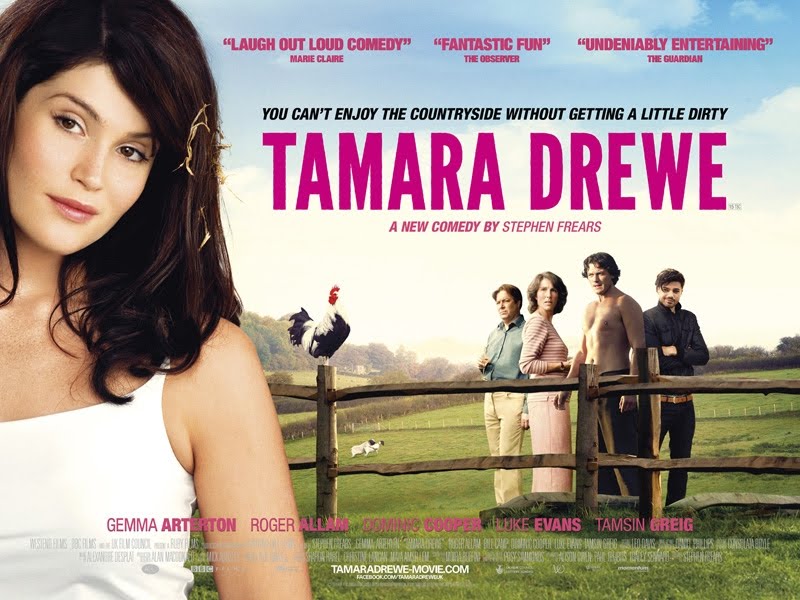 A young newspaper columnist returns to her hometown in the English countryside, where her childhood home is being prepared for sale, and causes a stir with her flirtatious ways.
Tamara Drewe is based on Posy Simmonds’ comic strip, which was inspired by Thomas Hardy’s book Far from the Madding Crowd, and ran in The Guardian from 2005-2007 before being collected into a graphic novel. And this was a pure graphic novel in the sense that the text, which gently satirizes the English middle class, was given equal footing with Simmonds’ illustrations.
Director Stephen Frears’ (The Queen, High Fidelity) film is fond of its characters even as it pokes fun of them (“takes the piss”) and is immensely humorous – you leave the cinema with a smile. This is also an excellent showcase for Gemma Arterton (Quantum of Solace, St. Trinian’s 1 & 2), who shows us that not only does she have poise, she can act. (Certificate 15)
Filed under: Published film reviews | Tags: Christopher Nolan, film review, Inception, Leonardo Dicaprio, science fiction movie
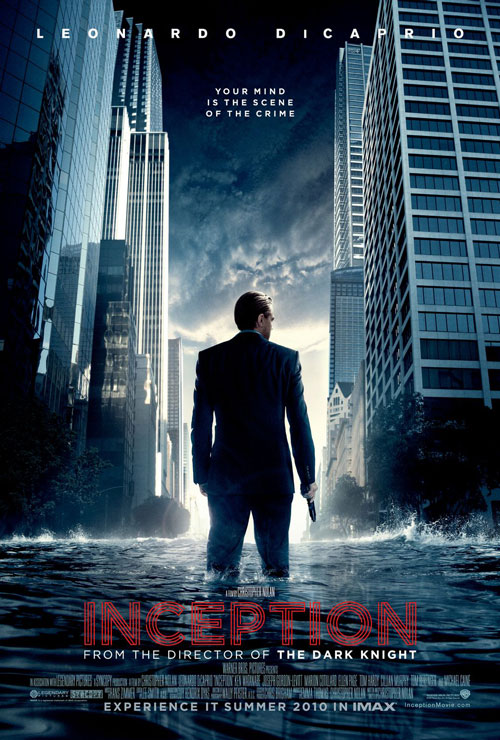 Spy-for-hire Dom Cobb (Leonardo Dicaprio) steals ideas in dreams for corporate espionage. Then he’s hired to achieve the ‘impossible’ of planting an idea in the mind of a target, an “inception.”
This film is about life and death and what might be there in between. It’s a huge-event film that is also about grief, faith, and the desire for an after-life so that we can be reunited with those we love and have lost. But Director Christopher Nolan (Memento, The Dark Knight) doesn’t tell us exactly what this film is about and this isn’t a sombre meditation on existentialism. Once again Nolan manages to combine an incredibly cerebral and imaginative concept with blazing gun battles, zero-gravity-fist-fights, and sexy stars.
Like any truly convincing science-fiction, there are rules and boundaries that can’t be broken – but in this film, the boundaries are pretty expansive, as they’re the limits of each character’s imagination. Dicaprio is amazing in this role – he shows a depth of feeling here that appears effortless and entirely anchors the whole film. You’re not aware of Dicaprio the actor, you believe him as the character of Cobb.
This film is gigantic in scale and style – you’re on the edge of your seat for the entire 2.5 hours. The themes are there to be explored (pay attention), but you can just as well sit back and enjoy the glorious spectacle of this thunderous action-packed, heart-wringing original of a film.
Filed under: Published film reviews | Tags: Casey Affleck, film review, Jessica Alba, Jim Thompson, Kate Hudson, The Killer Inside Me
 Deputy Sheriff Lou Ford is a respected member of his community even as he’s also a shrewd and sadistic sociopath. However, after the son of a local mogul is found dead with the beaten body of a local prostitute, suspicion falls on Ford.
The film, which takes place in Texas 1952, is adapted from Jim Thompson’s psycho-noir novel of the same title. Fifty years after the book was written, this portrait of small-town America and its depiction of violence against women is deeply unsettling. Directed by Michael Winterbottom, this is a darkly disturbing film that’s brutal and visceral but not gratuitous. Ford’s Southern manners, baby face, and bland homilies are the epitome of evil.
From Casey Affleck’s sociopath Ford, to Jessica Alba’s sad and compelling role as witness, to Kate Hudson’s moving performance as Ford’s girlfriend, the ensemble cast are the best elements of this movie. This isn’t a film for everyone, and this writer didn’t like the ending, but it’s nonetheless a very good film.
Filed under: Published film reviews | Tags: Elsa Zylberstein, film review, French film, I've Loved You So Long, Kristin Scott Thomas, Philippe Claudel
 Juliette (Kristin Scott Thomas) is released from prison after 15 years and goes to live with her sister. There, Juliette attempts to cope with the burden of her incarceration and the gravity of her crime.
Pale, chain-smoking Scott Thomas delivers a stellar performance (and shows off her fluent French). She inhabits the character of Juliette with warmth and vitality as she throws off the judgement of others and the horrible shackles of her past. Elsa Zylberstein, who plays Juliette’s earnest and caring sister who takes her in, also gives an excellent performance.
This isn’t a ‘comfortable’ film to watch, with its themes of regret, grief and alienation, but in the hands of debut Director Philippe Claudel, this is a truly affecting film. It’s also a very French film in its subtlety, philosophy, and pacing. 115 minutes running time.
Filed under: Published film reviews | Tags: Beatrice Dalle, Betty Blue, film review, French cinema, Jean-Jacques Beineix
 Zorg, a handyman, is living a peaceful life in rural France, working diligently and writing in his spare time. Then Betty, a vivacious and unpredictable woman, walks into his life. Initially, her wild ways are fun and spontaneous and Zorg falls in love with her, but Betty’s behaviour slowly gets out of control as she spirals into insanity.
The film opens on a shot that creeps up on a couple making love on a bed – their sweating intimacy is contrasted by a voiceover telling us that they’ve only known each other a week. Every frame of Jean-Jacques Beineix’s film carries the seal of its country of origin as well as the era in which it was made. Only in the 1980’s could such a tragic film be created with such a visually-gorgeous-but-empty style. Only in France could a story of passionate love open so erotically. Only in France could a film’s tone be misogynist, seeming to blame Betty’s insanity on the inherent ‘madness’ of the female of the species, and yet seem authentic.
Betty’s descent into insanity and destruction is well paced and compelling. Beatrice Dalle (Betty) never made another film worth noting again, but this film alone was enough to make her an icon of late 20th century cinema. 183 minutes.
Filed under: Published film reviews | Tags: Charlotte Gainsbourg, film review, Julie Bertucelli, L'Arbre, The Tree
 When her father dies suddenly, eight-year-old Simone tells her mother that her dead father speaks to her through the leaves of her favourite tree, a huge Moreton Bay fig. But when her mother, Dawn, starts a relationship with George after he’s called in to remove the tree’s troublesome roots which are going to wreck the house, the bond between mother and daughter is threatened.
This sounds like a ‘downer’ of a movie, but it’s not. The notion that there is a spirit within the tree is nicely played out and leads to some lovely moments for members of the family, who are all ‘getting on with their lives,’ but who are also coping with their respective loss. French director Julie Bertucelli handles the material with compassion and sensitivity that is, in the French manner, developed slowly; she also draws good performances from her cast (inclusive of the wonderful Charlotte Gainsbourg).
Filmed in Queensland, Australia, the cinematography in The Tree is gorgeous and complements this tale of grief and recovery by using nature as a metaphorical and literal character; the stunning landscapes that fill the screen are evocative and marvellous.
Filed under: Published film reviews | Tags: animated film, Belleville Rendez Vous, film review, Sylvain Chomet, Triplettes de Belleville
 During the Tour de France, expert cyclist Champion is kidnapped by the Mafia and taken to the megalopolis of Belleville. Champion’s doting grandma, Mme. Souza, mounts a daring rescue mission aided by three ageing music hall stars and a geriatric dog. A Portuguese ‘old dear’ with a clubfoot, Mme. Souza is an unlikely cartoon heroine, but her relentless, resourceful spirit and her unyielding desire to protect her grandson is completely compelling.
From the opening musical number, French Animator Sylvain Chomet throws in amazing set pieces and creates an original and enchanting world, with great supporting characters (hulking mobsters, sad-faced cyclists), and subtle cultural commentary (Belleville is a thinly-disguised USA).
Les Triplettes de Belleville is not a new release, but it is an absolute must see. This is Chomet’s first full-length feature and it’s a wonderful adventure tale with a hymn for times lost. Chomet’s film maintains an emotionally resonant core as it mixes sadness with satire and complexity with nostalgia. Humorous and moving, this is an absolutely unique film that is arguably pure genius.
Filed under: Published film reviews | Tags: film review, J.M. Coetzee, John Malkovich
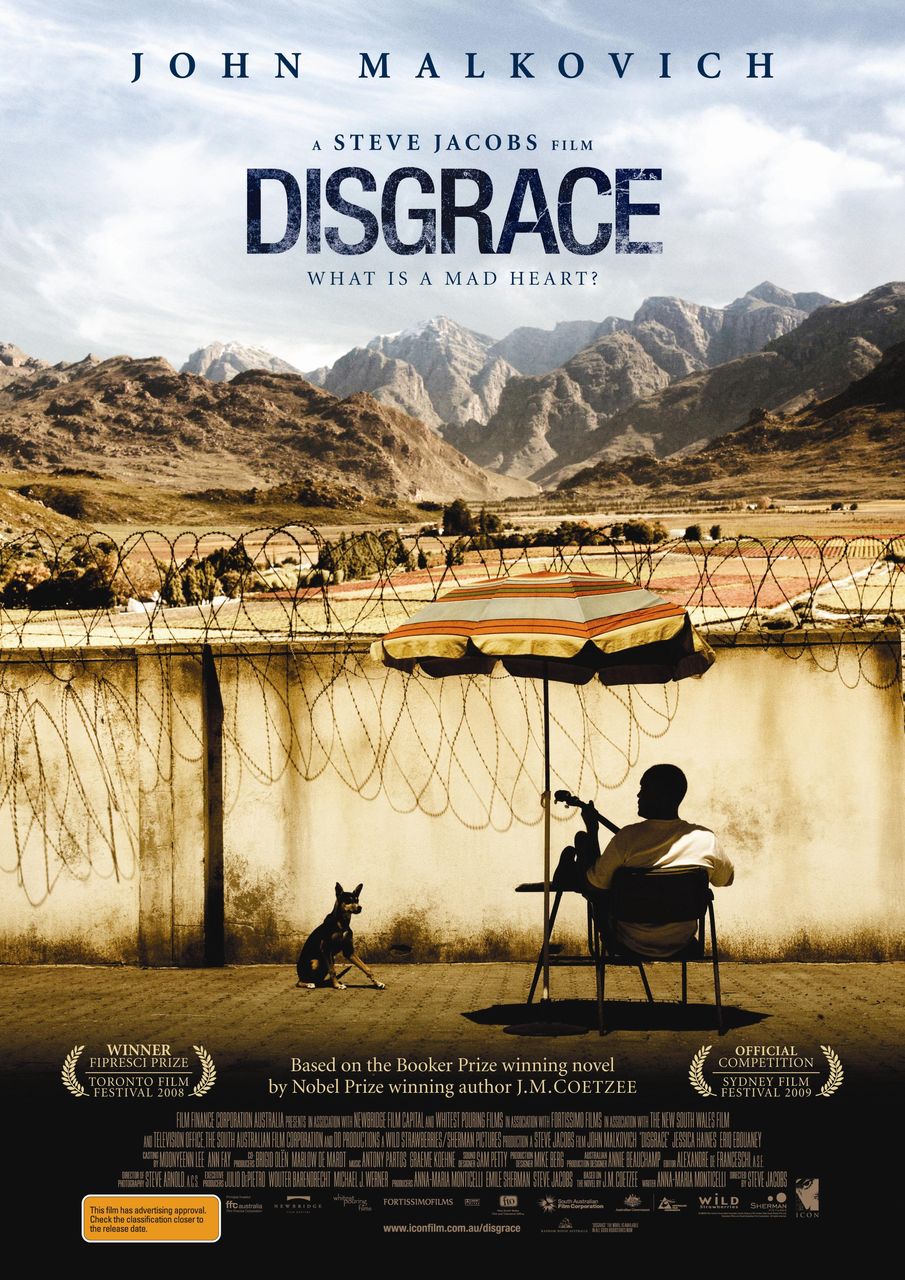 David (John Malkovich, Burn After Reading, Changeling) is dissatisfied with his job as a professor in post-apartheid South Africa. When he cruelly seduces one of his students, he is dismissed and goes to live with his daughter on a farm in the Eastern Cape. For awhile, his daughter’s influence and the natural rhythms of the farm promise to bring his life calm, but the balance of power in the country is shifting and in the aftermath of a vicious attack on the farm by three black youths, he is forced to come to terms with the changes in society – as well as with his own disgrace.
The film, like the book it’s adapted from (J.M. Coetzee’s Booker Prize winner) is brilliant.
Filed under: Published film reviews | Tags: Abbie Cornish, film review, Jane Campion, John Keats
 If you’re in the mood for a love story that leaves you both devastated and uplifted, then BRIGHT STAR is the movie for you.
London 1818. Fledgling poet John Keats (Ben Whishaw, LAYER CAKE) meets neighbour Fanny Brawne (Abbie Cornish, CANDY) and they fall intensely in love, much to the irritation of Keats’ best friend (Paul Schneider, ELIZABETHTOWN), who schemes to break them up – but it’s a more daunting opponent that kills their relationship in the end.
Similar to her most famous film THE PIANO, Writer/Director Jane Campion tells us that it’s through the unlikely pairing of Fanny and Keats that the passion in his poetry is exposed.
This isn’t a creaky costume drama or Keats from a dusty old book – this is a buxom and touching ode to love.
Filed under: Published film reviews | Tags: film review, Johnny Depp, The Doors, Tom DiCillo, When You're Strange
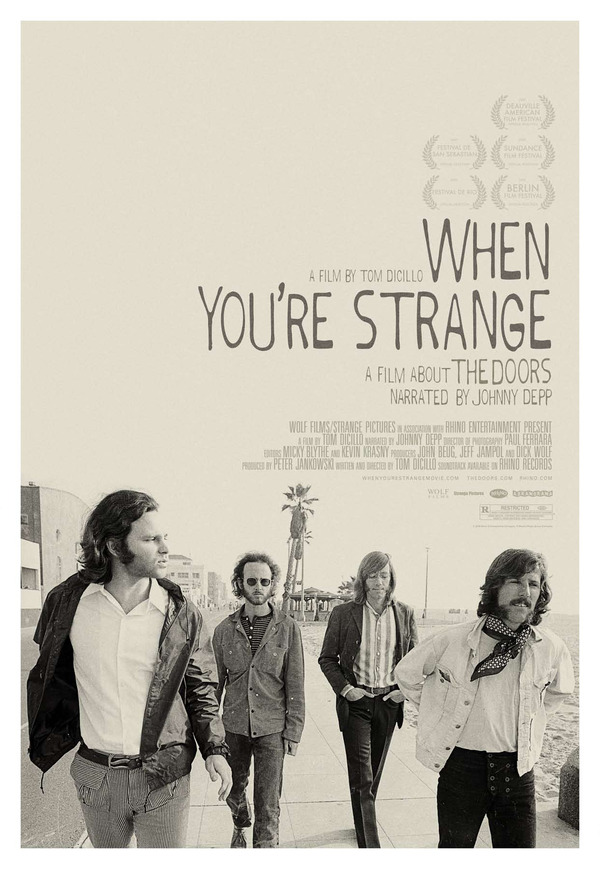 This big screen documentary follows the band The Doors from their formation in 1965 to Jim Morrison’s death in Paris in 1971 (he’s buried in the world famous Pere Lachaise Cemetery).
Writer-director Tom DiCillo (JOHNNY SUEDE, LIVING IN OBLIVION) avoids talking heads retrospective interviews, with contemporary footage and still images throughout and a wry commentary read by Johnny Depp. It’s amazing that so much footage of The Doors at work and play exists (rare in the 1960’s), and there are even sequences from an unfinished underground film Morrison starred in.
Di Cillo covers the bad behaviour many rock bands are famous for, but his focus is on the music and he even takes the trouble to analyse The Doors’ unique sound (no bass, extra keyboards) and to assess what other members of the band contributed to the mix.
Ultimately, WHEN YOU’RE STRANGE is an essential film for Doors fans, but it’s enlightening to the uninitiated, too. Not only is there great music, it’s a compelling story of a troubled creator whose charisma was preternatural, and it captures a moment in time that will never be replicated.
 Victoria Jelinek