Filed under: In Vino Veritas, In Aqua Sanitas | Tags: American, Culture, emigration, France, Identity, nationalism, society, Third Culture, travel, Xenophobe, Xenophobia
My identity was a big issue when I was a teenager, and I had a lot of questions, like: ‘Who am I?’ ‘Who do I belong to?’ But when I was still quite young, I decided that belonging is a tough process in life, and I’d better say I belonged to myself and the world rather than belonging to one nationality or another. Hiam Abbass
 I feel great sentiment for the land in which I was born, the USA. I feel pride that I’m from the state of Oregon, and I appreciate my childhood there as something rather exotic to my present reality, and I’m grateful for it. But I also feel sentimental about the other countries I’ve lived in – Scotland, England, France – and empathy with other countries that I’ve known well, Denmark and Germany. Each of them in their unique ways approximates my notion of “home,” which I define as where you feel a sense of familiarity and love. However, I don’t feel nationalistic about any of these countries, meaning that I don’t believe one is ‘better’ than another, or feel prouder with my affiliation with one country over another–I appreciate each of them in different ways, just as I’m also critical of each of them. Even so, I’m identified as an American – with all of its constructs and connotations – everywhere I go because my accent defines who I am for others. This, despite my peripatetic background, or the fact I’m also a naturalized French woman, and even as I don’t share the values, ideas, and desires most Americans have faith in, such as the American Dream.
That said, any latent Yankee tendencies in me – forthrightness, warmth, enthusiasm, and the propensity to vomit my life story upon meeting someone – came to the fore when I moved to France. Over thirteen years in London, with no American friends, had prompted me to be more polite, more discreet, more modest, and dryer in my humour. In France, being direct, even confrontational, and more opinionated, seems appreciated by the natives. I’m not sure if this dormant Yankee in me came to the fore because I moved from England, a country in which I shared the language, to being a complete outsider linguistically in France and, therefore, I reverted back to my American manners once England was not influencing me daily. Or whether American and French comportment compatibility, as well as a shared, allied history, instinctively felt more complementary than English and French. What I have discovered over the last nine years in France, as I observe how people speak to me, or behave towards me, is that a person’s perception of an American and the USA, can loosely be classified into four distinct types:
The first are those that are automatically and openly hostile to me because I’m a foreigner. This includes the English expatriates who have disdain for Americans (always the case, not because of Trump and his administration).
There’s the pseudo political sophisticate. They think they’re well travelled because they’ve travelled outside of Europe, read some news, enjoy film and television, and speak two languages. In discussion, these folks will proffer an opinion on American politics that is extremely critical, not particularly discerning, and then apologize to me for saying whatever they’ve said as though I’m personally responsible for American society and its politics or I hold these views myself.
True sophisticates exist. They are those who have lived in a few countries, perhaps had a few long time lovers or spouses from countries other than their own, and consider another person’s nationality only as information for a contextual perspective of a given person. I’ve learned a great deal from their example, too, such as learning to deprioritize my own trigger response to a person’s nationality or accent. For example, not all English people are funny, nor do all Russians hide money.
The fourth type, though not so prevalent these days, is the wide-eyed American ideologue. They have holidayed in the USA or they’d LOVE to visit the USA, especially Disneyworld, New York, and Yosemite. They rave about how friendly Americans are. These folks regularly buy clothing and paraphilia with American slogans, flags, and iconic images that they think are “cool” or confirm their romantic image of the USA. They generally watch a lot of television, perhaps a few popular films, and aren’t “interested” in politics. They think it’s great that I’m a “Yank” but they’ll never see me as anything but this.
And, like most people, I imagine myself as unique and complicated, not simply relegated to a national identity because of my deeply entrenched accent. I’d prefer to have the reasonable judgement against me that I’m a shit mimic or lack any real talent for language acquisition.
All countries have their merits and demerits, but one (ideally) chooses to live in a place that suits your needs and values most. While I believe in the competition inherent in Capitalism, I think that without concerted regulation, enforcement, and fair taxation, it manifests into the perversion of inequality we see today. Capitalism is the bedrock of the USA, and what I’m about to say might mark me as a “red” or a “commie” to many stateside, which I’m not: I don’t believe your work defines who you are as a person. I believe ‘success’ is measured by the amount of time you have for leisure in relation to material needs having been met. I value reading books highly, and those that read them regularly are those that I believe are intelligent. I believe healthcare, access to a good public education, and safe housing are universal rights. I believe in modest portions of food at regular sittings, and I’m disdainful of fad diets. I believe in minimal consumption of goods, and collective conservation enforced by law. I believe smoking only kills the person doing it, and negative judgement about it indicates a type of puritanical moralism. Likewise regarding drinking.
Perhaps it was the influence of my educator activist parents who took me with them on their many travels and sabbaticals, and were embarrassingly progressive throughout my life. Perhaps it has been the influence of my fair-minded husbands, German and Danish, respectively. Perhaps it’s that I read a lot. Perhaps its that I’ve lived, been educated, and worked in several countries over the entirety of my life and been influenced by a variety of people of all creeds, races, cultures, and nationalities. I’m not sure, but it’s a curious and sometimes frustrating phenomena when considered in light of rising nationalism throughout the world. If there is any nationalistic tendency in me (and please note that I’m suspicious of humanity regardless of origin) it’d be towards France. I deeply love French culture – its food, its literature, its history, its geography, its weather, its films, its general philosophy on life, and its approach to governance. However, even as I’m French in spirit and hold a French passport, I will never sound like a French person and consequently I won’t ever be truly accepted as one of them. I will always be l’étranger.
My son, however, who has neither my propensity towards self-absorption (other than the normal level accompanying his seven years), nor the tendency to “overthink,” has a slightly different reality. One parent is Danish, one is American French. He speaks Danish with his father, English with me, and French at school and during his extracurricular activities. Additionally, when he speaks English, he has a unique accent – he doesn’t pronounce his “th’s” as English speakers do, his vowels vary between the French as well as the English expatriate influences, yet his dialogue is interspersed with American idioms. Recently, a teacher of his called together eight little boys from his class, including my son, who had been harassing others on the playground in order to have a conversation with them about the similarities and differences between people and why we should appreciate these contrasts. She told me later that each of the boys, when asked what their respective nationalities are, adopted their parents’ nationalities: “I’m German,” “I’m Italian,” “I’m Swedish,” “I’m English,” etc., despite the fact that most of them had been born and were being raised in France. My son was the only one who said “I’m French.” Not Danish, as his father is, or American, as I am also, and despite holding these passports, too. France is the country he unequivocally identifies with. In fact, during the World Cup 2018, France was playing Denmark in one of the quarterfinal games and my son’s father wanted him to wear his Danish football costume. Being considerate, my son did so, but at one point, out of earshot of his father, he told me that he felt “strange” wearing Denmark’s uniform when he actually wanted France to win the game: “You see mommy, I don’t know Denmark or the USA…yes, I’ve been to these countries and I have family in these places, and that’s something, I know…but I really only know France…and I really want to wear France’s football uniform.”
Arguably, my son’s a potential nationalist and is being indoctrinated to France’s mores given his environment. But I doubt this, given his parentage and the perspectives that provides. And, I hope, he’ll live, study, and work in other countries, garnering more information and consequent insights than even I will have experienced because I do not have multiple languages natively. But my point remains: my son is viewed as a foreigner by the French given his parents, and viewed as a Dane or an American depending on who the (other) expatriate emigrant is, but he, himself, does not accept any of this. Similarly, I may have a strong American accent that creates the impressions and judgements of others about me, but this is not primarily how I see myself.
In the interest of exploring nationalism and identity, I’m going to start asking people how they define themselves & others and why – watch this space.
Filed under: In Vino Veritas, In Aqua Sanitas | Tags: Economics, Emmanuel Macron, France, Gillets Jeunes, Inequality, Minimum wage, Nation, Pensioners, Retirees, Single parents, Yellow Vests
 “Europe and the world are waiting for us to defend the spirit of enlightenment everywhere.” Emmanuel Macron
I listened to Emmanuelle Macron’s address to the Republic and it was fantastic.
He was conciliatory, reflective, and humbled. He has realized that for his presidency and his party to survive, he has to change. This adaptability is ideal in a president. He was specific about the changes that he will implement in response to the Gilets Jaunes movement. He was emotionally sensitive to the issues around retirees, divorcees, and the poor in particular. He has listened. He accepted responsiblity for not paying attention to the vulnerable in the nation. And even as he has compromised, he made a point of reiterating the obvious – that protest is to be respected, but peace and collectivism is the objective, not chaos and violence. Communication has been a problem with this GJ movement ‘cause there is not, technically, leadership, and when Macron’s administration has attempted to speak with the protestors, and those from the GJ movement have tried to respond, they have been heckled by their compatriots for speaking to the government.
I respect Macron, and I believe he has absolutely paid attention to the grievances, despite their being arguably incoherent – they want lower taxes yet they ALSO want more public services. He has proposed that he will meet with citizens throughout the country and through discussion these people will, perhaps, understand how much it does cost to run hospitals, train stations, and in order to provide public services to the general public, including enacting clean energy policies to help the environment. It can’t happen without taxing the citizenry, though there is credence in making sure the taxation takes into account capability and geographic situation as much as is possible.
Even as there is justifiable criticism that the very rich are evading their taxes and are growing richer under Macron, he did not mention adhering to the wealth tax. He did say, however, that there is the need to enforce tax evasion and, ideally, that employers should pay employees an annual tax-free bonus.
This evening, Macron proposed the following specific fixes in response to the GJ movement:
- Retirees will be tax free up to 2,000 euros received in pension per month.
- There will be a rise in minimum wage of 100euros per month that will not be additionally taxed.
- He has scrapped the fuel tax (even as it is necessary for environmental change).
These things might land him in trouble with the EU because it will cost the French government a great deal to pay for these changes, particularly without the additional tax revenue. And the benefits will not be visible for some time, lamentable in the ‘quick fix’ attention spans of today and with the individuals that compose this movement.
In response to the criticism that he, Macron, is too Paris-centric, he said that he will visit mayors and their citizens throughout France. In normal France, the France pre-En Marche in which the rulebook was torn up, those in power would create a commission to investigate, then pile it up with other findings. Macron will meet with local representatives in order to listen to the citizenry’s particular needs based on their geographic location and consequently unique problems, and together attempt to find solutions to economic inequality.
Filed under: In Vino Veritas, In Aqua Sanitas | Tags: Capitalism, clean energy, Education, Emmanuel Macron, England, fossil fuels, France, healthcare, Marine Le Pen, Socialism, taxes, USA, Yellow Vests
“I have tried to lift France out of the mud. But she will return to her errors and vomitings. I cannot prevent the French from being French.” Charles de Gaulle
 I once said to a French doctor during a visit to her office that I’m so grateful for the French healthcare system. Like England, where I had lived for thirteen years, there is universal healthcare. Unlike England, one must be a resident of France, pay your taxes, and while the state covers 70% of your healthcare (100% for your children), you must have private insurance to cover the rest. A visit to a general practitioner will cost you about 23 euros and to a specialist, about 60 euros (of which 70% will be returned to you). Similar to the USA, and unlike England, in France you can choose your general practitioner and they will refer you to specialists of your choice. Moreover, the French have effectively integrated methods based on medicine, or ‘hard’ science, with non- traditional methods, such as physiotherapy, acupuncture, and nutritionists.
Back to the visit with the doctor and my compliment to the French healthcare system. She, in turn, was grateful for my appreciation. She told me that on an average visit, about a half-hour in duration per patient, she earns 10euros, with the rest being reimbursed or going to fund the collective ‘mechanisms.’ She didn’t have a problem with this, telling me she wanted to be a doctor to help people and she is. However, she said it’s frustrating because the French patients are never satisfied with the system. For example, when the Carte Vitale* machine doesn’t work and she must consequently give the patient a brown form+, they complain about having to cover the expense of an envelope and stamp in order to send the form and get reimbursed for their visit.
My point? While the French argue that they are collectively oriented, in general, they are not. They do not seem to care that their participation is necessary to maintain the heavily subsidized welfare state – public schools, universities, extracurricular activities++, school lunches+++, CAF** and housing subsidies, healthcare, retirement, etc. To sustain these services means paying a modest fee for them, as well as paying taxes, in order to support the whole system and the vulnerable within society. Many here begrudge paying anything even as they feel it’s their right to receive these benefits, which they complain are too little, and many people actively work to undermine the system. While a large part of me appreciates the French cynicism, and I agree that the super rich seem to avoid all fees, the average French knee-jerk cynicism also frustrates me. Having originated from a country where the cost of an emergency medical service without good health coverage could mean that you and your family lose your home due to the expense of it, or you have to take two mortgages out to fund your child’s university education, I’m grateful for the services in France. So, I consequently pay my taxes and all fees without question, even as I’m lucky that I do not use most of the services on offer. This does not mean that I don’t see that it is ‘apples and oranges’ to compare France – a noble, socialist state – with USA – a staunchly Capitalist one – and the subsequent services available in each.
However, France, like the rest of the world, is polluted due to fossil fuel consumption, deforestation, consumerism and waste. Where I live, many children have chronic coughs that the doctor’s dismiss with a sad shrug, saying “C’est comme ca…” On higher particle days, the kids aren’t allowed outside to play. Originating from France is the Paris Agreement, a global agreement to collectively reduce carbon emissions. In response to this, Macron’s administration put a nominal tax (literally a few cents) on diesel and petrol in an effort to curb its use. Many in France are very poor, earning an average income as teachers and police officers, of 1200euros per month. In rural areas of France, driving is necessary and these extra pennies mean a lot. However, in France, there is a 10,000-euro rebate when you convert your existing diesel car to an electric or hybrid car. Most don’t know this, and when they do, they argue that the cost of electric and hybrid cars is still too expensive. That’s true when you’re earning 1200 euros a month and have a family, even with CAF and governmental subsidies, but it’s a substantial offer. Arguably, all new technology is the bastion of the middle class and the rich, but as with all new technology, it will become more affordable, and we must begin the process somewhere of conserving our environment and our collective existence. Perhaps Macron’s administration should have begun with taxing the manufactures of the vehicles, yes, but there is an argument that by doing this, these manufacturers would withdraw a lot of manufacturing from France, which would also create a problem with a loss of jobs and income. Perhaps France should have built efficient public transit that uses clean energy that the people could use in order to discourage the use of their cars? But where would the money come from? Perhaps the taxes should have been placed on the fossil fuel companies, and the EU should enforce this collectively?
But I encourage people to ask themselves several questions: Is it not suspicious that many involved in the Yellow Vest movement are from middle class families? Is it not suspicious that at the same time that the Yellow Vest’s are claiming to be for the everyman, they are destroying the property of those working and having businesses? Is it not suspicious that what began as a protest about the increase on the cost of diesel and petrol, is now about wages, taxes, housing, retirement benefits, cost of living, etc.? Is it not suspicious that the average person involved with this movement is calling for the ‘head’ of Macron, a “banker,” rather than also seeing him as the Classicist, a man who spent more time studying the Humanities – literature, history, economics, philosophy? Also, a man they voted for. Is it not suspicious that the Yellow Vests have thus far refused to speak to the prime minister unless the meeting is filmed? Is it not suspicious that by reducing the speed limit on the highways, thereby limiting nasty emissions that prompt climate change, which the government has done, is not adhered to by the people themselves? Isn’t the nasty transport of goods by trucks perpetuated by our ordering goods online in order to avoid paying more for these same products?
I understand that many in France voted for Macron as opposition to the Front National, and that many view him as unforgivably arrogant (an irony, given that the French are stereotyped as arrogant). I also understand that people are frustrated and poor. That there is abhorrent global economic inequality. I agree with the suspicion that corporations and a superrich class of people are dictating global politics and laws, perpetually squeezing public services and the working class for their own increased profits and the perpetuation of their lavish lifestyles. I respect to some extent that my compatriots are noting this and protesting. However, the Yellow Vests are a fragmented and violent movement that is being manipulated into a frenzy by the same powers the participants are protesting. Macron is not the enemy. Nor are foreigners or refugees. Big business and tax evaders are the enemies. Macron is pro European, actively building bridges between member states, which is important because a united Europe is much stronger than a divided one, despite the rhetoric that cynically opposes the union and capitalizes on people’s fears and anger by creating scapegoats. While he may have been a banker briefly, he’s a truly cultured man and that means he understands context and the long game. He’s a man who has benefitted France as its president by increasing the profile of France through his efforts and his charisma, making it once again a power to be reckoned with (which happily coincided with the World Cup 2018 win). He has openly criticized Trump, rising xenophobia, and nationalism disguised as patriotism. He is actively arguing the need for climate action, even as arguably it is not nearly enough. These are great things socially and practically. He has served as the opposition to rising ignorance. His presidency has increased tourism to France and consequently bolstered the economy, and it has brought France back to the forefront of negotiating tables throughout the world. And now he is being undermined in these efforts, which will not benefit France or the European Union collectively. Is it not suspicious that this undermining occurs after the USA has officially dismissed climate change and Brexit has destablized the EU?
Yes, there is much more to be done about economic inequality, strife, and the environment. There is credence to the argument that letting even ‘little things’ go is a ‘slippery slope’ to creating an individualistic, capitalistic society like the USA. Yes, Macron is from the privileged class, and there is rising and unforgiveable economic inequality, but wouldn’t it be more helpful to stop condoning those culprits activities? Focus one’s efforts? Demand that companies such as Amazon and Google, for example, pay their fair share of taxes to operate in Europe. Demand that the taxes on the super rich in France (and the rest of the EU) are enforced. Demand that campaign financing is absolutely transparent so that there is not a conflict of interests. Tax the hell out of fossil fuel companies throughout Europe. Pay your own taxes so that your kids can continue to have benefits when they need them. Stop buying products online and support local businesses rather than these same ‘dark forces.’ Stop buying services or products from international companies that are contributing to economic inequality by creating monopolies and not paying their fair share in the societies they operate in. Stop driving so much. Stop eating so much beef, and buy it locally when you do eat it in order to undermine the big business agriculture has become. Use the subsidies and loans available to convert your homes to clean energy and your cars to clean energy.
I hope that Macron is able to face down the agitation and keep a steady hand on the tiller of the country. We shall see what he says tonight when he makes an address after the fourth weekend of riots in Paris. As it is, the Rassemblement National (Marine Le Pen’s party, the National Rally, as they have rebranded themselves since their defeat to Macron) is on par with Macron’s En Marche to represent France in the European elections in May. May the gods help us all and may reason and concerted effort prevail.
*A Carte Vitale is given to residents who pay their taxes or need special assistance. It is swiped through a machine at a doctor’s office so that reimbursement to the patient is immediate.
+A brown form is a sheet that is dated and signed by the doctor that the patient must fill in with their name and health number, and then send to the state’s Assurance Maladie (Health Insurance) for reimbursement.
**CAF supports childcare on a sliding scale, from 20c an hour up to 4euros an hour for baby and children’s day care and after school support. They also provide subsidies for families to take holidays around France each year. They also enable a mother to take three years off when their child is born, by giving her a monthly allowance. They also give a family a one-time fee upon the birth of a child that ranges in size, to a monthly stipend for each child to a certain age. The assistance the CAF provides is seemingly endless.
++Extracurricular activities in my village include taking the kids regularly to do a week of alpine skiing with instructors, as well as Nordic skiing, swimming lessons, museum visits, all subsidized by the commune.
+++School lunches for the elementary school children are three course events – salad, meal, cheese or desert – that are usually locally sourced and bio. And, thanks to Nicholas Hulot’s response to a petition, they are now serving a vegetarian meal once a week in order to ‘put the subject on the table’ about the correlation between meat eating and climate change.
Filed under: In Vino Veritas, In Aqua Sanitas | Tags: Brexit, France, Ignorance, media, Opinion, Politics, society, Trump, USA
“Since the days of Greece and Rome, when the word ‘citizen’ was a title of honor, we have often seen more emphasis put on the rights of citizenship than on its responsibilities.” Robert Kennedy
 It’s very hard to see the willful ignorance globally. I’m so impatient and sad that most people aren’t ‘connecting the dots’ between what is happening in one part of the world (politically, socially, philosophically, and practically) with another. It seems many aren’t noting the similarities between politicians, actions, ideas, and media coverage across the planet. Despite differences in nationality, culture, creed, religion, it’s all shared global phenomena. For example, it amazes me that the British news media continues to give airtime and credibility to hardline Brexiters like Boris Johnson who has been utterly discredited, allowing the ignorant millions who voted Leave to persist in their delusions, thereby preventing British society as a whole to face the facts and move forward. Likewise, the American media continues to lead the news cycles with coverage of Trump’s erratic behavior and lines straight from his mouth, consequently reiterating and perpetuating the nonsense that comes out of it and is so destructive for the USA and the world as a whole. Similarly, the French media, historically skeptical of the president’s office, are covering the Yellow Vests in France ad infinitum in a sensationalistic manner. Subsequently, those backing them, including Trump, don’t understand the context of the situation even as they’re jumping on the bandwagon of the movement. It’s all so confusing, divisive and horrible that it does my head in.
If I were queen of the world, I’d eliminate tax free havens, I’d tax the hell out of fossil fuel enterprises to fund clean energy incentives, I’d enforce tax laws and funnel the money to bolstering public education and social services, and I’d eliminate ‘dark money’ from all campaigns globally so that corporations and the super rich could not effect public policy.
However, as this won’t happen, and in an effort not to become more depressed by the madness that I’m seeing everywhere, on social media, in the newspapers, in television reports, and then perpetuated by those around me, I’m going to chronicle what I see. Short observations on a variety of subjects that, I hope, reflect aspects of this ‘brave new world’. I’ve decided to title all the entries “In vino veritas, in aqua sanitas,” or “In wine there is truth, in water there is health,” not out of pretention, but because it suits. I drink wine most days, and the Latin expression seems to be a good ‘umbrella’ philosophy for how I envision the series. The idea, from the Romans, the Greeks, the Persians, is that if something was decided during a council while drunk, then it must be reconsidered when sober. These cultures believed that no one could lie effectively when drunk. I like the complete phrase that incorporates the later portion, “in water there is health,” because, ultimately, I think that politics today, and, arguably, since the beginning of time, is full of hubris and the ‘only’ thing that ultimately matters is the natural world, hence the allusion to clean water.
Who am I? A native Oregonian. An American citizen and also a French citizen, who has lived in Europe for the last twenty years by choice and through great effort. A woman who has traveled the globe, living, working, studying in countries such as Scotland, Zimbabwe, Germany, Mexico, England, and France, as well as the American states California, Washington and New York (and obviously Oregon). I’ve been married three times, to an Iranian man, a German man, and now a Danish man, respectively. This doesn’t make me a ‘bad’ person, just a bad Catholic. I’m certainly not great at conventional relationships, though I’m making an effort now. I’m not a dilettante, though I’m well read. I worked my way through all of my university degrees and travels, as a waitress during my undergraduate degree, and then in the film industry and as a content writer during my graduate degrees. Now, I’m a schoolteacher and mother to a seven-year-old son. I live in France with him, my Danish husband, my border collie, and a ginger cat that adopted us several years back. I’m a flawed individual, of course, with constructs that sometimes defy logic, and, my observations, here, will likely be focused on the Northern hemisphere, which isn’t complete. But I’m also bright, sensitive, passionate, and, obviously, modest.
Here goes…
Filed under: From the Soap Box | Tags: Culture, elections, Europe, France, Midterm elections, Oregon, patriotism, Politics, Trump, USA, world order
Patriotism is supporting your country all of the time, and your government when it deserves it. Mark Twain
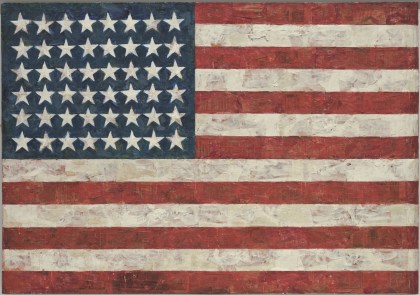 I was born in Oregon and spent most of my childhood there. We fished for crawdads in mountain creeks during the summer, took inner-tubes down small rapids, climbed the trestles for the Great Western Pacific trains, biked everywhere through the fields and pastoral lands, with the gentle mountains in the distance. We ‘drag raced’ down Main Street on the weekends, saved money for the state fair and Turkey Rama, picked magic mushrooms in the forests, and went to Friday night football at the high school – not necessarily because of interest in the game, but because it was a community social event. My family regularly camped and hiked at Neskowin, Canon Beach, and Newport City, and ate clam chowder at “Mo’s.” I remember that my bright red feet from the cold of the Pacific Ocean would not deter me from playing in it. We grew up skiing on Mount Hood, and dining at a pizza barn near Government Camp, as well as hiking at Multnomah Falls and through the Cascades. Family holidays involved traveling in our VW van with a styrofoam mattress laid out in the back for we children, staying in Motel 6’s or KOA campsites. I remember that hanging our washing out to dry made it smell even lovelier after a rain, and lying on my back in order to look up at the leaves of the many ancient oak and maple trees on my family’s property (though raking them in the autumn was an onerous task). Badminton and croquet over a bumpy, rooty lawn. Trading candy with my siblings after the Halloween haul on the floor of our den. Thanksgiving as the only time my father would cook things simply.
Typical to a small town girl, I moved away as soon as I graduated from high school: first to Portland, then Seattle, then London, then New York, then Los Angeles, then Berlin, then back to London, then to France. I’ve now lived in Europe for a third of my life, and half of my adult life. I’m formally naturalizing as a French citizen on Thanksgiving this year (not through my own design, but because that’s what the Minister of Interior set as the date). I’ve always maintained that one place is not “better” than another place – they simply represent our different needs and desires at a given time in our life. The inherent values in Europe, of a safety net for the public, even as there are capitalistic markets, align with my personal values: healthcare for all, housing subsidies for those in need, mandatory WEEKS off of holiday, paid, per year, plus personal days, and free (or almost free) university education. Additionally, the pace of life is slower in Europe, and I appreciate this because I believe the frenetic pace of American life is debilitating and anxiety provoking for the populace.
Visiting the USA each year, keeping in close touch with my family, and assiduously reading the global news each day, means I have watched all the negative elements of my native society become exaggerated: workers not taking the minimal days off they have ‘cause they can’t afford to, or they’re afraid they’ll lose their jobs; the employment figures being misrepresented, as many people have to work two or three jobs to make ends meet; there is no time for most Americans to simply rest, ‘cause they are always working, and stores and restaurants are always open, implicitly encouraging the people to consume more than they need; the cost of an emergency or a long term illness fells a person or a family who does not have adequate healthcare coverage; even as the USA has the most highly trained teachers in the world, they are paid the least and the public school system receives substantially less each year in federal funds than the penal system does; diets for most Americans are evidence of a cultural polarity – there are those that are hyper ‘healthy’ with diet and exercise, and those that are obese. Suffice to say, that the milieu that I want to live in is one in which there is a social safety net for those that pay their taxes (however nominal), and people are encouraged to have time to eat, think, and spend time with their families and friends.
That is NOT to say that I am not also in love with my native land, the USA. I love it and it hurts me personally when people criticize it, even as I may agree with them intellectually. For me, I think of my interesting, liberal childhood, the gorgeous and diverse nature of the land itself, its film, its music, its ingenuity in all things, and my heart fills with nostalgia, pride, and gratefulness. Even as I have lived abroad in tough times – the Reagan/Thatcher reign, the GATT Talks 1994, Bush Jr’s reign, to name a few – I have always been proud to be American ‘cause I believe there’s a certain ‘energy’ to us, both good and bad. But now, to see my beloved country so divided within itself, and so alienated from the rest of the world, truly breaks my heart and makes me feel ashamed of what it happening there.
The intolerance and loathing from both sides of the aisle – the fact that there ARE just two choices in American politics – is shockingly fierce and illiberal. To observe cynical, self-serving politicians capitalize on the American people’s personal fears and anxieties, encouraging tribalism, so that the people will be too busy infighting and creating scapegoats, that they will not notice what is happening to their land and their laws, is starkly shocking and sad. It’s as though all the goodness of the USA – its receptivity to new ideas, its consequent ingenuity, its warmth, its diverse and gorgeous cities, natural landscapes and wildlife – are succumbing entirely to its underside – blind ambition, greed, racism, anger, violence, and ignorance. My defense of my native land in conversation here usually goes along the lines of explaining the context for the current situation (the electoral college, the Southern Strategy, Super PACs, Fox News, and an effective smear campaign against Socialism as “commie” interests, the vast swaths of land effecting perspectives), but this falls deaf on European ears. Ironically, they seem to believe MORE in the idea of personal responsibility for one’s destiny socially and politically than Americans generally do, even as we are professed individualists. Even so, they will politely listen to my contextual explanations if the wine keeps flowing, then they predict that it’s simply a repetition of historical dominance of given countries, the fall of the Roman Empire, so to speak, and if there is any fear here, it’s that it will effect the world order ‘cause there will be no one to lead in global policies that monitor corruption, extortion, human rights infringements, and the need for clean energy. Lamentably, the USA and its leaders cannot be quarantined.
For the first time in history, Europeans know what a midterm election in the USA is and are paying attention. I’m pensive and worried today ‘cause I really don’t know what tomorrow’s vote will bring. I’m skeptical that despite all the noise, voters will NOT turn out in the droves that they need to in order to offset the gerrymandering and voter repression. I worry Trump, enabled by sociopathic ideologues like Pence, McConnell, and Ryan, will declare the results – IF they indicate congress will have a Democratic majority – as false and refuse to adhere to the vote of the citizens. My Danish husband says, “That’s impossible! That would be breaking the law, no?” I don’t know what to say to that. A president who has been accused of sexual harassment repeatedly, found fraudulent in his financial declarations and business endeavors, who has never revealed his tax returns publicly, who has been ‘caught’ telling as many as 200 lies in a single week publicly, whose administration has altered law and protocol to put two justices on the Supreme Court and push through over 50 more judges on the lower courts, and who has turned back clean air and clean water protections, food protections, and undermined national parks borders, caged children in privately profiting detention centers that refuse elected officials entry into them, and now has used the US military as an election gimmick to capitalize on his bases’ fears and racism (ostensibly declaring martial law)…well, it’s not inconceivable that he and the sitting GOP’s will just refuse to budge, no? What will the world do then? Perhaps it will be just the excuse to invade and topple this regime. But who could do it? China, Russia and Saudi Arabia have, together, the military might to take on the USA, but why would they do that when they have so much invested in the country? Alas…
Despite my worry and misgivings, I will try to believe that America will re assert itself as a land of hope for all. As the Marquis de Lafayette wrote about the USA after the French helped the Americans to overthrow the tyranny of the English: “Humanity has won its battle. Liberty now has a country.”
Filed under: Vertigo | Tags: All Saint's Day, Cambodia, Druids, France, Gallic, Haiti, Halloween, India, Ireland, Italy, Mexico, Natural world, Poland, Roman, Samhain, Scotland, societies, South Korea, Tribal, Tribes
 Modern Halloween can be traced back to the Celtic Festival of Samhain (Sow-in), which took place two thousand years ago in Ireland, Scotland, and Northern France. Samhain marked the end of summer and the harvest, as well as the beginning of the dark and cold months. For these cultures, winter intuitively symbolized death, and this has remained the case in the arts and literature today. Two thousand years ago people commonly believed that the boundary between the worlds of the dead and the living were blurred at this time, which made it easier for Druids to make predictions about the coming year.
Prophecies such as this were an important source of comfort and direction for these tribes during the long, dark winters. However, the same was true of all societies at this time, who were equally dependent on a volatile, natural world. Celebrations marking the end of the growing season and a heralding in of the winter months, as well as folk traditions that told of the day when the boundaries between the living and the dead were lifted, were common everywhere. The manifestations of the celebrations differed slightly from country to country, from festivals, parades, bonfires, and costumes, to gatherings of families and loved ones in cemeteries to pray for the dead, to feasting or fasting, but the concept remained the same. The ancient celebration of the contrast between life and death, the living and the departed, is intuitively experienced when the changing of the seasons occurs. In parallel to Samhain, there was, and is, the “Dia de Muertos” in Mexico, born of the Aztecs; “Ged Gede,” a voodoo festival from Haiti; “Chuseok” in South Korea, born from an ancient Shamanistic ritual; “Tutti i Morti” in Italy; “Pitru Paksha” in India; “Dzien Zaduszny” in Poland; and “Pchum Ben” in Cambodia, for example.
The fact is that on a subliminal level, societies throughout the world recognize the magical possibilities inherent in the natural world, particularly at this time of year. In my opinion, the questions that follow are why it is that the Gallic rituals dominated to become our modern idea of Halloween? And, will the modern world return to these tribal rituals dominating culture – the consulting of priests, the convening with spirits, the sacrificing of animals – now that we are once again dependent on a volatile natural world?
Filed under: Film reviews | Tags: Film, France, French, Gender, gender roles, Marie-Sophie Ferdane, Netflix, Vincent Elbaz
 Damien (Vincent Elbaz) is a ‘player’ in modern Paris. He develops content for an apps company by day, and seduces women when not at his job. Alexandra (Marie-Sophie Ferdane) is Damien’s best friend’s assistant. Damien tries to pick her up at a book-signing event to no avail, then leaves and bumps his head on a pole he runs into while ogling women passing by on the other side of the road. When he wakes up, he finds himself in a world where women hold the societal position that men have held historically to present day. While there is much in this film directed and co-written by Eleonore Pourriat that is arguably cliché and flat-footedly drives home a point, it’s ultimately a diverting film that one considers after watching it.
A hackneyed element is the idea that men in the alterative world who are not married at a certain point are sad and likely to live with a cat. I also found it rather wearisome that men in their role of stereotypical women in the alternate world are effeminate in their mannerisms, actions, and behaviors, such as swinging one’s hips, flipping one’s wrists, using ‘up talk’, etc. Would this actually happen with testosterone flowing through their veins? Is this type of behavior truly just environmental influence rather than biology? Conversely, women in the alternate world strut and burp, have their babies holding on to a hanging exercise bar, then turn the care of the babe over to the male nurse or their husband – would this happen with all the hormones raging through our bodies that (generally) work to bond us to the process of pregnancy, birth, and infant
Fundamentally, however, I found the concept good and was rather unsettled by how the reversal of gender is depicted, which prompted me to consider my own attitudes to roles men and women have in modern life. For example, women don’t shave their legs or armpits in the alternate world, but men must shave all of their body hair or risk being seen as disgusting hippy apes by potential seducers; women bare their chests while running or walking around, whereas men attempt to accentuate any cleavage and play coy with their titties; professional women wear dark suits, and men wear something colorful that, ideally, displays their legs; men are dismissed when they proffer a serious opinion, while women are respected and listened to; and men are the objects of lust in films; when Damien is ‘picked up’ by a woman and they have sex – they struggle for dominance and when she’s finished, she rolls over and leaves.
Even as I didn’t find this to be a comedic film, which has, perhaps, a cultural element to it, I did find it droll (derived from the French “drôle” meaning humorous or peculiar). For example, classic literature and philosophy has been re considered, with books written by George Sand (a woman in fact) becoming Georgia Sand. Additionally, I closely considered both my uncomfortable response to what was being shown as gender behavior in the alternative society, as well as why (exactly) it might be that men have dominated the cultural, political, economic, and personal lives of everyone since the beginning of time…has it all been so arbitrary?
Filed under: From the Soap Box | Tags: Climate, collectivism, France, Macron, Politics, Trump, USA
Dear V,
OMG the Orange Man is reversing the time space continuum. We will soon be conducting inquiries and the stake burning and impaling is on the melting horizon.
I suppose I always knew this was coming, as we are seriously stupid here. We are a nation of dummies. And weak. I had a period of sobriety and ran a 10k, but then I turned on MSNBC and listened to Maddow and grew distraught. At least Macron shamed him. They won’t discuss it here, but it was plain to see.
If those Catholic ass fucks overturn Roe v. Wade I will know it is time to go.
I think I will build a deck and a redwood hot tub to grow old in with my pot in the meantime.
M

Dear M,
Don’t despair. Get active and fight it. Vote. If for no other reason than to stand up and be counted – to show that there are good Americans that are not going to normalize this horrid regime.
All nations are full of ‘dummies.’ The Italian Renaissance was, like, four men, no? The rest of the population was shitting, eating and fornicating – surviving, not thriving. All great movements/thoughts are never the majority. Most people are concerned with their own small lives/perspective. That’s why fascists get rid of artists, teachers, etc., first. In general, the French hate Macron, btw. They are not informed about the changes he’s proposing, but they see him as a “banker” who is only interested in helping the rich. They spout off about communism, socialism, the collective, but they’re only concerned with themselves, not the overall health of the country – the worst kind of individualists. I fear that in a few years they’ll vote the National Front in, so…I worry about the future for my son. He’s only seven and with the calamity about to happen/happening – war, refugees, climactic devastation, nationalism, xenophobia, income inequality to the point of feudal systems, destruction of public education and consequent opportunity, compromised universal healthcare – what will his future be like? I’d thought to purchase a nice piece of land somewhere near a water supply, maybe in Scandinavia, and just have it for him in case he needs a place to literally camp and grow his own food, but who knows if that land will remain/be ours/his in the future? Perhaps international law will be struck in future years? I.e., you own it now and have protections, but perhaps they’re scrapped in the future? (Trump’s working hard on destroying alliances that ensure citizen’s rights uniformly throughout the world!). And then the land will be taken by some despot…horrible prospects.
Did you ever read Lewis’s “It Can’t Happen Here”? It’s amazingly prescient and terrifying, but also, oddly, assuring that there are writers and observers such as this who wrote about what they were seeing, the true threats to humanity, in the 1930’s onward, if only we would listen…these people give one hope, I think…if for no other reason than the assurance that you are not alone. And today, the fact that there are nurses, lawyers (like you!), and observers who are going to the US border to help these poor children and their families if they can, if only to bear witness, is hopeful…
By-the-way, these people trying to strip Roe v Wade, environmental law, civil protections for natives and immigrants in the USA, are not Catholic! They’re evangelicals. The Catholic Church – namely Pope Frances – has disavowed them as truly Christian or religious.
Take heart. Look for the voices and stories and people who are fighting the good fight “under the shadow of the wings of war.” Get active in your community. Model the life you want to live/want others to live. If you need focus, I think the most worrying concern is the environment these days–if that goes ‘tits up’, there will be a whole shit storm that will make Trump look like child’s play…
Filed under: From the Soap Box | Tags: Children, Education, France, Macron, Provincial, Trump, USA, Xenophobe, Xenophobia
http://www.bbc.com/travel/story/20180702-the-epic-story-of-the-map-that-gave-america-its-name
Yet another way France and America are historically connected…
 Ironic, however, how few of the French I meet everyday understand this affinity. The French (in general) view the English and the Americans as “the same thing” (the next one who says this to me directly will get the question as to whether they regard themselves to be the ‘same’ as the Swiss-French, given that they speak the same language, which they will most emphatically deny).
What’s worse, is that an anti “Anglais” is spreading throughout France. For example, the little French boy that is my son’s dear friend, told him the other day at school that he “hates the English.” My son’s response was to say that he isn’t English, he’s American. The boy responded, “They’re the same thing.” This did not stop the boy later that day and the next morning from coming to ours hoping to play with my son. I understand it’s the influence of the grandma – she’s a provincial person – but one sees how quickly the kids pick up these ignorant statements, even as they don’t understand what it means (much like those who propagate these types of ideas). I joined a field trip with my son’s class the other week, too, and a teacher had a ‘go’ at me for speaking English with a group of little boys (who are Swedish, Danish, English, and American) when it is a French speaking school. I gently admonished her not to be so parochial, that the children speak two or three languages and easily switch between them depending on their audience – “what a gift! So international!” Later, I heard her gossiping about me to a few of the other teachers, which I chose to ignore.
It also irritates me that the local, everyday French (in general) loathe Macron. Don’t get me started on their flawed “logic” when they ‘explain’ why he’s so “terrible.” They also refuse to answer my question as to whether they prefer the Front National – and I do ask. Their lack of a response is an implicit response. These people remind me of Trumpsters in the USA with their bandwagon statements, hypocrisy, misinformation, and incomplete information/ideology.
It makes me so sad how the general populace of any place is ignorant of context, history, theory…so limited in critical and logical thinking and reasoning…and so naturally disposed to tribalism (lending itself to xenophobia) and aggression…
Filed under: Film reviews | Tags: Alan Rickman, Bill Pullman, California, Californian wine, Chateau Montelena, Chris Pine, France, French wine, Napa Valley, Sideways, Wine
 In 1976 there was a blind wine taste-testing held in France, where all the judges were French. The result of the contest? The wines of California’s Napa Valley defeated the best wines France had to offer – mon dieu! Bottle Shock is the fictionalized version of this true event, with the added story of the underdog winery deeply in debt, and a problematic relationship between a father and his slacker son who run the winery together.
Even as the outcome of the story is predictable, it is a charming film. The direction is solid, the cinematography picturesque, and the cast is good. Bill Pullman is believable as the tough and angry man who runs Chateau Montelena. Chris Pine is sympathetic as his lazy, long-haired son, Bo. And Alan Rickman as the British wine lover living in Paris who instigates the contest in the first place (thinking the French wines would win!) is quietly and wonderfully comic. “But did you know that it’s the struggling, thirsty vines that make the best wines? They can’t just sit there sipping water.” They must labor to thrive. These lines from the film sum up what makes this movie engaging – it’s about people who love their work and do it well. People who talk about it with passion and with knowledge. And people who are motivated to continue despite seemingly insurmountable odds.
 Victoria Jelinek