Filed under: Published film reviews | Tags: Brian de Palma, Chicago Prohibition, David Mamet, Kevin Costner, L'humanite, Robert DeNiro, The Triple Entente, WWI
This month I’ve chosen to review two gangster films for you to compare and contrast. Both stories are based on true events that took place in the early 20th century; both films are adapted from popular TV series in their respective countries, the US and France; and both films’ groups of heroes have catchy nicknames – Les Incorruptibles and Les Brigades du Tigre.
Les Incorruptibles (The Untouchables)
 FBI agent Elliot Ness (Kevin Costner) is going to bring down Al Capone (Robert De Niro), a powerful gangster and bootlegger in 1920’s Chicago.
Based on a 1950’s television series, which was itself based on the true story of the treasury agents who took on organised crime in Prohibition Chicago, this is an amazing film that in ‘old school’ Hollywood fashion, is a collaboration of great talent: it’s written by David Mamet with simply drawn heroes and villains, and crisp, clever lines; it’s directed by Brian De Palma and shot on an epic cinematic scale; the soundtrack is Ennio Morricone; Giorgio Armani designed the costumes; it stars Sean Connery, always wonderful, and who won an Oscar for this role; Kevin Costner is perfectly cast as the classically good looking ‘everyman’; and De Niro–in typical fastidious method acting, took himself to Italy just before filming to devour pasta, bloating out his face to match the famously lurid beach-ball head of Al Capone, and found the tailors that Capone used and had identical suits and silk underwear fitted–is pitch perfect as Capone.
Even as this film has a great script, exquisite direction, superb performances, and creates an authentic feel of 1920’s Chicago, it’s fundamentally a hugely entertaining crime drama and simple escapism.
Les Brigades du Tigre (The Tiger Brigades)
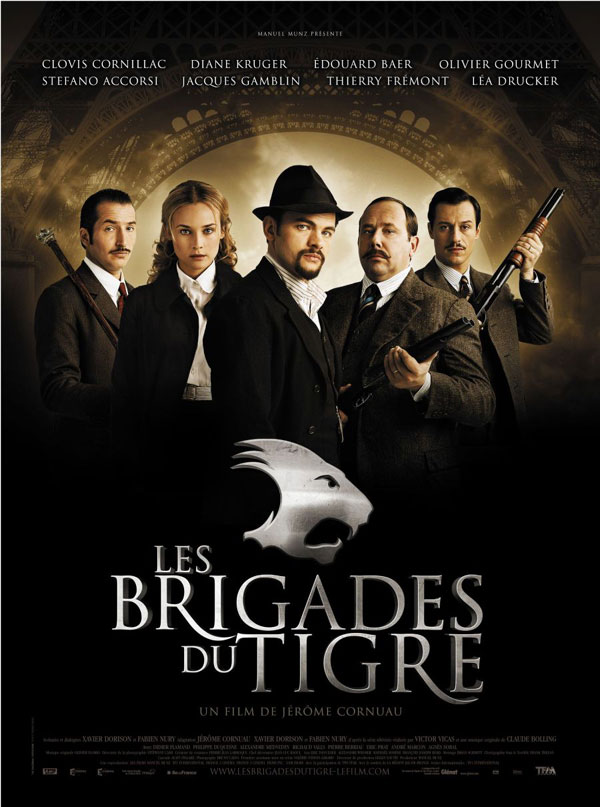 Set in 1912, this film is about the exploits of France’s first motorized police brigade, nicknamed the Tiger Brigades, and in particular, the daring group’s first assignment to neutralize crime leader Jules Bonnot and his gang of anarchists.
Based on a hugely successful French TV series in the 1970’s, the script is well-written (Claude Desailly, who also wrote for the TV series) and blends huge parts of history and historical figures into the film, such as Minister Jean Jaures and his journal L’Humanite; The Triple Entente; the Russian Revolution & Russian Loans to France; and the ‘premices’ or reasons/situation of WWI. And the direction, by Jerome Cornuau, covers the emergence of a new type of criminality, the innovative ways to fight this new type of crime, and the rivalry between the Brigades, the Parisian Police and other Prefectures throughout France.
While the ending felt abrupt, as though they’d run out of time, this is a fun, informative, and well cast film well worth watching (also, there’s meant to be a sequel in the pipeline, so one must catch up!)
Filed under: Published film reviews | Tags: Lake District, Michael Winterbottom, Rob Brydon, Steve Coogan
 Steve Coogan has been asked by The Observer of London to review six of the finest restaurants in Northern England. He plans to take his pretend girlfriend Mischa, but after she backs out he is forced, with demonstratable reluctance, to take his best friend and source of eternal aggravation, Rob Brydon.
The Trip was a six-part BBC2 series last fall, and almost everything – the title, premise, the duelling funnymen (also from Tristram Shandy: A Cock and Bull Story, an earlier film of Michael Winterbottom’s) are the same except for the abbreviated length for the movie and some gags consequently lost in the process of shortening. In between the food, the vocal caricatures and Lake District landscapes, the duo goad each other with smiling insults and prickly jokes, all the while comparing their successes. Sometimes the camaraderie edges into aggression but this is soon stifled by laughter and good humour; lots of tears and laughs.
Filed under: Published film reviews | Tags: Berlin Film Festival, Best British Comedy, Cannes Film Festival, Joe Dunthorne, Richard Ayoade, Sundance Film Festival, Toronto Film Festival
 Oliver Tate is besotted with a feisty girl in his class at school, Jordana. But as he embarks on his first relationship, he also frets over the troubles in his parents’ relationship, problems exacerbated by one of his mother’s exes moving in down the street.
This is Richard Ayoade’s directorial debut and he has hit it ‘right on the money’ with savvy visual references, a good script and cast. Adapted from Joe Dunthorne’s novel, the script is humorous and sly. Aiding the script are well-cast actors in all of the roles whose characters offset the quirky, dark tendencies of the movie with a warmth and likability.
A coming of age tale that blends cool, quirky comedy with warm-hearted drama.
Filed under: Published film reviews | Tags: best actress, Cannes Film Festival, Charlotte Gainsbourg, Danish film, Kiefer Sutherland, Kirsten Dunst, Lars Von Trier
 Justine (Kirsten Dunst) and Michael (Alexander Skarsgard) are celebrating their marriage at an extravagant party in the home of her sister (Charlotte Gainsbourg) and brother-in-law (Kiefer Sutherland) just as the planet Melancholia is heading towards earth. As the planet threatens to collide with the earth, the two sisters find their relationship challenged and their sense of the world and their place in it in question.
Danish Director and Writer Lars von Trier is no stranger to difficult subject matter as seen in his previous films Dogville, Breaking the Waves, Dancer in the Dark and The Kingdom. Melancholia is about the tension between appearances and ‘reality,’ happiness and sadness, ‘good’ and ‘evil.’ Von Trier is also a man who upsets people both with his work and his words – it premiered at the Cannes Film Festival this year (May) where it won Kirsten Dunst a Best Actress Award (a long way away from her role in Spiderman) even as Von Trier was ejected from the festival for offending someone with something he said.
However, as with Von Trier’s previous films, the work speaks for itself: complex, gorgeously shot, beautifully scored, and wonderfully acted, this is a very good film.
Filed under: Published film reviews | Tags: Cruel Intentions, Dangerous Liaisons, Glenn Close, John Malkovich, Michelle Pfeifffer, Perre Choderlos de Laclos, Reese Witherspoon, Sarah Michelle Gellar
Because the characters in Pierre Choderlos de Laclos’ novel Les Liaisons Dangereuses (Dangerous Liaisons) are very French and not ‘august’, I’ve chosen to profile two very different film adaptations from this book for this month. The author, Choderlos de Laclos, was a Brigadier General in Napoleon’s army. His novel was condemned as ‘revolting immortality’ when it was first published in Paris in 1782, but that didn’t stop it from being voraciously read over the next two hundred years!
 DANGEROUS LIAISONS (Les Liaisons Dangereuses)
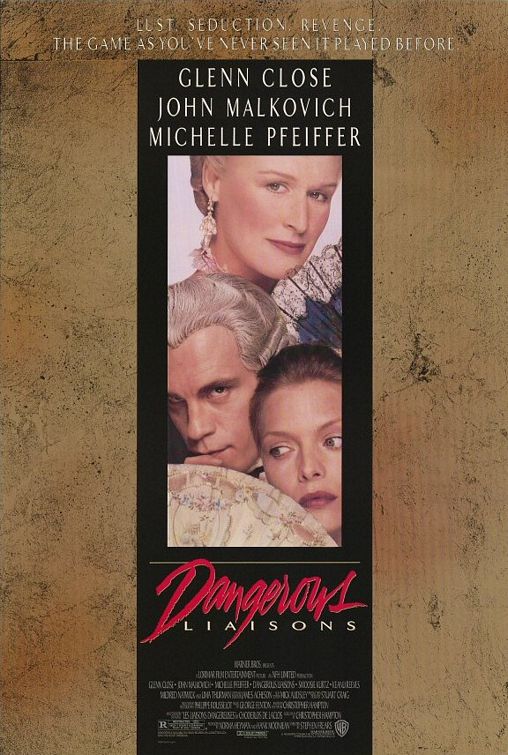
Vicomte de Valmont (John Malkovich) and the Marquise de Merteille (Glenn Close) enjoy a close, although not sexual, relationship based on desire and disdain. They are perpetually trying to outdo each other in their morally reprehensible acts, which generally involve the deflowering of young socialites. When she asks him to seduce Cecile to humiliate her prospective husband (the Marquises’ ex), he initially refuses because he’s trying to bed the highly moralled Mme de Tourvel (Michelle Pfeiffer) just for fun. When Valmont locks horns with Cecile’s protective mother, he decides that bedding her, in defiance of the mother, may be a good idea after all. Meanwhile, the ‘bet’ between the Marquise and Valmont is that he cannot bed Mme de Tourvel, and if he does, he must provide written proof and then he will actually get to sleep with the Marquise.
The film could so easily have fallen apart due the sheer ludicrousness of the plot, but the wonderful acting by the leads, Close, Malkovich and Pfeiffer, makes the story not only possible, but plausible; they’re operating on the idea that everybody concerned is absolutely mad as only the fabulously wealthy can be. This is a devilishly seductive black comedy.
 CRUEL INTENTIONS
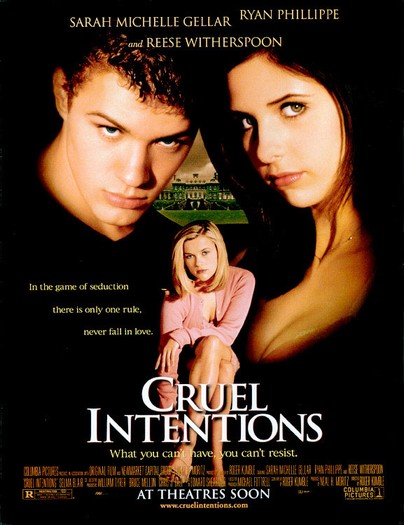
Kathryn (Sarah Michelle Gellar) and Sebastian Valmont (Ryan Phillippe) are amoral step–siblings in modern day Manhattan. Both of them spend their time shagging around the Upper East Side, but Kathryn has a great reputation among the upper-class society they are both a part of, whereas Sebastian is a notorious sleaze. In an effort to satisfy their lust for each other, Kathryn bets Sebastian that he can’t bed the virginal Annette (Reese Witherspoon), the headmaster’s daughter at their posh school, who has sworn celibacy before marriage. If Sebastian fails to bed Annette, then Kathryn gets his vintage Jaguar. If he succeeds, he gets Kathryn for the night.
Cue saucy shenanigans and a subplot regarding defrocking the innocent pawn Cecile as revenge for Kathryn’s being dumped by Cecille’s current boyfriend. As added vengeance, Kathryn also sleeps with Cecile’s ‘true love’ even as she tells Cecile that she is helping them to get together away from the vigilante eye of Cecile’s overbearing mother.
With its over-the-top performances and preposterous climactic ‘tragedy’, this is the kind of movie purists dismiss as a mockery of both the original film ‘The Dangerous Liaisons’ and of the book. However, if you don’t focus on the roots that it has shamelessly mangled, this film is a lot of fun that will entertain you.
Filed under: Published film reviews | Tags: Abbie Cornish, Bradley Cooper, Robert DeNiro
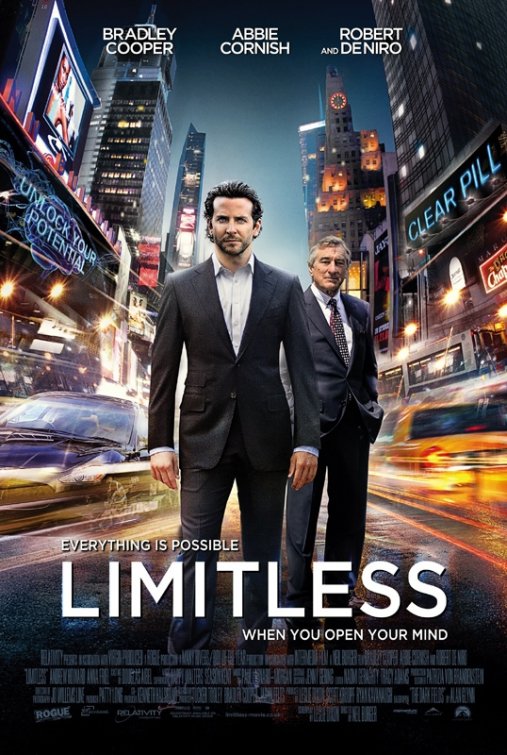 Wannabe writer Eddie (Bradley Cooper) is out of money, heart broken, and has writer’s block until he discovers a top-secret drug with brain-enhancing qualities, which gives him a four-digit IQ. Robert De Niro plays a billionaire on the trail of Eddie’s secret and Abbie Cornish plays our hero’s skeptical girlfriend. Soon, Eddie finds himself haunted by blackouts and hunted by bad guys.
This is silly material, sure, and very high concept, but the actors – particularly Bradley Cooper and Robert De Niro (both in form in their respective roles) have a lot of fun in this film, which does not take itself seriously. This is a smart, stylish and hugely entertaining movie that makes you wonder “what if?”.
Filed under: Published film reviews | Tags: Christopher Plummer, Ewan McGregor, Mike Mills
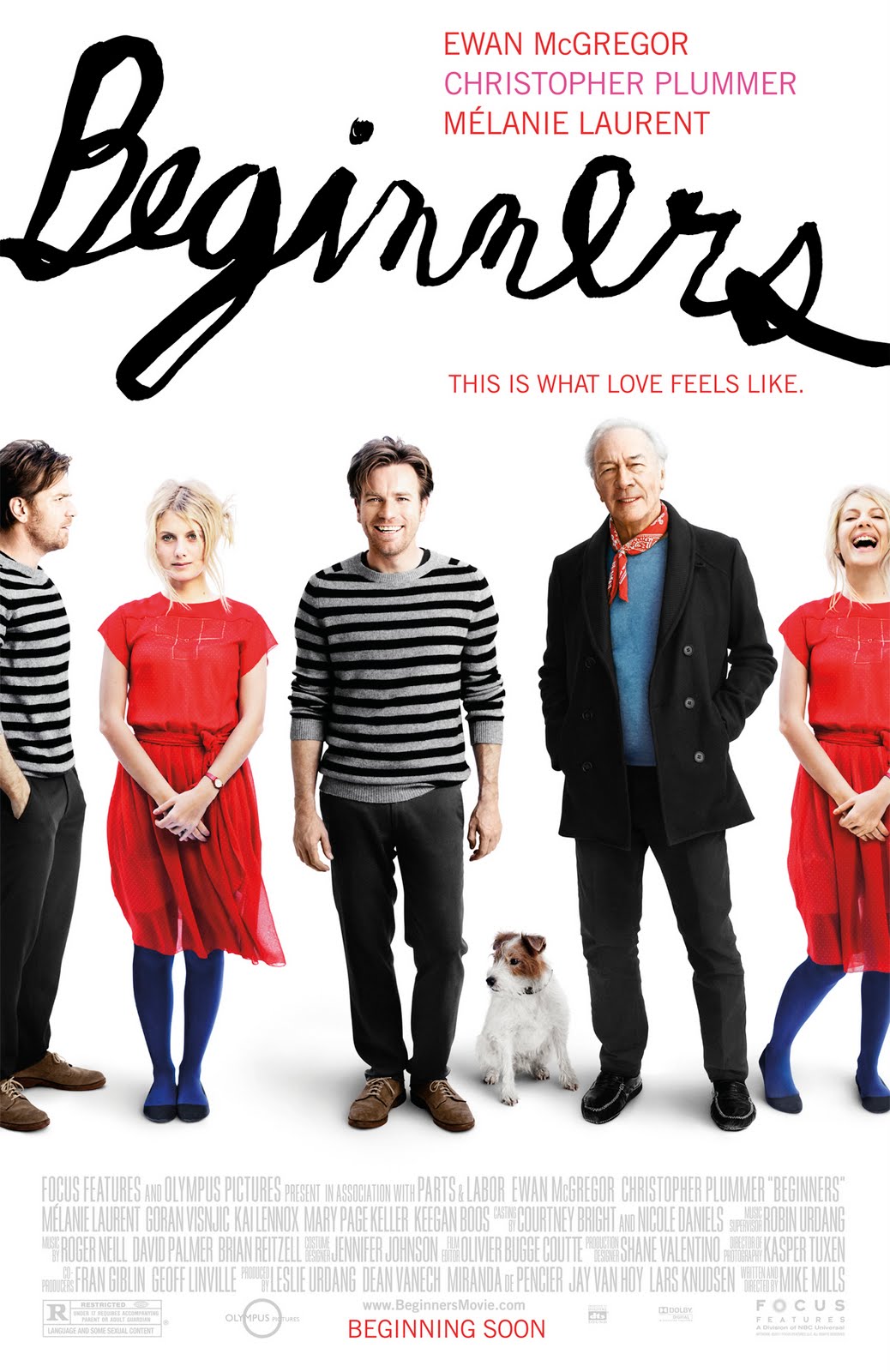 Oliver (Ewan McGregor) is graphic artist grieving for his father, Hal (Christopher Plummer) who has terminal cancer and who Oliver’s just discovered is gay. Oliver then embarks on a love affair with a French actress.
Mike Mills is a very hip US Director connected in a big way to cool bands (Air, Beastie Boys), edgy movies (Thumbsucker), and who’s married to an indie-scene ‘goddess,’ so it’s no surprise that this film has an offbeat sense of humour and is quirky in general. However, this film doesn’t know whether it wants to be a romance – see our hero embarking on a love affair with pretty and ‘kooky’ French actress – or whether it’s a family drama – see our hero discovering something huge about his father just as he’s dying – resulting in the film not going into too much depth in either area.
That said, the acting and the characters are very well done: Ewan McGregor is likeable and witty as Oliver; and Christopher Plummer as Hal, is great as the kindly, outspoken and stubborn dad. The flashbacks of their visits together in the hospital, where Hal openly embraces his sexuality, to the surprise of his son, are well-observed and poignant, and remind one of the importance of living life to the fullest.
Filed under: Published film reviews | Tags: Bangkok, Bradley Cooper, Hangover, Very Bad Trip
 Like its predecessor, one of the guys is set to wed a non-mail order Thai bride, so the gang are reunited and set loose in Bangkok (last time Las Vegas) where they wake up in another hotel room, unable to remember what’s happened to them. This time their trail of mayhem involves monks, monkeys and a slew of ‘lady boys.’
The original Very Bad Trip (Hangover) was a cleverly structured dumb comedy about the day after a stag night, piecing together the specifics of a debauchery. This follow-up sticks so closely to its predecessor’s blueprint that it plays more like a remake, and unlike the first film, it’s not very funny. That said, if you’ve had a few beers, want to have a ‘lite’ evening at the cinema, and are interested in looking at the seedier side of Bangkok, then this is the film for you.
Filed under: Published film reviews | Tags: Badlands, Brad Pitt, Days of Heaven, Sean Penn, Terrence Malick
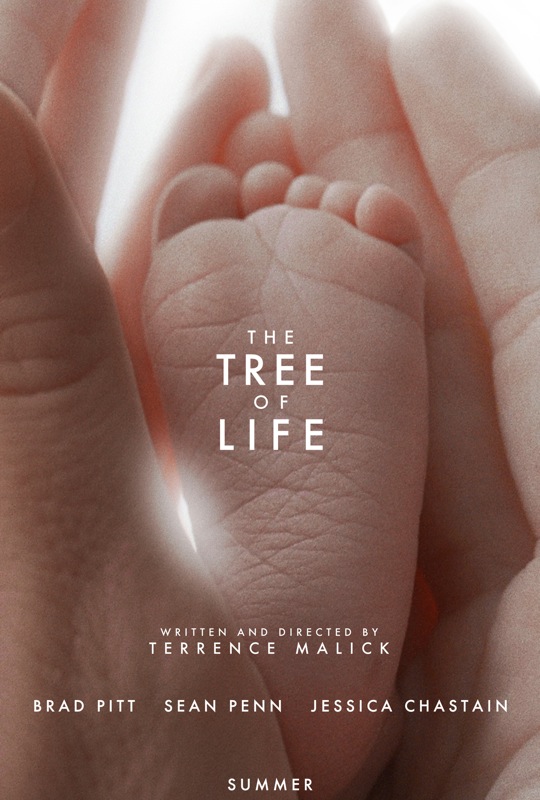 This is a film about three boys growing up in the 1950’s with their mother, a free spirit, and their father, a ‘hard ass’ who is alternately affectionate (played by Brad Pitt). The story considers the origins and meaning of life, and death, in general and as it pertains to the boys’ lives and experiences.
The film premiered in competition at the 2011 Cannes Film Festival, where it won a Palme d’Or, and was met with rave reviews from critics but was actually booed at the screening (a tough reaction particularly as the filmmakers and actors are present). Depending on who you speak to, the sci-fi meets surrealist themes and imagery were seen as either imaginative and independently minded, or pretentious and boring. This reviewer finds that the fragmented and non-linear narrative actually is how memories are remembered, and as it’s a story told in the present about the past, this seems appropriate and interesting. That said, there is an argument for its being indulgent and meandering. However, in a world of films that appeal to the lowest common denominator and rely on frenetic images and action, this nicely paced, philosophically-light film is refreshing.
Malick has taken his time with his films, working on this one for decades and ‘only’ having made seven films in a 35-year career, but his films Badlands and Days of Heaven are two of the most beautifully filmed movies of all time and this one is gorgeous, too. Lightly existential, this is a great film to watch when you’re in the mood to consider your life, your family, and the world you live in without delving too deeply into any of it.
Filed under: Published film reviews | Tags: Audrey Tautou, Carla Bruni, Jean-Pierre Jeunet, Michael Sheen, Owen Wilson, Paris, Rachel McAdams, Woody Allen
Picking up from last month’s The French Paper interview with Woody Allen at the Cannes Film Festival, I’ve reviewed his latest film Minuit a Paris (Midnight in Paris) currently in cinemas. Because Allen’s film celebrates Paris as the city of light, the city of romance, and the city of beauty and possibility, I have chosen another film that honours Paris’ ‘heart’, too.
MIDNIGHT IN PARIS
 Director Woody Allen’s latest film, which premiered in Cannes this year, is a romantic comedy about a family travelling to Paris for business, including a young engaged couple. Our hero, one half of the couple, is unhappy, but not entirely sure how to amend his malcontent. During his rambling evening walks, our hero finds that he is transported to 1920’s Paris every night at midnight when he stands at a certain place in the city. In this other age he meets many of his heroes, such as Hemingway, Fitzgerald, Dali, Bunuel, Picasso, Man Ray and Gertrude Stein. During these visits, our hero is forced to confront his illusion that a life different from his own is better, even as he also finds that some elements of his dreams are worth pursuing in his ‘real’ life.
This film is not one of Allen’s greats – Manhattan or Annie Hall or even The Mighty Aphrodite – but it is the best of recent years and absolutely worth watching. That said, it’s not a film for everyone because of its literary and artistic references as well as its subtext of existentialism, but that’s not to say that it’s ‘high brow’ or overly intellectual at all. Ultimately, Woody Allen’s film is an homage to creativity and dreams as a reality rather than as an illusion. This reviewer left the cinema after watching this film feeling that “all things are possible.”
AMELIE
 Amelie secretly sorts out the sad little problems in her friends’ lives, bringing joy to them without being happy herself. But when she finds a photo album belonging to a stranger called Nino, she realises that she’s in love from afar, a problem of her own she has to deal with, among other problems, one of which is that as a child she was isolated from her peers and withdrew into a private world of her own. Luckily, however, this gives her a great imagination and gives Director Jean-Pierre Jeunet the opportunity to filter the film through some of Amelie’s gently bizarre observations.
As in Director Jeunet’s other film Delicatessen, the affectionately eccentric and grotesque characters are essentially lonely people who share their geography. Unlike Delicatessen, there is the positive force of Amelie, played charmingly by Audrey Tautou, who brightens their lives and fills them, and us, with hope and happiness.
This colossal French box office hit has an irresistible charm that will eliminate the storm clouds hanging over the heads of even the most desolate misanthrope. With its wonderful soundtrack, Amelie leaves the viewer feeling revitalized and dreamy.
 Victoria Jelinek