Filed under: Published film reviews | Tags: Casey Affleck, film review, Jessica Alba, Jim Thompson, Kate Hudson, The Killer Inside Me
 Deputy Sheriff Lou Ford is a respected member of his community even as he’s also a shrewd and sadistic sociopath. However, after the son of a local mogul is found dead with the beaten body of a local prostitute, suspicion falls on Ford.
The film, which takes place in Texas 1952, is adapted from Jim Thompson’s psycho-noir novel of the same title. Fifty years after the book was written, this portrait of small-town America and its depiction of violence against women is deeply unsettling. Directed by Michael Winterbottom, this is a darkly disturbing film that’s brutal and visceral but not gratuitous. Ford’s Southern manners, baby face, and bland homilies are the epitome of evil.
From Casey Affleck’s sociopath Ford, to Jessica Alba’s sad and compelling role as witness, to Kate Hudson’s moving performance as Ford’s girlfriend, the ensemble cast are the best elements of this movie. This isn’t a film for everyone, and this writer didn’t like the ending, but it’s nonetheless a very good film.
Filed under: Published film reviews | Tags: Elsa Zylberstein, film review, French film, I've Loved You So Long, Kristin Scott Thomas, Philippe Claudel
 Juliette (Kristin Scott Thomas) is released from prison after 15 years and goes to live with her sister. There, Juliette attempts to cope with the burden of her incarceration and the gravity of her crime.
Pale, chain-smoking Scott Thomas delivers a stellar performance (and shows off her fluent French). She inhabits the character of Juliette with warmth and vitality as she throws off the judgement of others and the horrible shackles of her past. Elsa Zylberstein, who plays Juliette’s earnest and caring sister who takes her in, also gives an excellent performance.
This isn’t a ‘comfortable’ film to watch, with its themes of regret, grief and alienation, but in the hands of debut Director Philippe Claudel, this is a truly affecting film. It’s also a very French film in its subtlety, philosophy, and pacing. 115 minutes running time.
Filed under: Published film reviews | Tags: Beatrice Dalle, Betty Blue, film review, French cinema, Jean-Jacques Beineix
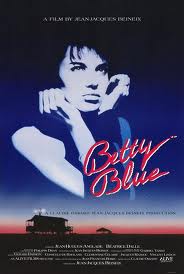 Zorg, a handyman, is living a peaceful life in rural France, working diligently and writing in his spare time. Then Betty, a vivacious and unpredictable woman, walks into his life. Initially, her wild ways are fun and spontaneous and Zorg falls in love with her, but Betty’s behaviour slowly gets out of control as she spirals into insanity.
The film opens on a shot that creeps up on a couple making love on a bed – their sweating intimacy is contrasted by a voiceover telling us that they’ve only known each other a week. Every frame of Jean-Jacques Beineix’s film carries the seal of its country of origin as well as the era in which it was made. Only in the 1980’s could such a tragic film be created with such a visually-gorgeous-but-empty style. Only in France could a story of passionate love open so erotically. Only in France could a film’s tone be misogynist, seeming to blame Betty’s insanity on the inherent ‘madness’ of the female of the species, and yet seem authentic.
Betty’s descent into insanity and destruction is well paced and compelling. Beatrice Dalle (Betty) never made another film worth noting again, but this film alone was enough to make her an icon of late 20th century cinema. 183 minutes.
Filed under: Press releases | Tags: Chamonix, film events, Make Your Own Legends, The Adventure Film Festival
 The Adventure Film Festival got started in Chamonix when American mountaineer Jonny Copp came here, as many of us do, to enjoy the great outdoors and some of the best mountains in the world. Once here, he proposed to his friends in Boulder – another outdoorsy, naturalistic area – that they extend their film festival to Chamonix. He argued that there are a lot of similar people out here – adventurers, artists, activists – who believe in the power of story, especially the narrative of awakening to change, portraying the world we want to live in, abiding by a respect for nature and practicing conservation, always. The festival’s slogan of ‘Making Your Own Legends’ is not only about epic challenges, it’s also about the daily challenges all of us face as we try to build a healthy, positive world to live in: we create our own stories of risking, losing and winning–or simply surviving and prevailing!
It didn’t take long to convince the group in Boulder to extend the festival idea to Chamonix, as the vision had always been about developing a ‘world community.’ When Jonny died in a climbing accident, friend and fellow climber Zoe Hart took over as Director of the festival in Chamonix. “His vision was to grow it (the festival), like a seedling in the garden, and pass it on to the local community to grow into whatever it would become with Chamonix sun, water, love and care,” says Zoe. Today, Zoe and festival volunteers – with nationalities ranging from French and British, Canadian, American, German, Swiss, Finnish, Swedish, Australian, Norwegian, Flemish – are working together to make the festival a permanent international event based in Chamonix.
Alliances such as the one involving the Adventure Film Festival organisers, volunteers, town officials and local merchants, are established because of a shared cause. Let’s hope this alliance, now in its second year, grows over the years to come, not only because there’s no reason why it shouldn’t, but also because we need to encourage and nurture all the culture we can get in Chamonix.
The 2nd annual Adventure Film Festival will be taking place again this year on August 20, 21st & 22nd at the Bicentennaire, Chamonix-Mont Blanc. For tickets, schedules and further details of films and events, please visit www.adventurefilm.org or contact Zoe Hart at zoe@adventurefilm.org
Filed under: Published film reviews | Tags: Charlotte Gainsbourg, film review, Julie Bertucelli, L'Arbre, The Tree
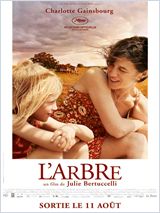 When her father dies suddenly, eight-year-old Simone tells her mother that her dead father speaks to her through the leaves of her favourite tree, a huge Moreton Bay fig. But when her mother, Dawn, starts a relationship with George after he’s called in to remove the tree’s troublesome roots which are going to wreck the house, the bond between mother and daughter is threatened.
This sounds like a ‘downer’ of a movie, but it’s not. The notion that there is a spirit within the tree is nicely played out and leads to some lovely moments for members of the family, who are all ‘getting on with their lives,’ but who are also coping with their respective loss. French director Julie Bertucelli handles the material with compassion and sensitivity that is, in the French manner, developed slowly; she also draws good performances from her cast (inclusive of the wonderful Charlotte Gainsbourg).
Filmed in Queensland, Australia, the cinematography in The Tree is gorgeous and complements this tale of grief and recovery by using nature as a metaphorical and literal character; the stunning landscapes that fill the screen are evocative and marvellous.
Filed under: Travel pieces | Tags: Cannes Film Festival, Festival du Cannes, film festival, French film festival, Travel Cannes
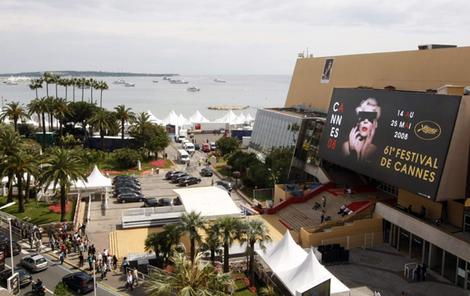 Cannes…It’s is an amazing party like nothing you’ll see anywhere – not Sundance, Toronto, Berlin, Venice, nowhere. It’s everyone in World Cinema and the European industry combined with everyone in the US industry, combined with super super super stars, combined with international wealth that one doesn’t usually see (arms dealers, for example), with huge yachts on the harbor, sparkling at night along the Croisette, and folks decked out in Chanel, Dior, Gucci for the premieres (black tie only, and its very cool as you walk down the red carpet and it all seems so celebratory! For film!). The main gig is along the Croisette (the main road, bordering the water) with Old Town providing the places for nice, relaxed dinners, and the beaches farther along the harbor for those who want some ‘peace.’ And most of the action that’s not private, happens behind the Grand Hotel. It’s a lot of fun and its gorgeous. I’ve gone there to work and I’ve gone there to bask in my ex husband’s credentials, expense account, passes, etc (where I went to every party, and a premiere every night, and his offices were on the Croisette, costing 40k Euros for rental for two weeks), and I enjoyed it and it was EXHAUSTING. I felt like I had Rose wine streaming through my veins by the time I left ALL times. However, it is IMPOSSIBLE to get into parties, on the beach, in the villas up in the hills, on the boats, anywhere, without invites/being on guest lists, and it’s near impossible to get into most films without a pass, and absolutely impossible to attend a premiere unless you know a distributor who can give you an invite, or you go with an A List star (and even then, hmmm). The villas, the parties on the beach, all heavily guarded/manned, as are the premieres, where even if you DO have a ticket, you may not get in and it’s a real mess (see A List bringing an entourage and over-issuing to insure packed houses). It’s gorgeous, blue sparkling, French Riviera, and its silver-colored sea with the sparkling lights at night. However, even when you ARE working, or ARE with an ‘important’ person, or are beloved by those you’re around, EVERYONE is always looking over your shoulder as they talk to you, and around the room, to see who else is there, etc…but it is exhilarating even as it’s heartbreaking.
Filed under: Published film reviews | Tags: animated film, Belleville Rendez Vous, film review, Sylvain Chomet, Triplettes de Belleville
 During the Tour de France, expert cyclist Champion is kidnapped by the Mafia and taken to the megalopolis of Belleville. Champion’s doting grandma, Mme. Souza, mounts a daring rescue mission aided by three ageing music hall stars and a geriatric dog. A Portuguese ‘old dear’ with a clubfoot, Mme. Souza is an unlikely cartoon heroine, but her relentless, resourceful spirit and her unyielding desire to protect her grandson is completely compelling.
From the opening musical number, French Animator Sylvain Chomet throws in amazing set pieces and creates an original and enchanting world, with great supporting characters (hulking mobsters, sad-faced cyclists), and subtle cultural commentary (Belleville is a thinly-disguised USA).
Les Triplettes de Belleville is not a new release, but it is an absolute must see. This is Chomet’s first full-length feature and it’s a wonderful adventure tale with a hymn for times lost. Chomet’s film maintains an emotionally resonant core as it mixes sadness with satire and complexity with nostalgia. Humorous and moving, this is an absolutely unique film that is arguably pure genius.
Filed under: Published film reviews | Tags: film review, J.M. Coetzee, John Malkovich
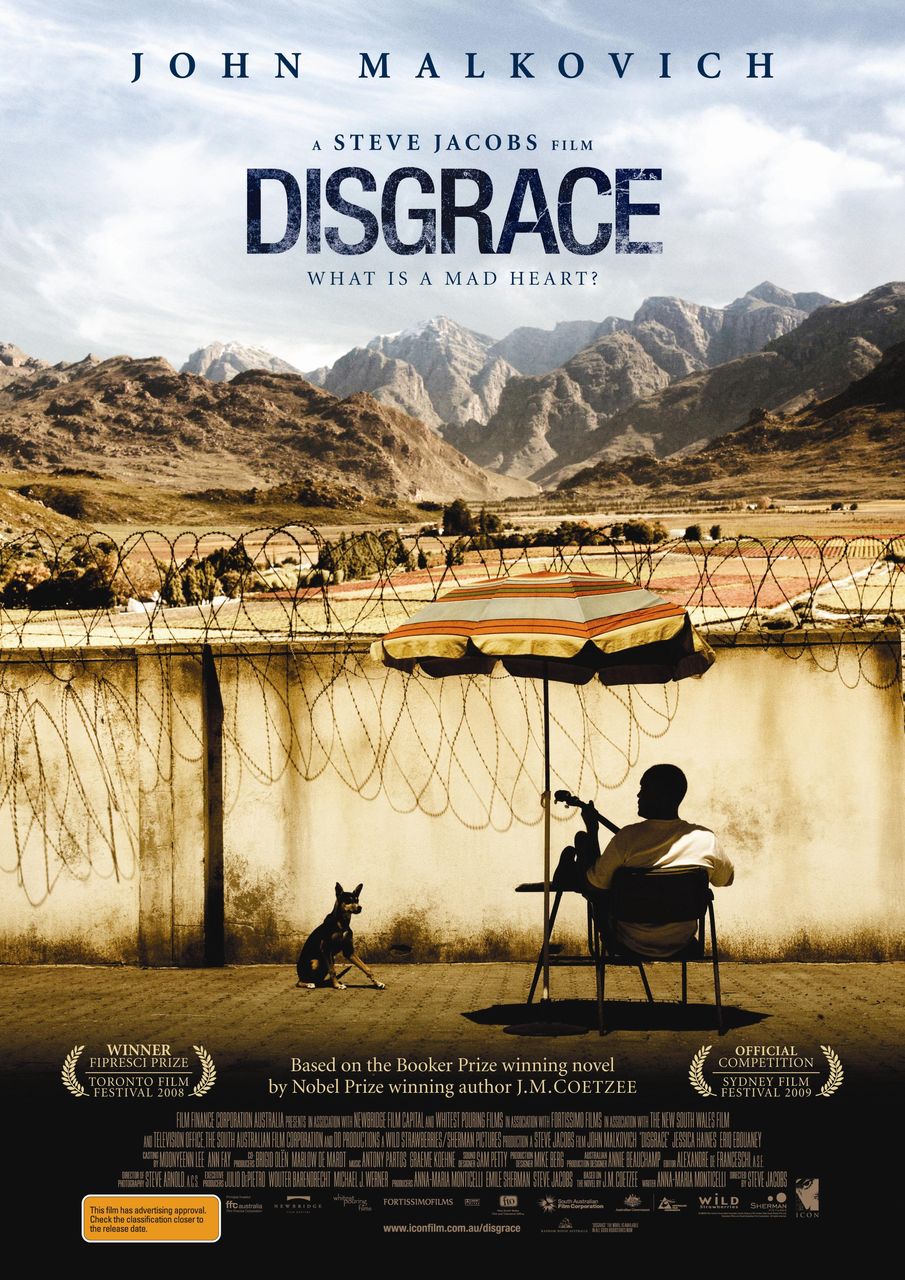 David (John Malkovich, Burn After Reading, Changeling) is dissatisfied with his job as a professor in post-apartheid South Africa. When he cruelly seduces one of his students, he is dismissed and goes to live with his daughter on a farm in the Eastern Cape. For awhile, his daughter’s influence and the natural rhythms of the farm promise to bring his life calm, but the balance of power in the country is shifting and in the aftermath of a vicious attack on the farm by three black youths, he is forced to come to terms with the changes in society – as well as with his own disgrace.
The film, like the book it’s adapted from (J.M. Coetzee’s Booker Prize winner) is brilliant.
Filed under: Published film reviews | Tags: Abbie Cornish, film review, Jane Campion, John Keats
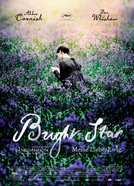 If you’re in the mood for a love story that leaves you both devastated and uplifted, then BRIGHT STAR is the movie for you.
London 1818. Fledgling poet John Keats (Ben Whishaw, LAYER CAKE) meets neighbour Fanny Brawne (Abbie Cornish, CANDY) and they fall intensely in love, much to the irritation of Keats’ best friend (Paul Schneider, ELIZABETHTOWN), who schemes to break them up – but it’s a more daunting opponent that kills their relationship in the end.
Similar to her most famous film THE PIANO, Writer/Director Jane Campion tells us that it’s through the unlikely pairing of Fanny and Keats that the passion in his poetry is exposed.
This isn’t a creaky costume drama or Keats from a dusty old book – this is a buxom and touching ode to love.
Filed under: Press releases | Tags: Chamonix, Cinemavox Chamonix, French Alps, Kendal Mountain Festival, La Montagne Fait Son Cinema
 The second of the La Montagne Fait Son Cinéma movies is showing on Wednesday night at the Cinema Vox.
The mountain film series La Montagne Fait Son Cinéma has been put together by Association des Amis du Cinéma, and is inspired by a book about films shot in and around Chamonix. The series showcases films by local directors, climbing and mountaineering documentaries, and a few recent productions, including a film from the Kendal Mountain Festival.
“The Blizzard of Aahhhs”, is a “Rock-u-mentary” style “cult classic” from 1988 that profiles little-known and famed heroes of the ski world, from Chamonix Valley to Squaw Valley in California, in a humorous and personal manner. The first of its kind, “The Blizzard of Aahhhs” is cited as the inspiration to reside in Chamonix from many current expats living in the valley.
Guest Glen Plake, one of the skiers in “The Blizzards of Aahhhs” and also one of the judges in this week’s Nissan Outdoor Games, made a name for himself with his huge Mohawk and punk style of skiing, and is still a passionate enthusiast who spends half his year in Chamonix.
 Victoria Jelinek