Filed under: From the Soap Box | Tags: Brexit, Cameron, EEA, England, English, EU, European Union, France, Immigrants, London, refugees, Trump
 My love affair with England began in 1990. I was an undergraduate student in London. I loved the particular energy of the city. The diversity of shoes on display in shop windows and on people’s feet. The apartments over ground floor shops. The double-decker red buses. The black cabs. The deep, smelly, hole-in-the-wall pubs. The trains. The humor – which is everywhere – from the people you meet casually or in passing, to radio and TV broadcasts, to one’s friends. The literature. Oh, the great literature. The libraries. The music. The history. The architecture. The pride. The Indian food. The bacon sandwiches and brown sauce. The pastoral countryside. The rivers. In fact, returning to the USA, I moved to New York City because it was the closest approximation of London that I could find in America. In the years since, I have repeatedly returned to London to live – for graduate school and, later, for work. It’s the only place I’ve lived – of several – which I continually and almost religiously, return to. Livings as I do now in an unnatural habitat for me (and at the risk of sounding dramatic) my regular visits to London are the lifeline that sustains me. Without that vibrant, majestic, complicated, dirty city and my community of friends – honed over 25 years through school and work – I would be bereft.
That said, for the first time my beloved adopted country precariously sits in my heart and mind due to its likely vote to exit Europe. This makes me terribly sad, troubled and confused. Over the course of the last month or so, in London and with the English expatriates who populate the region I currently live and work in, I have been surprised to hear that they mostly favour an exit. Their reasoning? That it’s “better for England.” When I ask exactly how it’s “better for England,” their arguments are thin, though impassioned – “It’s not right that England is ruled by unelected foreign officials!” It’s been “co-opted” by people they can’t see and who are not English. Ultimately, however, it comes down to this: “We are full and can’t accept anymore.” To paraphrase a dear friend who is truly English, the motivation to exit doesn’t seem to be just from fear (tribal basics of ‘in-group’ and ‘out-group’ – see Social Psychology), but from the very real difficulty in getting a GP appointment. From meeting droves of Polish and Asian people waiting in the doctor’s surgery, who are often waiting for translators for their appointment, which is an additional burden on the NHS. The desire to exit is because locals find that their kids are unable to get school places. The parents chat in a multitude of languages in the playground, which promotes fear in the English-speaking parents that their kids are being held back ‘cause they have twenty-four languages in a middle-class white school in Surrey, for example. It’s folks seeing foreign food aisles in supermarkets. British folks looking for a builder and struggling to find one that isn’t Polish, or having carers who can’t speak to them because they’re foreigners without the ability to talk competently in English. It’s black cab drivers that are losing work ‘cause there are flocks of mini cabs being driven by foreigners offering cheaper rates. It’s the fear that unwanted hordes of migrants and refugees will be granted citizenship in France or Germany and then move to England with their fresh passports. The thing is, England needs these workers. Without them, who will do the work that the average English man doesn’t want to do, certainly for a lower wage?
The ‘un-elected foreign officials’ making laws are in Belgium. They’re an amalgamation of Europeans, including the English. Moreover, it’s a miniscule fraction of the laws in England that have their origin in Europe. And likely less so with the recent concessions Cameron has received. On top of that, the laws that have been enacted in England from Europe are about the environment – housing is built to an environmental standard and there are incentives to make one’s homes more environmentally sustainable. The waterways of England have been greatly cleaned up and are protected by EU laws regarding dumping and waste. The EU protects workers rights in an environment of vicious capitalism. For example, the right to ask for overtime pay if your employer requires that you work more than 48 hours a week is protected by an EU law. And if you’re into vicious capitalism (or simply growth and invention), the EU allows English companies to trade and expand more easily, thereby creating jobs and revenue for the country. The EU protects human rights laws –the ability to have a safe place to live subsidized by the state for example. The lack of wars and infighting between countries within the EU has ceased since the 1950’s, when the EU was just a good idea – one that took decades to create and enact and which has consequently ensured peace between the nations of Europe since the (that’s only just over 60 years of peace!). What about the sharing of information? If England secedes, there will not be the same level of cooperation between countries to find a given ‘bad guy’ (and there are already problems given language and bureaucratic realities). Freedom of movement for the English and their children is a product of the EU. The ability to buy houses in warmer countries outside the UK. The ability to work and live out your retirement on the continent with protection for health and welfare as you age, are products of the EU. Low airfares to/from the continent for holidays are a product of the EU. Protection during your package holiday such as travel insurance and charlatan deals are a product of the EU. The ability to buy loads of wine and cheese ‘cheaply’ with a mere crossing of the channel is the result of the EU. The hordes being held on distant shores are the product of the EU – without the EU, the reception will be in Dover, not Calais. Lack of roaming charges on mobile phones is a EU invention (and hasn’t even gone into effect yet). If England exits, it will be the end to the welfare state most English people know. Certainly those under fifty years of age. And one still won’t get a school place or go to a GP appointment without incident or have more material possibilities outside the EU because it’s lack of good management and long term planning that are the problem as well as inequitable distribution of wealth.
I do understand those desiring a frustrated exit from the EU, even as I disagree. I, too, worry about practical and material possibilities for my child in the future. I worry about the influx of migrants – the Trojan horse theory that there will be ‘bad ones’ mixed in with the ‘good ones’ simply seeking a safe haven for their families has entered my construct of reality, too. I am troubled by the prospective entry of Turkey into the EU. I appreciate the country, its beauty, history and music, but it’s not a culture that shares the same values as other European nations – which includes England – about gender roles, education, religion, marriage, work, freedom of speech, and penalties to criminal offenders. Why then would they be a part of the EU? Well, that’s a larger argument about global tactics, side deals, and corruption. The Brexiters are right to complain about the EU’s endless hassles, choices, and its bureaucratic administration, but one does not change things from without. One changes them from within.
Referring to the primal fear in England that the country is losing its national identity, it begs the following questions: despite being a country of immigrants, when you think of Americans, do they not share a common identity in your mind? (For better or for worse). In an increasingly global world, where increased knowledge of other cultures – namely languages – is a practical benefit, why would one want to eliminate that exposure for your children? (Also, look at the neuroscience regarding bilingual abilities and the positive effect on a child’s brain). Does it make sense to break the bonds with your neighbours in such troubled times?
In my opinion, the finest qualities of the English are their language, their humour, their resourceful stoicism, and their generosity. Would not the best way to ‘fight’ the feeling of losing one’s identity be to uphold these values despite the seemingly fierce opposition to them? Figure out ways to teach foreigners the native language and bring ‘em over to the English POV. Find the ways to solve the real problems of mismanagement, poor bureaucratic processes, and lack of material possibilities and wealth (starting with the NHS, the Inland Revenue, namely tax evaders, and foreign home ownership would be a good start). Dearest England, despite your fears and frustration, act in solidarity for what is essentially a good idea for everyone, including you. The European Union is a positive force, not a negative one. Personally, I fear that I’m going to lose friends over this vote…I might find it hard to look those opposed to the EU in the eye because to me a vote to exit is on par with a vote for Trump (who supports Brexit btw) — it’s yielding to the lowest common denominator in each of us.
A few resources for information on Brexit:
http://www.telegraph.co.uk/travel/comment/what-would-brexit-mean-for-travellers/
http://www.bbc.com/news/uk-politics-32810887
Filed under: The Baby Diaries | Tags: Bill McKibben, China one child law, Emma Kennedy, France, French childcare, G. Stanley Hall, lonely children, only child, only children, The Guardian, Time Magazine
Being an only child is a disease in itself. G. Stanley Hall
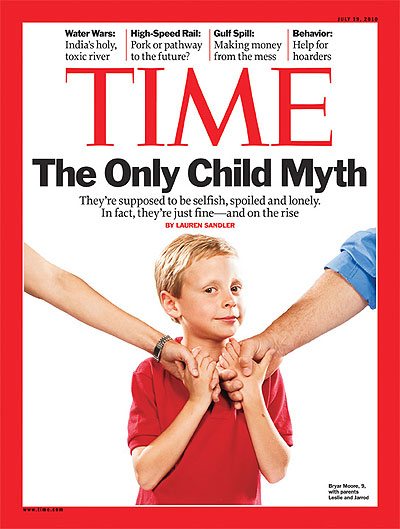 The other day I was surprised to hear from a long-lost friend that she’d given birth to her third child. I never would have taken her for a mother in the first place. When I told my husband about my old friend, much to my surprise he suggested that we have a second child. I find myself astonished that he wants a second child and seems to have kept his mouth shut due to my own opinion on the matter. And now I’m confused, particularly as there is a lot of social pressure to have more than one child in France…likely due to the amazing programs available to help you care for them. On the one hand, despite my flawed relationship with my own siblings, I’m grateful they exist and feel bad that my son will not have this ‘record’ of his early life at home, or camaraderie on holidays or later in life, particularly as my husband and I will likely be dead by the time he has his own family. Moreover, I’ve bought into the stigma around only children as lonely, indulged, and neurotic creatures. On the other hand, the single children I know tend to be rather independent and strong-willed, traits I admire. And, also, there are too many people in this world already. I didn’t have a maternal instinct until I had my own child. In fact, I was skeptical of the whole motherhood route for a variety of reasons. I also had a very problematic pregnancy, and am not too keen to repeat the experience. If I were to try to get pregnant again, and to have a child, I would be doing it for my child and my husband only…I don’t want to be selfish, however, so I started talking to friends here in Chamonix and abroad, and doing a bit of research on the subject.
My friends in Chamonix told me that if there is even a seed of doubt in my mind, and if there is any chance that if the circumstances were different and I COULD have a baby in five years, once I’ve rested from the previous pregnancies, then I SHOULD try to have another baby now and just ‘grin and bear it.’ Two of these friends were only children themselves, and they went on to have three kids precisely because they were only children. Two other friends who were only children told me that they never knew any differently while growing up. Reassuring, except that they have two kids each.
Two close friends in the US who are also only children had a different take on the matter. Both of them say that they love and value their time alone. That they were raised to make the best of their ‘alone’ time or go crazy. Both say that they are self-reliable and self-entertaining. Both say that if there were any ‘problems,’ then it would be that it was harder for them to make friends, be outgoing. Both also admitted that they often wished that they’d had a brother or sister to share things with as they grew older, especially as their parents aged, but both remark that it’s likely that my child will a great spouse and/or loads of friends to share the burden and joy of life with, as they do. Both said that it’s arguable that being an only child results in various traits and issues, such as being headstrong, but who doesn’t have something ‘wrong’? It’s what makes us all special. They advised me to teach kindness and a desire to understand and learn from others, which will counter any negative aspects commonly associated with single children. Interestingly, both posed a question to me: “The real question is, would you be willing to go through all that you did to have another child?”
After much thought, I’m not willing to go through the stress of trying-to-get-pregnant sex, likely more miscarriages, and another difficult pregnancy. Whether my son (and husband) know it or not, this would hinder our relationship now and in the foreseeable future, and I feel it’s primarily motivated by the fear that our kid MAY be lonely and spoiled. I found an interesting article in The Guardian by an only child named Emma Kennedy entitled “Who Needs Siblings?”
She writes: A friend of mine recently sat down with me and asked me in all seriousness whether I was happy about being an only child. It was if she were asking me what it was like to cope with a disability. But she had an agenda. She has got an only child and she is concerned that if she doesn’t have another one, her currently happy and well balanced three year old is somehow going to mutate into a gorgon of bitterness and despair.
My experience of being an only child has been unequivocally positive, and I was happy to put my friend’s mind at rest. Sometimes I wonder what it would be like to have a sibling, of course, but rather than wondering what he or she would have been like, I find myself wondering if I would have turned out to be a fundamentally different person. There is no way of knowing. But there are several things I know about myself and I am convinced they stem directly from being an only child. First, I love my friends beyond words. I have a huge circle of acquaintances, I am an incredibly social beast, but there are a handful of people to whom I am devoted to the point of madness…. Second, because I grew up with no experience of sibling rivalry, I have no professional jealousy. I have never, not once, looked at one of my peers and begrudged them their success…The only negative I can ever come up with when I am quizzed about the downside of being an only child is that, when the time comes, I shall bear the burden of my parents’ old age and inevitable decline on my own. While this will be difficult and stressful and heartbreaking, I can think of no greater privilege than being asked to look after the two people to whom I owe everything… I like being an only child. I am guessing that other only children like being the way they are, too. So, please, stop treating us as if we are birds with broken wings…There is a reason China is now the most successful country in the world. It is because it is run by an entire generation of only children. Coincidence? I think not. Let the world take note.
In a review of 141 studies examining the personality traits associated with only children, the spoiled, selfish, lonely stereotype had no basis in fact. Only children also rate significantly higher in achievement and motivation, due to increased parental scrutiny. Studies also indicate that only children score higher in adjusting to new environments, exerting self-control, and interpersonal skills – all skills I hold dear. But, it was my mother who both made me laugh and made me realize that for-better-or for-worse, my dear boy will be an only child; she told me that my siblings and me always wanted to be only children. Indeed. So, I will pull up my socks, get on with life as I have it, and simply love my single, and certainly singular, child.
Filed under: Book reviews | Tags: England, France, Jacobite, Scotland, Scottish crown, Scottish Highlands, Stuarts, Stuarts in exile, Susanna Kearsley, The Winter Sea
 In 1708, a fleet of French and Scottish soldiers almost succeeded in landing the exiled Stuart prince in Scotland to reclaim his crown. In the present day, author Carrie McClelland wants to turn this story into her next bestselling novel. Settling into the shadows of an ancient castle in the highlands of Scotland, she creates a heroine named after one of her own Scottish ancestors, and begins to write the tale. Soon after, she finds that the details she’s intuitively including in the book are factual, and she ponders whether she’s dealing with ancestral memory, making her the only person alive who knows the truth about what happened over 300 years ago.
I was skeptical about reading what looked like a tome of historical fiction, but my doubt was quickly allayed. The concept is great – a writer has characters and their actions, circumstances, and dialogues, coming to her as memories, blurring the lines between fact and fiction. The locale is vividly, but not overly described, and the Scottish landscape is romantic. The characters – both in the present day and during the 18th century – are compelling. The story is suspenseful (and there’s a twist at the end that I didn’t see coming). Finally, without being drawn into tedious text-book-type writing, I learned a great deal about the Jacobites, the feuds between Scotland and England, and the alliance between France and Scotland, which is immensely interesting and explains a lot about the social politics between these three countries today.
Filed under: The Baby Diaries | Tags: air pollution, ATMB France, environment, France, Francoise Hollande, La Route Blanche, La Vallee de l'Arve, mont blanc, mont blanc tunnel, pollution, SITMB Italy, The White Highway
“It isn’t pollution that’s harming the environment. It’s the impurities in the our air and water that are doing it.” Dan Quayle
 La Vallee de l’Arve, which is the region that encompasses the village I live in, has very polluted air. I believe that Paris and Marseille are the only other French places that have worse air (and they have a few more people). This is ironic, given that the area became a tourist destination – its primary source of income – in the late 19th century when the Victorians would come here for ‘the mountain cure’ of fresh air. The problem is primarily the result of transit through the Mont Blanc Tunnel, home heating (bad wood, fireplaces and chimneys that aren’t energy efficient), and the fact that the valley is so deep that it traps the air in it. All the expats complain about the air and attest that this will be the reason they leave the valley, ‘Poor little Junior can’t breathe and always has a cough.’ It’s true. My infant son often has a cough and after several visits to the doctor because of it, we’ve been told ‘C’est comme ca…c’est le Chamonix toux…” (It’s like that…it’s the Chamonix cough…). I, myself, am always congested here, and I find it odd when I return to London that my nose becomes clear again.
Recently, my husband and I received a letter home from the crèche (nursery) letting us know that they would no longer be going outdoors with the kids on days in which the pollution index was too high. Mon Dieu. Then, almost all of the doctors in the region signed a petition addressed to President Francois Hollande, stating that the air pollution in La Vallee de l’Arve is a health issue, particularly for the vulnerable, such as infants, children, and the elderly. I signed and sent this petition to everyone I know globally in the hope that by having folks of other nations sign it, maybe the powers-that-be would think that the tourist money will dry up if they don’t do something (god forbid they do it for the inhabitants).
Now there’s the proposal for a second Mont Blanc Tunnel, or, alternatively, the expansion of the current one, to increase the amount of transit and goods through the tunnel. As an aside, those that own the tunnel – a 50/50 partnership between ATMB France and SITMB Italy–pay for its upkeep and all of the overhead/salaries associated with the running of the tunnel, in the first six days of every month, so the rest of the month is pure profit. A second tunnel, or the widening of the existing tunnel, would be dire in terms of air quality. Ten years ago there was fierce opposition by local residents against plans to widen the tunnel, but it seems it’s back on the table again. The Swiss are busy building tunnels for trains through their country in the hope of increasing efficiency and not destroying the environment. But the French, and Italians on the other side, are extremely reluctant and claim it will cost too much money.
So, this last weekend there was a demonstration in Chamonix against the pollution, in which the highway, La Route Blanche (The White Highway), leading up to the Mont Blanc Tunnel, was closed so that protestors could walk it. I sent emails and text messages to all the expats in the valley I know (not many, granted, but a couple of dozen), many of whom are regularly complaining about this situation. But on the day, there were five expats I recognized there. The rest of the crowd of, perhaps, 150-200 people, were French, and included Chamonix’s mayor and various council folks. A disappointing turnout for the valley of 10,000 regular inhabitants and 90,000 saissonaires, but, then again, it was a good snow day. I did receive numerous text messages from my pals with various excuses about why they couldn’t participate, but they reflected their hypocrisy. At the march, I carried a HUGE sign with about 13 other people for the entire demonstration. It was very heavy and awkward to carry, but the spirit of the crowd was one of camaraderie, and the line of us carrying the sign joked together, often as a result of the French ‘lovey’ next to me calling out to folks passing in cars or on foot ‘cause she seemed to know everyone and was really charming. We marched down the highway and into town, then to the Mayor’s office where there were a bunch of speeches (of course). Yesterday, the Mayor travelled down to Paris to meet with someone in Hollande’s cabinet about the situation. I look forward to discovering what’s next. I’m still hopeful, despite my instinct telling me that apathy and commerce will rule the day…
Filed under: The Baby Diaries | Tags: Alps, carollers, Christmas, France, French, infant, mulled wine, Pere Noel, Santa Claus, sprite, vin chaud
“There’s nothing sadder in this world than to awake Christmas morning and not be a child.” Erma Bombeck
 When my first nephew was a child, I remember thinking that Christmas was definitely for children. He “oohed” and “aahed” at the Christmas lights, the decorations, the colourfully wrapped packages, and his excitement for everything was so palpable that it became infectious for us grownups, making our Christmas truly joyous and warm-hearted.
Now I have a child of my own. And I’m in the French Alps, which is an idyllic setting for the holidays. It’s snowing here as I write, and the chalets everywhere are emitting tufts of smoke from their chimneys. There are Christmas lights along the streets, and a huge Christmas tree in the village square. Moreover, there are all sorts of activities in honour of the Christmas season: Pere Noel (Santa Claus), will pass through the village on a sleigh Christmas Eve and Christmas day; the local community centre hosts animated Christmas films most evenings; there are carollers and little musical concerts with flutes and violins and even accordions; snow “sprites” will ski down the slopes all day Christmas Eve; there is a torchlight ski with the children from the local school skiing in decorative formations down the slopes; there are Christmas story readings at the local bibliotheque (library); and, of course, Midnight Masses in every chapel and church that dots the countryside. Additionally, each of these celebrations provides the additional luxury of vin chaud (hot wine) and chocolat chaud (hot cocoa), courtesy of our local mairie’s office (and our various habitation taxes – fees we pay to live in the province). I intend to take my son to most of these events, even if he can’t quite grasp what is happening. My hope is that some part of his brain will register the festivities, the gathering of people in song, music and celebration, and it will begin his love affair with this season of the heart. At home, I find myself singing the classic Christmas songs to him, such as “Jingle Bells” and “White Christmas” in anticipation for his understanding the pleasure of this season.
But I may be optimistic. Just short of nine-months-old, my wee one is able to pick up a toy and throw it, but not to crawl over and grab it, so I’m not sure if his sensory register is sophisticated enough to make any connections between the specific time of year and the celebration. He’s also eating a mushed up version of Christmas dinner, that doesn’t quite give the same pleasure as loading one’s plate full of gorgeous, especially tasty offerings…ah well, it’s an excuse to attend the festivities and to eat to my heart’s content!
Filed under: The Baby Diaries | Tags: Diptheria, France, HIB, kids in France, Polio, Tetanus, vaccination, Vaccines, Whooping Cough
Vaccines are the tugboats of preventive health. William Foege
Dearest son,
 You had your booster immunizations yesterday – five at once – Diptheria, Whooping Cough, Polio, Tetanus, and something called HIB…you were stellar at the doctor’s office, never crying, not when the doctor examined you, placed you on your front, poked and prodded you for your six-month check up (as you’re six months next week) and then gave you your injection. Your father and I had screwed up and placed the patch that would serve to numb the area that you’re ostensibly injected, in the wrong place, so you had to take it “cold” and, as mentioned, other than letting out a bit of a protest (you seem to be chatting and speaking a lot recently, so it seemed more like an ‘awww…”). Luckily, you’ve got really pudgy, lovely big thighs and didn’t seem too bothered. On the way home, you were chuckling and smiling, then suddenly you started crying, then you passed out asleep. The rest of the day you were your normal cheerful self, sleeping, eating, giggling and smiling and you didn’t have a temperature…
But today you’ve been out of sorts – fussy, hard to settle, obviously uncomfortable, not eating as much as you normally do, making us think its affecting you a day later…I went to get my haircut in town (and also got a fresh bouquet of flowers) and you were, according to your father, difficult and didn’t fall asleep for the entire time I was out (and even as you were asleep when I came home). You did watch a few cartoons in earnest and tracked and grabbed your Brio classic bell/cage ball (very impressive) and played with your over-the-head jungle gym, and laughed when I was dancing for you to THE KILLERS. That said, we’ll take your temperature tomorrow and hope that you’re your normal wonderful self. If there’s a temperature, I’ll likely want to take you to the hospital (in Sallanches, where you were born) and let them call me paranoid.
Much love,
Mom
Filed under: The Baby Diaries | Tags: Danish, France, infant, Lyon, passport, passport photos, photo, Snappy Snaps
There is nothing more miserable in the world than to arrive in paradise and look like your passport photo. Erma Bombeck
 It’s time to get my son his Danish passport. The American one will be a bit delayed given the dossier I must prepare first, but I’ll tell you about that later.
First we must get a passport photo. One that manages to capture his full face and both ears. Sound easy? Not on a six-month-old who moves constantly – involuntarily and voluntarily. Moreover, there are no “Snappy Snaps” shops or quick photo shops in our provincial French town that are familiar with various countries’ diameters and take photos all day for passports. In fact, there is one shop in town that touts its abilities to do passport photos but which is not a photo shop.
So, my husband, young son and I set out for the store, having carefully printed the specifications for the shop assistant. She was very sweet and helpful, but not competent in photography. There was a tiny little room at the back of the store in which to take the picture. With my husband, me, the baby, and the shop assistant in there, we were literally cheek-to-cheek. We laid the boy on the floor, as he’s unable to sit up completely by himself. I tried to keep his head straight so that she could get a full frontal, but of course my fingers couldn’t be in the picture so his head would only stay direct for a moment or two once I removed my hands. The shop assistant repeatedly tried to get my son’s full face, with both ears showing, and his eyes open (thank god for digital) but she’d fuss with the focus for so long between each-and-every shot, that just at the moment she’d take the picture, he’d move. Very exasperating. Additionally, she had to go and serve clients of the gift shop when they came in. After thirty minutes or so of this (consider that time with an infant is like the Bermuda Triangle in which things seem way longer than they actually are, and we were in a room the size of a small closet), we chose the photo most likely to work for the Danish authorities and she assured us she’d print them and cut them to specifications and have them ready after we went for a coffee.
When we returned, she’d put the four photos in a nice little envelope ready to go. We took them and left, thinking all was well, we’d seen the photos already, but then discovered a major error as soon as we got home. The photos were 4”x4” and even at this grand size, they were literally filled with our boys face. No distance or perspective. No space around his face. No full face with ears in view. Just our boys face filling out the entire, huge photo. A passport page is smaller than one of these photos. We went back the next day and went through the whole palarva again, and again there were no useable photos, but she did manage to cut the ones that might work down to a passport-sized photo. To be on the safe side, we opted to go to a little photo shop similar to “Snappie Snaps,” just outside the Danish Embassy in Lyon. We literally plopped our son on a seat with no back, and the guy took a picture before I’d even wiped my brow, and it was perfect! Wow. Guess there is something to specialising and, after repetitive action, getting your endeavours right. Now just to get the passports for him…
Filed under: The Baby Diaries | Tags: Antoine de Saint-Exupery, assistante maternelle, baby, Balzac, Calvin Coolidge, Chamonix, Colette, creche, Flaubert, France, Godard, kids in France, nanny, nursery, toddler, Truffaut, Victor Hugo, Voltaire
If you see ten troubles coming down the road, you can be sure that nine will run into the ditch before they reach you. Calvin Coolidge
 After putting my son’s name on the waiting list for the crèche (nursery) when I was four months pregnant with him (almost a year ago), and intermittently popping by to say ‘hello’ to the Directrice of the creche, show her my growing belly, then my new baby, and reiterating my desire for a place when there was one available – we have been given one! Hooray!
But in addition to keeping myself on the forefront of the Directrice’s mind, there’s an official process. I quickly had to go to my ‘fixer’ – an Irish woman who knows the French systems of bureaucracy like the back of her hand and gets paid by expatriates to delve into these waters on their behalf. In order to employ the services of the crèche, and an assistante maternelle (nanny), I must show that I earn income and, more importantly, pay taxes to the French government. So, she set me up as an auto-entrepreneur (self-employed). It quickly gets you into the system, which is why there has been a huge amount of criticism in France about this scheme and its supposed abuse by foreigners. But, for the moment, it exists. I must report income every quarter and then pay around 25% of my income, give-or-take.
For the crèche, my husband and I must produce an Avis d’Attestation (official breakdown of earnings) for last year, utility and bank bills proving we live locally, a letter from the doctor declaring our son is fit to be in collective care, as well as an ordinance, or prescription, for Doliprane in case of a fever, proof that we have supplementary healthcare (for that 20-30% not covered by your taxes and the state), official paperwork proving that we have gainful employment (the letters from the organisation that oversees profession liberales, or freelance and contracted workers), and duplicated pages from our boy’s Carnet de Sante (a health book given at birth in France that records all health visits, vaccinations, hospital stays, etc.) proving he’s had his necessary vaccinations. The French love paperwork, but I’m freakishly organised, so compiling this dossier and putting it neatly in a binder is actually fun for me. It’s perverse, but it’s also useful in this country.
Then there’s the adaptation process. It is literally a period in which your child is adapted, or assimilated, into the crèche. If your child does not meet their expectations, for example, not eating and sleeping when they have that scheduled, then your child loses his place in the crèche and you must apply for a place in the following year. I agree with this in theory. I think it’s a great idea to slowly introduce your child into a new environment and its regimens and people and if it doesn’t work for all involved, so be it. But something in it also makes me think of the last person picked for a team during physical education in school. If you’re not accepted, then you’ve not fitted in, and regardless of what one may say about the entity that has rejected you, or the reasons for the rejection, you’ve been rejected.
The first day you go with your baby into the crèche and sit with him there for about an hour. The second day, you sit with him for an hour, and then leave him for an hour. The third day, you leave him for two hours, which coincides with either their eating time or their sleeping time. The fourth day, it’s three hours, which again coincides with their eating or sleeping schedule. The fifth day, he stays half a day. The sixth day, he stays the whole day. I found it exhausting and overwhelming, so I can imagine what my wee one thought. The women seemed nice enough, with the exception of one who was rather shrewish, though all of them would be coquettish with my husband and look me up and down with a cold, polite smile every time I came in. There are two or three women working on a given day, and eleven babies at a given time. I was amused to see that they have a wooden contraption that has four baby seats on it in a row, and they literally feed the babies a mouthful and move down the line at feeding time. The babies sleep on separate cots in a room together. They would let the babies cry rather than going to them- they’ll fall asleep on their own (or they should!). But dang! I was amazed and pleased when my baby came back to me tidier than when he went in – even his nostrils were cleaned!
At the end of the adaptation process, the shrewish woman told my husband that my son was ready, but she was not sure if the mother was ready (me!). She didn’t mention that to me when she told me he was accepted. But who cares? He’s in for two days a week (as the lovely Welsh assistante maternelle has agreed to take our boy three days a week!) and hopefully it will be the start of his French education and a great introduction to the best of its culture, to the lessons that have given birth to its auteurs, and its wonderful writers and philosophers, rather than the beginning of his training to be a clerk in a Balzac-ian society.
Filed under: The Baby Diaries | Tags: baby sleep, breastfed, Chamonix, co-sleeper, cot, crib, formula, France, French Alps, infant sleep, nursing, Ralph Waldo Emerson, sleep
There was never a child so lovely but his mother was glad to get him to sleep. Ralph Waldo Emerson
 The sleep situation with my baby boy has caused a lot of strife in our household. When I first came home from the hospital after having a c-section, I was unable to move in bed, and it seemed ‘safe’ and easy to let my baby boy sleep in the crook of my arm, which I laid upon a pillow to keep it level. Every well-meaning woman whom I know told me this was unacceptable and dangerous- my baby could be smothered by me or by my husband in our sleep! Websites confirmed this. But it also seemed as though most of this death-by-smothering was a result of a parent being intoxicated in bed next to them. And almost all of them were a result of the father. For me, it seemed natural, and practically speaking, it seemed to be the only way to get him to sleep.
After many ‘discussions’ with my husband, however, and his dissatisfaction with the sleeping arrangement, we moved the baby onto this little cot that was cut at an angle so that his head was higher up. On each side, there was a little velcro’d buffer to keep him on the wee bed. This little cot fit right in between the pillows where my husband and I rest our heads, and also seemed to work for awhile. I liked having the boy so close, because it allowed me to hear his breathing over the snores of my husband. Even so, my husband expressed repeated dissatisfaction with this arrangement and after many ‘discussions,’ we bought a ‘co-sleeper’ that we put on the side of the bed. To be honest, I never liked this situation because my boy seemed close but very far, too, and it seemed rather pointless to have him on my husband’s side of the bed, but he claimed it made it ‘easier’ for me to sleep. Finally, we put the boy in a crib in the corner of our room and hoped that this would be a fine option. The boy was able to sleep in the crib, but he woke up every couple of hours, anyway, to feed, and going over to the crib, picking him up, bringing him back to the bed with me or sitting in a chair to nurse him seemed tedious and I’d be wide awake afterwards.
The doctor told us that the baby can literally smell the milk of its mother if it’s in the same room, and this is why the baby was frequently waking up throughout the night. Consequently, my husband and I put together a sleeping schedule. Because my husband goes to bed early each night, anyway, I would be the ‘point-person’ to attend to the boy when he cried in the evening and early night while my husband would sleep in the guest-room and get several hours of uninterrupted rest. At about two am, after being awaked for another feeding, I’d nurse the boy, we’d change places, and I’d sleep peacefully until morning, and when our son next woke up, he’d be fed a bottle of formula by his father, the rotation manoeuvre completed!
To be honest, when I was in the room with the boy alone, I’d simply take him back to bed with me and feed him while I was lying down and then doze off at some point till his next revival. I could have gone on like this for a number of months, but my husband has badgered me to put the boy and his crib into a room of his own so that we can sleep in the same bed together like a ‘normal’ couple. Because I can’t think of a logical reason not to, and I’m really too tired to argue, I have complied. The first few nights that the boy was in his own room were hideous. He cried at an ear-splitting pitch and I nearly had to be tied down not to go to him. These last few nights, however, have been blissful. It seems to be true what the doctor said about his smelling me in the room, because he does not wake as frequently as he once did. As a consequence, I am feeling a renewed sense of energy and wakefulness that I have not known since I was seven months pregnant and could still sleep at night!
Filed under: The Baby Diaries | Tags: accompagnateur, assistante maternelle, babies, Chamonix, creche, existential struggle, exotic, famille garder, France, motherhood, mountain leader, nanny, nursery, P.J. O'Rourke, toddler
Everybody knows how to raise children, except the people who have them.
P.J. O’Rourke
 I took my baby boy to the lovely Welsh assistante maternelle today. She’s still undecided about whether she’ll return to being an assistante maternelle after the last three years in which she’s spent under the famille garder while raising her young son. Even so, she’s kindly agreed to watch my boy for a few hours a day, a few days each week, while my husband is away working as an accompagnateur, and I’m grateful.
So today I dropped him off at hers for the first time, went home to write, and attempted to have something to eat at a leisurely pace. But all I could think about was how I really am a different person now that I’ve had my baby boy and this unsettles me. I feel as though I’m more emotionally tender, and consequently more vulnerable than I’ve ever been in my entire life. A little person depends deeply on me now and I am completely responsible for him. I realise, now, that my life has been relatively carefree thus far. I’ve cared about jobs, work, boyfriends, husbands, sure, but ultimately I’ve always been free to do as I wish. To go out to a dinner at midnight. To sleep till 10am. To miss the last train and take the night bus home or stay with friends. To travel to exotic places with my only concern being to get the correct inoculations beforehand. To leave a job or a place or a man because I’m unhappy. To do most personal things on an impromptu basis. To do most things selfishly.
I’d been so cavalier before having my boy about putting him into care as soon as it was possible so I could resume my professional interests. I was so cavalier about taking him with me on travels to places I want to visit and revisit in the second and third worlds. But now that he is in day care and not with me, I find myself feeling nervous, agitated, and I have an enormous, nebulous sense of guilt. As for traveling to obscure locales with him, I think ‘No way!’ I suddenly fear excessive heat, uncomfortable lodgings, bad water, food poisoning, malaria, typhoid and hepatitis!
I’m not the easy-going mother I’d hoped to be, taking my child everywhere with me and not particularly concerned about dangers, and more carefree. I fear I am conventional. That said, maybe things will change with time as he ages and becomes less vulnerable? Although, from what I hear from my elders, one’s child never really seems grown-up even when they are. Maybe as I learn to trust that my boy is happy in care, or at least not unhappy, I will be able to relax and concentrate on other things. Maybe with time I’ll better remember warm days and nights, exotic food, and the stars of the Southern Hemisphere, rather than its heat, poverty, and potential for bad stomachs.
 Victoria Jelinek