Filed under: Uncategorized | Tags: Christopher Nolan, Epic, film review, greek mythology, Homer, IMAX, Matt Damon, movies, the odyssey
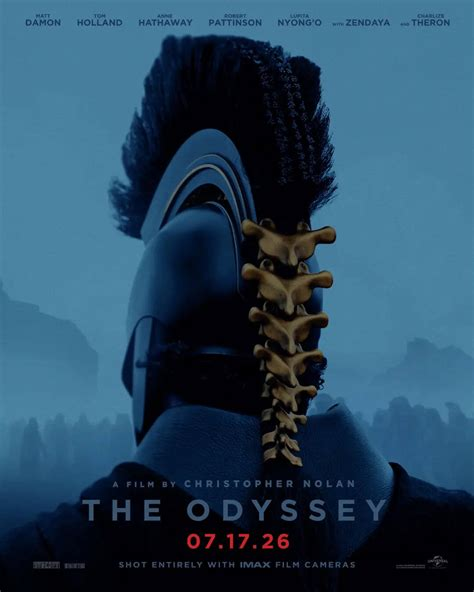
The Odyssey is the epitome of an epic by any definition. Homer’s 8th century BC poem has 12,000-lines and 24 books. The 3000-year old piece of literature, essentially about a man trying to get home after being at war, is a masterpiece of Greek mythology. Spanning many years, it’s a voyage of monsters and gods, across seas and islands, over warring lands and into the underworld itself.
A difficult text to adapt to the screen, but Christopher Nolan is not a stranger to ambition. From the opening title card, set in a “time of apparent magic,” the audience goes headlong into a world of realism and fantasy and a story dense with detail and plot. But, it is as economical and elegant an adaptation as is possible to make of such a lengthy tome, and you don’t need an English degree to understand it. While there may be purists who chafe at the script’s omissions and the loss of dactylic hexameter, Nolan’s film makes up for these sacrifices with the film’s structural and visual poetry. Beautifully shot and edited, using flashback and nesting narratives, this film might only be truly appreciated through repeat viewings. In addition to the extraordinary artfulness of the script, the set pieces are a seamless blend of puppetry, stunt performers, and special effects, which make this mythical world look and feel real (Especially if viewed on IMAX, the scope it was shot on)
Nolan’s The Odyssey is filmmaking at a magnitude only a few modern directors could imagine, much less execute. But it is not clangorous. There are quiet moments. As with the original text, the heroes of the film are full of foibles: Calypso is lonely and just wants a companion. Athena appears in flashes as if some kind of traumatic response. Zeus and Poseidon manifest as the elements. Circe is furious and saddened by the baseness of men.
When, in the final act, Odysseus finally makes it back to Ithaca, heartbroken at the state of the world and his part in its downfall, the film, and Nolan’s purpose, comes into focus. Greece is spoken of as “the greatest civilisation the world has ever seen.” A diminished empire, Nolan embraces its parallels with American exceptionalism and Manifest Destiny. It is here, at the journey’s end, that Nolan rages against the pointlessness of war and the follies and failures of mankind.
Leave a Comment so far
Leave a comment

