Filed under: Uncategorized | Tags: angry, anxiety, confused, family, Grief, life, love, mental health, stressed, worried, writing
In the last few years I have become more anxious. A downright “Nervous Nellie” who is quick to anger and fears everything. If people leave their garbage behind in a movie theater I want to accost them, force them to collect their rubbish. If someone takes up two parking spots in a crowded parking lot, I fume and fret and want to leave a nasty note on their windshield. If people walk through a door and don’t hold it open for someone behind them, my blood boils. Cutting lines makes me want to physically assault the offenders. I’m afraid of everything: being fired, being disliked, being a bad mother, being a bad wife, being a bad friend, being anywhere for a new World War, being destitute in my retirement, being riddled with cancer.

While always neurotic, I have emphatically not been untenably anxious before. In fact, despite the constant stream of self recrimination which has been my thematic backdrop, I have prided myself on being the bravest person I have ever met or known. My life has been dynamic, dramatic, with many career pivots in hyper competitive fields, a few husbands, several international moves, and it has been fantastically interesting and I am grateful for so much. But there have also been incredible disappointments and losses. Through it all I have been resourceful, resilient and intrepid. Always. Till now. Now I can feel the anxiety stream through my body like an electrical current at the slightest provocation. See the aforementioned. My body becomes rigid, my lips pursed, my eyes mean and dark.
Granted, I have had concentrated “challenges” in recent years: three eye surgeries and two foot surgeries. A terrible menopause, bleeding three weeks of every month for two years, culminating in my becoming anaemic (no doctor – female or male – would help). I found out the father that I had known my entire life, and who is dead now, was not my biological dad — memories, perceptions of my family and my identity shifted seismically as a result. My niece died in an accident, my mother died six days later, I became estranged with my remaining family after being unfairly excluded from participation in our collective familial grief and then the spreading of my mother (and father’s!) ashes. When my stoic son burst into tears of astonishment and hurt because of how his mom was being treated by the family, and my husband (who is my Jiminy Cricket, never shying from telling me the truth of matters and critical to a sharpened point) steps in to protect me, it’s time to excuse myself from the table. But that sadness remains, like an amputated limb. A year after these events, I was hospitalised for nine days and almost died due to an inflamed colon and three months later had 16 inches of it removed. Can’t help but think it was metaphoric. I’m a high school teacher, and I work very hard, yet as a contractor in a competitive market, every year for five years I was told that that year would be my last — it was a terrible period of uncertainty.
Because I perpetually want to understand the world around me, despite my simultaneous belief that the world and life itself, is chaotic and certainty in any regard is an illusion, two theories emerge as to “why?” I seem to be this way now: either I have early onset Alzheimers, a cruel disease that both my mother and my great aunt were afflicted by. Or, my hypothalamus is attuned to stress and a consequent “fight or flight” state of being. Having closely observed the decline of my mother’s mind and personality in the last few years of her life, dementia is horrifyingly fraught with personal tension. If my body is forsaking me, then honestly, I do not know what I can do about it in real or effective terms. As I keenly felt during Covid – 19, I wish that I had paid attention in biology class and understood the body’s machinations. Likely because I find the possibility of losing my mind too scary to light upon for too long, particularly in my ignorance of the delicate dance of one’s bodily synchronicities, I’m leaning toward the scientifically unsound notion that because I have spent my life in a state of extreme stimulus, my mind, body, soul, does not understand the calmer life I lead now. Life in which I am more stable than I have ever been personally, professionally, and practically. If so, then the answer is to learn how to calm my physical impulses and mind down. Simple, but not easy.
My great uncle Dick used to ask “How old would you be if you didn’t know how old you were?” This never made much sense to ten-year-old me, but it does now. Some days I feel like a teenager, others as though I am in the purgatory state of my late 20’s, other moments 45, and others 90. It is bizarre and interesting. It is agelessness, despite what my body tells me and what society’s superficial perception of me is. I used to think that by the time I got to the age I am now, the “old double nickel,” that I would have it all figured out. Be like the sage on the mount. But I find I’m frequently making mistakes, learning things I never knew, and perpetually evolving. It’s actually pretty awesome in the truest definition of the word. But it is not something for nothing. Due to the acute grief of recent years, I truly understand that life is fleeting and I have it good — I want to revel in that truth every day and be the best mother, wife, friend, person I can be. Most pressing is that I have to learn how to cope with my short fuse and anxiety before I hurt myself or anyone else…(any ideas?). While I figure this out, my instinct – the hail Mary – tells me to eat well, sleep well, move a little each day, and take deep breaths. Gulp.
Filed under: Corona 2020 | Tags: corona, Covid-19, creativity, Education, empathy, family, kindness, leadership, literacy, modesty, nature, Perspective, quarantine, reading, school, students, teachers, thinkers
The following came to me, a teacher, from my mother, who is a retired teacher, and she received it from another teacher. It’s not written very well, but the concept is wonderful!
Just maybe this could happen because of our crisis…
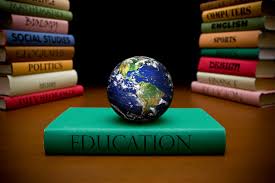 WHAT IF
If they cancel the rest of the school year, students would miss 2.5 months of education. Many people are concerned about students falling behind because of this. Yes, they may fall behind when it comes to classroom education…
But what if…
What if instead of falling “behind,” this group of kids are AHEAD because of this?
What if they have more empathy, perspective, enjoy family connection, can be more creative and entertain themselves, love to read, love to express themselves in writing?
What if they enjoy the simple things, like their own backyard and sitting near a window in the quiet?
What if they notice the birds and the different flowers emerge, and the calming renewal of a gentle rain shower?
What if this generation is the one to learn to cook, organize their space, do their laundry, and keep a well-run home?
What if they learn to stretch a dollar and to live with less?
What if they learn the value of eating together as a family and finding the good to share in the small delights of the everyday?
What if they are the ones to place great value on our teachers and educational professionals, librarians, public servants and the previously invisible essential support workers like truck drivers, grocers, cashiers, custodians, logistics, and health care workers and their supporting staff, just to name a few of the millions taking care of us right now while we are sheltered in place?
What if among these children, a great leader emerges who had the benefit of a slower pace and a simpler life to truly learn what really matters in this life?
What if they are…”AHEAD?”
*image courtesy of UNICAF.ORG
Filed under: The Baby Diaries | Tags: American in France, expatriate, family, France, French doctors, Geneva, infant jaundice, newborn, newborn gas, newborn weight gain, sleeping with a newborn, US culture, US politics
‘So live that you wouldn’t be ashamed to sell the family parrot to the town gossip.’
Will Rogers
 I had been a bit confused when I was only prescribed the mid wife (sage femme) and the physiotherapy at the hospital after my son’s birth, but now I’ve discovered my regular GP will be my baby’s doctor. I figured I would get a paediatrician assigned, but it turns out there aren’t many to spare in France.
Adhering to the old wives’ tale that one should not take a newborn out of the cloister of its home till it has been alive for two weeks, I took my son to my GP when he was 15 days old. The doctor told me that my son’s jaundice is gone, which is good (the time spent in the window like a plant worked!). She also told me that he was not gaining weight at the rate that he should be, necessitating that we monitor this closely. I left the doctor’s office completely freaked out and cried. I don’t want anything to be wrong with my baby and I’m scared because he’s such a defenseless little thing.
Luckily, my brother and my sister-in-law (belle-sœur) arrived from Seattle to help us out. They have two children of their own, now ‘tweens.’ I figure the fact that their kids have survived thus far makes them ‘old hands’. Moreover, it’s wonderful to have my family nearby. It’s hard to be so far from them. It takes 14 hours flying, through 9 time zones, to get to where they live, which prompts my feeling rather isolated on holidays and in vulnerable moments (for any of us). My husband and I drove to Geneva to collect my brother and sister-in-law – our boy’s first ‘big’ outing – and dined at an outdoor café on the lake. I had been a little nervous about nursing my son in front of my brother, but then realized it’d be stupid to go and secret myself away each time the boy ate, which is every hour. Besides, scarves are immeasurably helpful for discretion (and luckily I carry one always, stuffed into my purse or in a pocket, even before I began nursing!).
I live in an almost perpetual state of embarrassment for being an American in Europe given the antics of American politics, the regular shootings, and the disparate tax rates. But every once in awhile, I am reminded how wonderful we Americans can be. My brother and his wife are full of optimism and earthy pragmatism. They’re open and encourage others to be so. They’re warm and gracious. When I told them that the French doctor had said that my son was not gaining weight as he should be, they assured me the rates of growth are different, particularly in this early stage, and the important thing is that he is not losing weight. When I told them that I didn’t know how to pass the time with the baby, who doesn’t seem to be able to do anything, they didn’t pretend to have all the answers. Instead, they assured me that no one really knows what they’re doing when they have their first child and you simply follow your new-born’s cues: eat when he eats. Sleep when he sleeps. Go outside and take a walk when you’re bored and stir crazy. They advised me to enjoy this initial period of my baby’s new life as though we’re both convalescing (we are!). I admitted that I’m sleeping with the baby on my chest, which ‘everyone’ tells me not to do, but which seems right – I can’t move with the caesarean anyway- and they didn’t judge me. Instead, they went to a local baby store and found a soft, little, slightly slanting bed so the baby’s head is a bit higher than its lower torso, with two detachable soft sides to it to keep the baby from rolling, which the baby can sleep on and which fits right between the pillows that my husband and I sleep on.
I never imagined I’d be so grateful for assistance – even the opportunity to give the boy to another pair of trusted hands in order to de-gas him is appreciated. I don’t think I have needed help as I do now. Perhaps it’s that in the past I was too proud to ask for and accept it, and now that there’s another person involved, I don’t have that same sense of ego?
 Victoria Jelinek