Filed under: Uncategorized | Tags: angry, anxiety, confused, family, Grief, life, love, mental health, stressed, worried, writing
In the last few years I have become more anxious. A downright “Nervous Nellie” who is quick to anger and fears everything. If people leave their garbage behind in a movie theater I want to accost them, force them to collect their rubbish. If someone takes up two parking spots in a crowded parking lot, I fume and fret and want to leave a nasty note on their windshield. If people walk through a door and don’t hold it open for someone behind them, my blood boils. Cutting lines makes me want to physically assault the offenders. I’m afraid of everything: being fired, being disliked, being a bad mother, being a bad wife, being a bad friend, being anywhere for a new World War, being destitute in my retirement, being riddled with cancer.

While always neurotic, I have emphatically not been untenably anxious before. In fact, despite the constant stream of self recrimination which has been my thematic backdrop, I have prided myself on being the bravest person I have ever met or known. My life has been dynamic, dramatic, with many career pivots in hyper competitive fields, a few husbands, several international moves, and it has been fantastically interesting and I am grateful for so much. But there have also been incredible disappointments and losses. Through it all I have been resourceful, resilient and intrepid. Always. Till now. Now I can feel the anxiety stream through my body like an electrical current at the slightest provocation. See the aforementioned. My body becomes rigid, my lips pursed, my eyes mean and dark.
Granted, I have had concentrated “challenges” in recent years: three eye surgeries and two foot surgeries. A terrible menopause, bleeding three weeks of every month for two years, culminating in my becoming anaemic (no doctor – female or male – would help). I found out the father that I had known my entire life, and who is dead now, was not my biological dad — memories, perceptions of my family and my identity shifted seismically as a result. My niece died in an accident, my mother died six days later, I became estranged with my remaining family after being unfairly excluded from participation in our collective familial grief and then the spreading of my mother (and father’s!) ashes. When my stoic son burst into tears of astonishment and hurt because of how his mom was being treated by the family, and my husband (who is my Jiminy Cricket, never shying from telling me the truth of matters and critical to a sharpened point) steps in to protect me, it’s time to excuse myself from the table. But that sadness remains, like an amputated limb. A year after these events, I was hospitalised for nine days and almost died due to an inflamed colon and three months later had 16 inches of it removed. Can’t help but think it was metaphoric. I’m a high school teacher, and I work very hard, yet as a contractor in a competitive market, every year for five years I was told that that year would be my last — it was a terrible period of uncertainty.
Because I perpetually want to understand the world around me, despite my simultaneous belief that the world and life itself, is chaotic and certainty in any regard is an illusion, two theories emerge as to “why?” I seem to be this way now: either I have early onset Alzheimers, a cruel disease that both my mother and my great aunt were afflicted by. Or, my hypothalamus is attuned to stress and a consequent “fight or flight” state of being. Having closely observed the decline of my mother’s mind and personality in the last few years of her life, dementia is horrifyingly fraught with personal tension. If my body is forsaking me, then honestly, I do not know what I can do about it in real or effective terms. As I keenly felt during Covid – 19, I wish that I had paid attention in biology class and understood the body’s machinations. Likely because I find the possibility of losing my mind too scary to light upon for too long, particularly in my ignorance of the delicate dance of one’s bodily synchronicities, I’m leaning toward the scientifically unsound notion that because I have spent my life in a state of extreme stimulus, my mind, body, soul, does not understand the calmer life I lead now. Life in which I am more stable than I have ever been personally, professionally, and practically. If so, then the answer is to learn how to calm my physical impulses and mind down. Simple, but not easy.
My great uncle Dick used to ask “How old would you be if you didn’t know how old you were?” This never made much sense to ten-year-old me, but it does now. Some days I feel like a teenager, others as though I am in the purgatory state of my late 20’s, other moments 45, and others 90. It is bizarre and interesting. It is agelessness, despite what my body tells me and what society’s superficial perception of me is. I used to think that by the time I got to the age I am now, the “old double nickel,” that I would have it all figured out. Be like the sage on the mount. But I find I’m frequently making mistakes, learning things I never knew, and perpetually evolving. It’s actually pretty awesome in the truest definition of the word. But it is not something for nothing. Due to the acute grief of recent years, I truly understand that life is fleeting and I have it good — I want to revel in that truth every day and be the best mother, wife, friend, person I can be. Most pressing is that I have to learn how to cope with my short fuse and anxiety before I hurt myself or anyone else…(any ideas?). While I figure this out, my instinct – the hail Mary – tells me to eat well, sleep well, move a little each day, and take deep breaths. Gulp.
Filed under: Book reviews | Tags: Americana, books, Crime, cults, drama, Gillian Flynn, literature, mental health, modern, murder, society, suspense, USA
Libby Day was seven when her mother and two sisters were murdered in their home in an attack dubbed by the press as “The Satan Sacrifice of Kinnakee, Kansas.” Libby and her then fifteen-year-old brother, Ben, survived, and it was Libby’s testimony that sent Ben to jail on a life sentence for the monstrous murders.
 As a youngster, Libby received a lot of money from strangers for having survived her ordeal (and for being cute). Twenty-five-years later, she’s broke, and hasn’t done anything with her life except grow angrier and more depressed. Then the Kill Club locates her. They’re a secret society obsessed with notorious murders, and they want to pump Libby for details because they believe Ben was wrongly convicted and want to find proof that will liberate him. In turn, Libby hopes to make a profit off of her tragic history. For a fee, she’ll reconnect with people associated with that night and her family at that time, and report her findings back to the club. When Libby begins this journey, she’s convinced her brother is guilty. But as her search takes her from decrepit Missouri strip clubs, to deserted Oklahoma tourist towns, and back to the site of the fatal killings, the inconceivable truth emerges, and Libby finds herself back where she started – running from a murderer.
The novel is a complex character study and an evocative portrait of people on the fringe of society. Told in sporadic flashback, Libby narrates the present-day chapters in first person, while the flashback chapters are told in third-person, describing the actions and perspectives of several key characters on the days leading up to, and on the day that, the family was murdered. Libby is not a particularly likeable protagonist – she’s bitter, tough, and selfish. Even so, you root for her, and you’re sad about her horrifying childhood. Similarly, Ben isn’t particularly appealing – he’s awkward, shiftless, impressionable, and irrational. Like Libby, you feel immense sympathy for him. Each of the characters in the book are compelling, even if they’re not agreeable, and Flynn expertly weaves their stories together. The narrative is consistently developed, compelling, and absolutely suspenseful throughout (I had to resist reading the last chapters to find out how it ended!). The best aspect of this book, however, is in Flynn’s ability to create a vivid picture or a situation in a phrase or two, giving the reader a believable glimpse into a world we might never see otherwise.
This is an insightful, poignant, and well-written book. Its ability to affect its reader is also impressive. I was troubled for several days after finishing it – I found myself checking on my sleeping child in the night, hugging him more during the day, and double-checking that the front and back doors were locked when I went to bed. Would I read it again? Not for some years. Do I recommend reading it? An emphatic yes!
Filed under: Corona 2020 | Tags: alcoholism, China, Corona virus, Covid-19, depression, Fear, France, illness, Italy, mental health, self isolation, USA
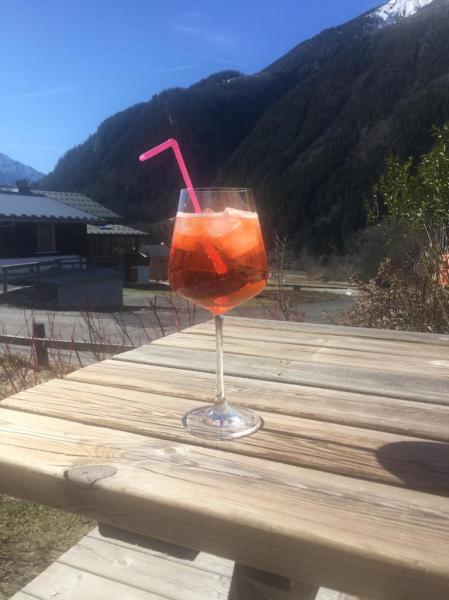 A friend wrote this to me when I responded, simply, to her text about what I was doing in my self isolation, « Drinking in the sun : »
« I take the opinion that if washing your hands with a hydro-alcoholic solution keeps germs away, then filling your body with alcohol will do the same…’Tis a noble sacrifice you are doing for the greater good of la république! »
Indeed. Vive la République! Yes, I’m a regular a dame de la résistance when one considers my coping strategies…
(Though I did write a note to both Emmanuel Macron and Édouard Philippe about what I saw today going in to vote and at the voting station, so that’s something (she tells herself)…).
Filed under: In Vino Veritas, In Aqua Sanitas | Tags: addiction, angst, city, depression, health, life, loneliness, marriage, mental health, mid life crisis, rural, sadness, teenager
“There is no greater agony than bearing an untold story inside you.”
Maya Angelou
 A city girl who lives in a village.
A muted erudite.
A smoker who can’t smoke.
A drinker who can’t drink.
A carnal creature sans sex.
Vivacity rendered torpid.
A bird in a cage of its own making.
Filed under: In Vino Veritas, In Aqua Sanitas | Tags: alcohol, anxiety, Children, depression, global affairs, human dynamics, humanity, intellect, liver, Mean Girls, mediocrity, melancholy, mental health, society, stress, Tennessee Williams
Depression is melancholy minus its charms – the animation, the fits. Susan Sontag
 My mind has been playing tricks on me all day. I almost convinced myself that my bad liver was a result of my candy intake. Seriously. For a moment, it seemed real. So real, that it almost justified my drinking at 9am. The rest of the day, I’ve been thinking that I’ll try to make it through fifteen more years. That’s the goal. Ten to see my son off to university, then five more years to have fun, do what I want, potentially decimate my body. Then, like a cat when its ready to die, I’ll quietly go off somewhere by myself. These morbid thoughts give me comfort. I think, “I can make it through today…” Then, “I can make it through the next year…” Then, “I can make it for ten more…I think…” “That’s all, that’s all…” But that “all” is everything.
It’s horrible to feel this way. It’s heavy and dark and bitter and mean and uncomfortable. I want to escape me. Barring that, I want to go to bed and pull the covers over my head and just pass time. The day, the year, the ten years, the fifteen. However, there are always people around me. My husband would interrupt this. Not because he would be concerned, but because it would annoy him that I was in bed ‘lolling about’ while he was taking care of our child, our house, and ‘business.’ Then, of course, there’s my son. My precocious, sweet, talkative boy who hums and sings to himself as he skips up the stairs, heads out the door, or plays by himself. He zones in on me like I’m a beacon whenever he’s home and demands I engage with him. Not in a pushy, aggressive manner, but because he likes me and wants to show me things, talk to me about what he has seen or done, and to hear what I have to say about it. He’s still cuddly, even as I can see the man that he will become, and he’s way too big for me to lift up. I try to engage with him. To pay attention to what he’s saying. I try to put a smile on my face. I try to pretend not to be me for him.
It’s entirely for him that I’m not drinking and inhaling to my heart’s desire. Or staying in bed all day. Or running away to somewhere else more suited to my real self. Somewhere dirty, large, and anonymous. He’s the reason I stay. He’s the reason I try at all. He’s the reason I will make myself go to the grocery store to get food, even as I absolutely dread the inevitable prospect of running into someone I know. He’s also the reason that we have any semblance of a social life. As an only child, or a “unique” as the French say, he wants playmates. As a naturally curious and social boy, he wants company and activity around him. As he’s still very young, he can’t arrange them or go by himself, and his father is unconcerned with having a social life, happy, instead, to be a homebody. So, I must arrange ‘play dates’ and social plans. Then, I must stay for a “hello,” and a “how are you?” and sometimes a cup or glass of something to be friendly. However, I find these interactions very hard. I feel as though I am perpetually masquerading as a ‘normal’ person, and consequently, am such a fraud. I don’t know how to have small talk when I’m sober, and I know people don’t want me to launch into “serious” talk, which is a “downer.” Having to interact with adults and children alike is painful and anxiety provoking for me. And now there’s no reprieve from the stress of it all.
Moreover, ‘the slings and arrows’ of children and their parents’ politics are very hard for me to observe, digest, and remain calm about. ‘Cookie cutter’ type kids and their parents are popular. They’re confident about asserting themselves. The kids spot the ‘Achilles heel’ of any child and exploit it cruelly. The other kids gravitate to these types. Prompting me to wonder if there isn’t some truth to the idea that people, in general, do like dictators – someone to tell them what to do and how to be. Tennessee Williams notes in “Night of the Iguana” that humans are the only creatures that won’t do anything to get out of a trap, such as bite off a foot or an arm. The kids ‘fisty cuffs’ are generally all forgotten relatively quickly, but it’s terrible to watch when you consider that these human propensities begin early. Ugh, and the little clusters of cliques, with those who are the ‘henchmen’ to the popular kids often being the meanest. Girls seem to be the worst. Or the best, depending on how you look at it. I think of the film “Mean Girls” frequently. Even among the hierarchies of adults. I hate observing these dynamics. It ‘winds me up.’ It makes me feel like I’m in grade school or high school all over again. I hated those years. I felt like a captive.
I keep looking for justice and signs of human thoughtfulness: to notice the person who picks up after himself when leaving the cinema. Or notice the car that uses only one parking space. Or notice the person who lets someone in front of them in the line at the grocery ‘cause they only have three items and the other person a trolley full of goods. Or see ‘the chancer’ get fired summarily. But it’s so hard to do when I feel so fucking bad. And, it often makes things worse ‘cause I don’t see these things everyday and then I’m angry. Then, like the masochist I am, I sling abuse at myself for being “so negative.” I tell myself that it’s MY fault that I see the ‘bad’ things about people in the world! I’m sending out that ‘energy’ and it’s causing a reverb by bringing negativity to me!” “If I could only change my perspective then it would all be fine. All would be different.” “It’s how I see things that’s the problem.” “It’s me. I suck. I’m horrible, beastly, angry, critical, and judgmental.” “I should relax and not think “too” much.” Problem is, the only way I don’t think too much is to ingest a mind-altering substance. If I’m to make it another fifteen years, I can’t. It’s already ‘dicey’ that I’ll make it that far with what I’ve already done to myself.
And that’s when I want to spend my day in bed. It’s then that I see little point in venturing out into the world. It’s then that I return to the idea that I’ve had a good run and I’m eager to be done with it. I’m tired of watching imposters get ahead. I’m tired of bullies dominating society – both on a micro and macro level. Of mediocrity reigning. Of the rise of pride in ignorance and the consequent disdain of intellect. Of no one really giving a shit about anything. I’m tired of it all. I’m tired of me.
Filed under: In Vino Veritas, In Aqua Sanitas | Tags: addiction, alcohol, British, comedy, depression, drama, Eddie Marsan, human behavior, humor, humour, John Hannah, mental health, Pete Jackson, Radio 4, radio play, substance, Sue Johnston
We are taught to consume. And that’s what we do. But if we realized that there really is no reason to consume, that it’s just a mind set, that it’s just an addiction, then we wouldn’t be out there stepping on people’s hands climbing the corporate ladder of success. River Phoenix
In my opinion, the best humor has a tragic core. And, what better source for dark and amusing material than addiction? Think of Carrie Fisher with her book (then film) Postcards from the Edge. Or Fear and Loathing in Las Vegas, Mall Rats, or Get Him to the Greek.
Addiction forms the setting for Radio 4’s fantastic six-part series Love in Recovery. It’s such a funny and interesting radio play that after a friend sent me a link to one show, I plundered the BBC I Player back catalogue. I have both laughed and cried on occasion while listening. It’s sharp and fresh, even as the story of immoderation in alcohol is age-old.
There are lines throughout that I have pondered after each of the 15-minute vignettes, such as, “The hardest thing in the world is just getting through…” Or, “I waited to feel better…it never came.” Or, “There is no cure. You will never be fixed. It’s horrible. But it’s just the way it is.” These motifs speak to me. The illogical sense of complete failure, disappointment, and a life full of more regrets than triumphs are familiar. That unhappiness, insecurity, and the sense that I’m not what I might have been had I been someone else (if that makes any sense to a rational person) is the albatross I’ll carry forever. That drugs and alcohol blissfully stop my brain from thinking too much. The characters in Love in Recovery feel much the same way. It rings ‘true’ to me. And it should. The writer, Pete Jackson, has an interesting backstory, which provides the lynchpin for the radio play’s authenticity.
Amidst the distress and pain is much humor. There is the subtle (sic) nod to the great British ‘art’ of “grumbling,” as well as slang, dialects, and cultural references that contribute to a sense of the everyday and the ‘everyman.’ Like Andy, for example, the needy group leader, who’s constantly offering cookies (biscuits) to the participants with the enticement that, “They’re from M&S.” And, as is often the case in the best Brits, humor coexists with self-deprecation and sadness. For example, one episode finds Julie (Sue Johnston) giving an unwaveringly powerful portrait of a woman who attempted to find happiness at the bottom of a glass after her husband of 40 years left her: “He went off with the cleaner, who ironically turned out to be a dirty bitch.”
All the actors are stellar. And, the sentiment resonates. It’s fundamentally about how even though you feel alone, that you have the worst difficulties, that you are the worst of the worst, you’re not. That even as you have some slim understanding that this vicious voice telling you these horrible things is false, and the facts belie this ‘self-speech,’ there are others who also find life hard. However, by sharing our stories, our difficulties, our successes, our failures and our disappointments, we can help one another take one day at a time. This works for anything, really, whatever the issue. Addiction takes many forms – alcohol, drugs, food, shopping, fornicating, exercise, and work. Or all of the above. Perhaps, as is the case for me, it’s ‘simply’ the compulsion to excess at all times, both ‘good’ and ‘bad’. Both substances and through actions. Big happy. Big sad. Big success. Big flop. For me at least, it’s comforting to know that I’m not alone in my current struggle for moderation. My own floundering objective to be ‘balanced’ also seems to reflect modern society’s own battle with itself, arguably making addiction a universal story. For me, listening to podcasts, reading books, watching films, and looking at paintings isn’t just for diversion. They provide insights into the human condition. And through this, greater understanding of the world we live in, as well as ourselves. It’s comforting to find a sense of propinquity in the world. And, one can find beauty in ugliness, just as there’s humor in the darkness.
Filed under: In Vino Veritas, In Aqua Sanitas | Tags: addiction, Alps, books, company, conversation, depression, drinking, films, France, Identity, isolation, language, loneliness, mental health, mountains, Perspective, Politics, sea, self, smoking
“My idea of good company is the company of clever, well-informed people who have a great deal of conversation.” Jane Austen
 I went to ‘Book Club’ this evening. Was loath to go after last night out at two bars with all the drinking, smoking and haphazard talk. Have been ‘twitchy’ and irritable all day as a result. My poor family. Self-recrimination ‘cause I’d had one drink more than my ration. Which was already really hard, given that we were out for hours. Self-recrimination ‘cause I’d been visibly irritated and uncomfortable with the drinking and smoking around me, and that’s not nice for those out to have a good time. Self-recrimination because I should know better than to put myself in the line of temptation. And yet. I didn’t want to get out of bed this morning. I’ve been near-to-tears all day. And, well, ‘Book Club’ is normally a large group of women in what is essentially a ‘book swap,’* drinking a lot of wine and chattering.
So I went late. And, I went only ‘cause it was a bonafide friend hosting it at her house and I wanted to support her. I brought a thermos of green tea and ginger to drink and in order to keep my hands busy and to keep me drinking SOMETHING while, ostensibly, everyone else drank copious amounts of wine. But it wasn’t like it usually is. For one thing, it was just our host, a dear friend of hers, another American who, while I may not agree with her politics, is an avid reader and I trust her judgment on books, as well as our host’s twelve-year-old daughter who is also a reader, and who makes short stop-action films. They were finishing dinner when I arrived, and the daughter had made a peach cobbler. They also weren’t drinking alcohol, just Perrier, and later, tea, so I didn’t feel tempted or preoccupied with others drinking. Best of all? The conversations were dynamic and interesting. We talked about films, and books we’d recently read, and television programs – both in French and English – and we talked about curricula – both French and American – and we talked about travel, and we talked about exercise ‘fads’ sweeping the globe. It was a good evening. Nothing was discussed in too much depth, as I would generally like to do, but, I am, arguably, too serious. Ultimately, it was an entertaining evening.
What a happy surprise! There’s a moral here I’m sure. Perhaps it’s that I need to only hang out with people who enjoy talking about subjects I also enjoy talking about? Even if that means I am not as social as I generally like to be. There are several people in the valley whose company I find engaging. Perhaps it’s that I can’t be in bars? I suppose it’s like a junkie going to a shooting gallery. Certainly, I can’t be in them for too long. In my previous homes – Portland, New York, Los Angeles, London – I would have discussed the subjects we discussed this eve, such as literature, film, culture, education (and, ideally, some politics!) every time I met up with friends. However, perhaps in those cities it’s more obvious to find more people and situations in which to do so. I mean, my coterie of friends in each of the aforementioned places were filmmakers, writers, painters, musicians, artists, and conversational skill is highly valued as a source of creativity and collaboration. Moreover, these types of people are generally more expressive. Whereas where I live now, people are outdoorsmen. Mountain people. They like to climb, hike, ski, and maintain their fitness in the outdoors, preferably at altitude. That’s their passion and their focus. Not ‘wrong,’ just not me. While I appreciate the mountains, I am claustrophobic in them, preferring the sea always (“Homme libre, toujours tu chériras la mer”). As a result of both the environment and the community’s subsequent interests in general, I’m often self-conscious, frustrated, and isolated here.
More so now that I’m trying to substantially reduce my drinking, smoking, and drug-taking after 33 years of ‘caning’ it. Additionally, the social life I’ve primarily known here is centered on boozy lunches, afternoons, and dinners…at restaurants and bars…with those that flock to and spend a lot of time in them. However, for whatever reason, tonight I made the happy discovery that while the people and opportunities like this evening might be few-and-far between, there ARE, indeed, situations like tonight. I’ve experienced them here before. Evenings in which I will not spend the entire time ‘clock watching,’ leaning on, or ‘clucking’ for my ‘crutches,’ and can, instead, enjoy what I perceive to be good company. Is this a new direction? It could be. It should be. Is it evidence of a whole new me? Perhaps not. But, perhaps, it is a peek at what the future could be like here, for the remaining years I am here, and that’s a relief from the bleak perspective I’ve been viscerally feeling for the last couple of weeks.
*We don’t read the same book and then talk about it like a traditional “Book Club” does. It’s for Anglophone women to have a supply of reading material without having to buy books, which is a great idea in theory.
Filed under: In Vino Veritas, In Aqua Sanitas | Tags: addiction, alcohol, border collie, dogs, drugs, habits, habituation, life, mental health, pet, pets, smoking, teetotaller
My fashion philosophy is if you’re not covered in dog hair, your life is empty. Elayne Boosler
 My beloved dog, a bright Border Collie, is having a hard time adjusting to my rationed cigarettes, alcohol, and consequent change of habits. When I get up in the morning and head downstairs, she greets me at the bottom of the stairs then goes and sits in the kitchen while I make my coffee. Once I’ve poured my coffee, she heads to the back door and waits till I open it in order to go out for a smoke with me. Whenever I head to the kitchen for something she does the same thing. She knows I like something to drink with my cigarettes. So, she gets up from her bed, sits and waits for me to finish in the kitchen, then heads to the back door waiting for me to open it and go outside with her to smoke. Every time I rifle through my purse, she gets up from wherever she’s lying and goes to the back door and waits for me to exit for a cigarette that I would normally have retrieved from it. After dinner, once we’ve cleared the table, she goes to the back door waiting for me to exit, wine in hand, to have my ‘after dinner’ cigarette. When my son has gone to bed and I normally return back downstairs for a phone conversation to the states (time difference), drinks and much smoking, she gets up as soon as I take the phone from the cradle, she stretches, and heads to the back door waiting for me to open it.
I finally ‘clocked’ her behavior last night when I was clearing the dinner table and began cleaning the dishes. Normally, I would have gone for my after dinner smoke before doing this, and normally she would have gone and stood at the door waiting for me after the clearing of the table. But this time she didn’t. She lay on the floor and looked at me. She eyed my every move, but did not get up to go to the back door. Also, I noticed that she has taken to lying at the bottom of the stairs after I go up with my son for bedtime. I haven’t gone back down after putting him to bed in recent days for a phone call or anything. I now prefer to go to bed early, like a farmer might, ‘cause I can’t drink and smoke anyway. It makes the day shorter. One week in and she realizes there’s a new regiment going on (smart dog) but she’s confused. Maybe a little saddened that our rituals together are changed. Then I realized, “She’s a creature of habit, of course! And, for five years – her entire life – she has been my companion in the rain, sun, snow, cold, heat for my frequent cigarettes throughout the day and night. Cigarettes that were habitual – with coffee. With the second coffee. Before lunch. After lunch. In the middle of the afternoon with another coffee. With my first cocktail at ‘cocktail hour.’ The subsequent drinks. After dinner. Before bed while on the phone. And now that’s over. At least I hope it is. “Well, it’s messing with my head, too, my dear doggie. We’ll get on with it together as best we can. Something tells me that you’ll break the habit much easier than me.”
Filed under: In Vino Veritas, In Aqua Sanitas | Tags: balance, consumption, greed, humour, life, mental health, money, power, priorities, relaxation, values, waste, work
My husband sent this to me – it made me smile, and it reaffirms my own priorities. I remember something I was told by a European when I first moved here – “Americans live to work, Europeans work to live.” May this remain true (even as I do think the contagion is spreading here…).

Filed under: In Vino Veritas, In Aqua Sanitas | Tags: Children, guns, loss, mental health, NRA, right wing, schools, security, society, Spain, students, teachers, USA, violence
Posted today on Twitter. I think it says it all…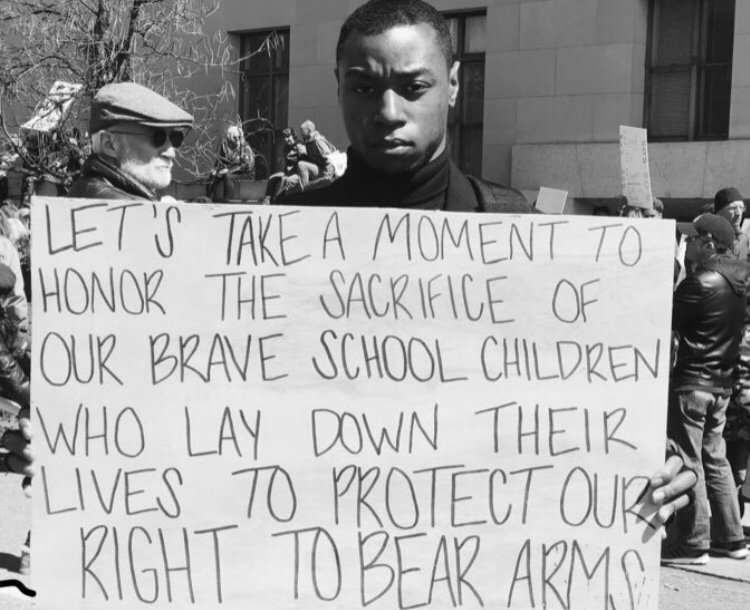
 Victoria Jelinek