Filed under: Corona 2020 | Tags: alcoholism, China, Corona virus, Covid-19, depression, Fear, France, illness, Italy, mental health, self isolation, USA
 A friend wrote this to me when I responded, simply, to her text about what I was doing in my self isolation, « Drinking in the sun : »
« I take the opinion that if washing your hands with a hydro-alcoholic solution keeps germs away, then filling your body with alcohol will do the same…’Tis a noble sacrifice you are doing for the greater good of la république! »
Indeed. Vive la République! Yes, I’m a regular a dame de la résistance when one considers my coping strategies…
(Though I did write a note to both Emmanuel Macron and Édouard Philippe about what I saw today going in to vote and at the voting station, so that’s something (she tells herself)…).
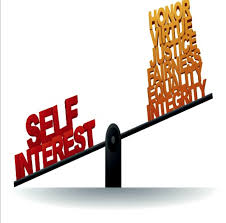
Filed under: Corona 2020 | Tags: Corona virus, Covid-19, equality, Europe, fairness, France, greed, hoarding, honor, honour, humanity, illness, individualism, integrity, Italy, justice, plague, self centered, sickness, Sociology, stockpiling, virtue, voting
The Ides of March…
 Just went to vote. No one taking legal closures and governmental advice seriously…folks were kissing, standing in small, tight-knit groups. The high street pedestrian area was teeming. Two restaurants (of two) in the one km stretch from my home and the voting location open and folks inside eating.
A ski area was open in Morzine and there were lines snaking around the lift station.
Unfortunately, this is exactly what Édouard Philippe said: people are ignoring safety procedures and thus things will get more serious and we’ll end up locked down like Italy! What is wrong with people?!
Went to the local grocery store and saw folks with TWO grocery carts stockpiling. THAT will cause a problem for everyone, but “fuck it! I’m (me, mine, etc.) sorted.”
Now, they’re talking about rationing on the news – not because like the war there was a shortage of food, but, quite simply, because of the mine, mine, mine attitude of people.
This selfish, individualistic, greedy behavior is so stupidly shortsighted and individualistic I could scream. It is, arguably, the source for all the problems in the world today (climate change – overpopulation, habitat destruction, consumer orientation, airplane travel, etc., PM of UK, “prez” of USA, poor public education, evasion of taxes for the welfare of all, etc.).
If I spoke better French, or was a confrontational person, I would have said something to the twats at the voting site, and in the grocery store, “Shame on you!” As it is, I’ll do as the boys sang in “The Book of Mormon” and suppress all the pain of it.
Filed under: Corona 2020 | Tags: Belgium, Corona virus, Covid-19, death, Europe, France, Germany, illness, Italy, plague, sickness, Switzerland, USA
 Édouard Philippe, the Prime Minister of France, has declared that as of midnight, France will shut down everything non essential. Only grocer, newsagents, petrol, chemists, banks will remain open. We are told to only go out for supplies, light exercise, and to vote in the municipal elections tomorrow. The closures are “indefinite.”
Filed under: Corona 2020 | Tags: Corona virus, Covid-19, Europe, France, human, illness, Italy, population, sickness, Social phenomena, Switzerland, USA
 My son was thrilled to discover that his school would be closed “indefinitely,” even as we attempted to discuss – in a child’s terms – that it wasn’t ‘good.’ The day was gloriously sunny and the drive up to Geneva was gorgeous and quiet. My school had resisted closing down, feeling it was alarmist and that there was money to be lost – social distancing and staying home if ill or afraid seemed okay. Finding and containing worked in China and Korea, so why not in Switzerland? But I knew that now that the USA had banned Europeans from entering the USA as of midnight Friday the 13th, France had closed all educational institutions from Monday (indefinitely), Belgium, Germany, Spain to follow, and the alarming rate of infection and the consequent lock-down in Italy, Switzerland would have no choice politically but to shut down.
We had a meeting. The head of the school spoke. We would move to online teaching for the high school for the following week and re open the week after. I was devastated. I’m a substitute teacher – at one school, granted* but there can be time between gigs. For me, this was a five-week stint due to an accident, and I was loving being there every day in the classroom teaching literature, and among people who are interested and knowledgeable about books. To close it now was devastating for me personally. Moreover, I wouldn’t get paid if I wasn’t in the classroom. My husband, who runs a touring company, was struggling with the looming threat of Covid-19 hanging over travel and holidays. We’re building a house and renting an over-priced one next to the land. Ostensibly, the teacher who had had an accident could teach online, so I was out of an income for the moment.
But, what could I do? After classes, I went for lunch with a friend and colleague and it was great. Later, upon return to Chamonix, I went to our local bar to meet friends for a drink while the kids played. It was hopping. I felt a sense of relief and hope by the fact that so many folks were out despite the threat of this disease, even as I also felt slightly anxious and it felt surreal with the jocularity and close quarters when the ‘plague’ seemed to be at our door. After a couple of hours, my husband, son, dog and me left and went to dinner. The local restaurant had some customers, but everyone was sitting at a distance from one other, and we were near the door, so we felt fine and it was a jolly meal of fondue.
And, I began ‘speaking’ to two dear friends I’d known since the 1970’s and early 1980’s, respectively, in Oregon, and who I had just spent my 50th birthday with, about what was going on here as well as there. I believe our text conversations will prove to be the saving grace at this time…
*We were called “floaters” at the literary agency that I once worked for in Hollywood. Floaters were ‘vetted,’ employed, but didn’t have a desk/’master’ of their own, and would help out or stand-in at a given desk or office as was needed.
Filed under: In Vino Veritas, In Aqua Sanitas | Tags: arts, authoritarianism, cesar, Culture, Education, equality, feminism, Film, France, hypocrisy, justice, liberalism, literature, Me Too, Nous Toutes, Osez le Feminisme, painting, patriarchy, Roman Polanski, women
My brief response to a recent event in France in which, “…the entire board of the César awards, France’s equivalent of the Oscars, has resigned two weeks before its gala ceremony amid growing controversy over the French-Polish director Roman Polanski, whose film An Officer and a Spy leads the 2020 nominations. ‘The French film academy says unanimous resignation was to honour the film-makers and ‘regain calm’ of the festival.’” https://www.theguardian.com/film/2020/feb/14/leadership-of-french-oscars-resigns-amid-polanski-controversy
“Liberalism is totalitarianism with a human face.” Thomas Sowell
 If I disagree with your brand of “feminism,” am I no longer a critical person? If I don’t believe a woman’s claim over a man’s denial, am I no longer a lifelong feminist? By being skeptical about the “Me Too” movement, or French subsidiaries such as Nous Toutes (All Of Us) and Osez le féminisme! (Dare Feminism), am I immediately branded as an unwitting stooge who has been blindly indoctrinated by the global patriarchal system? If so, doesn’t it define those that would judge me thus as narrow-minded, illiberal, and non-progressive?
With the inalterable definition of what it means to be “liberal” in mind, how do many women (and some men) think boycotting a retrospective of a body of work, or a film by Polanski, or ‘banning’ songs written in the 1950’s, or admonishing folks not to look at art that has breasts on display, is going to change the power dynamics between men and women in the workforce, in political representation, even in domestic models? As Johnnie Tillmon once declared: “Every woman is one man away from welfare.” Social systems in which women have to fight to be educated, are judged differently than their male counterparts, are paid less for the same job, are called derogatory names for the same traits men are lauded for, do not form at least half of our representatives in public governance, or on corporate boards, are held to traditional standards as a mother (by both men and women), are expected to be both a mother and a worker (in that order), are the societal elements that need to be challenged and changed. Not the filmmakers, artists, and writers who are generally the first to be killed by a fascistic regime. Nor does forcing the resignation of an entire board of an organization which celebrates excellence in filmmaking going to make a real difference other than to headlines and articles, for the moment.
To be absolutely clear for the more zealous or obtuse: I am not defending the fact that the most of the voting membership for the Cesar’s (or the Oscar’s) are men and that’s not fair. Nor am I defending Roman Polanski the person. I am, however, defending Polanski the filmmaker, whose body of work includes several modern masterpieces. If it’s necessary to attack the cultural industry in order to receive more media attention in the name of modern feminism, could these movements not focus on, for example, why it is that the heads of departments on almost every film (with the exception of hair, makeup, and wardrobe) are invariably men? Or why, even as there is an overwhelming amount of women in publishing, most publishers are men?
Infighting about art and culture is what the capitalistic white men who dominate the world want. They do not care about national boundaries, much less culture, while they play their geopolitical power games. Division, scandal, and media sensationalism decreases the credibility of these feminist movements. Moreover, boycotting films, art, and books is akin to censorship. Does this suppression help or hinder women’s movements that claim to be fighting injustice? Art and the humanities are meant to enlighten us, provoke us, trouble us, entertain us, and inform us. To broaden our minds. To create space inside us that invites redemption, hope, possibility, and reflection about what it means to be alive – even if it’s uncomfortable. Familiarizing oneself with and having a general appreciation of culture develops critical abilities (the basis of democracy and why public education – and the arts – are always under attack). Art celebrates humanity with all of its foibles. The film, the painting, the book is not the same as the person who created it. The person who created it forms part of the context in which the ‘product’ is created, but the operative idea, here, is to have a sense of context.
By fighting over the personal lives (based on hearsay) of filmmakers, artists, and writers, one denigrates their works, many of which are fine and deserve to be honored by us, the public, by both men and women. Otherwise, we risk destroying excellence in film, literature, and the fine arts, and in my opinion, these fields make the world more beautiful, arguably more complicated, and definitely worth living in. By jumping on bandwagons with pithy and/or emotive “handles” because of our justifiable frustration, one is operating within a mob mentality, rather than with judiciousness. Is it okay to believe a woman over a man simply because of gender? Is it fair to try a man in the media first rather than a court of law? By publicly destroying the careers of those who have brought art into the world by slandering and censoring them in the name of ‘justice,’ are we not also undermining art, artists, culture, the rule of law, and, ultimately, ourselves as rational women?
Just as it’s advisable to “follow the money” to get a sense of bias in politics, I ask you — who does this censoriousness of culture ultimately serve?
Filed under: In Vino Veritas, In Aqua Sanitas | Tags: addiction, Alps, books, company, conversation, depression, drinking, films, France, Identity, isolation, language, loneliness, mental health, mountains, Perspective, Politics, sea, self, smoking
“My idea of good company is the company of clever, well-informed people who have a great deal of conversation.” Jane Austen
 I went to ‘Book Club’ this evening. Was loath to go after last night out at two bars with all the drinking, smoking and haphazard talk. Have been ‘twitchy’ and irritable all day as a result. My poor family. Self-recrimination ‘cause I’d had one drink more than my ration. Which was already really hard, given that we were out for hours. Self-recrimination ‘cause I’d been visibly irritated and uncomfortable with the drinking and smoking around me, and that’s not nice for those out to have a good time. Self-recrimination because I should know better than to put myself in the line of temptation. And yet. I didn’t want to get out of bed this morning. I’ve been near-to-tears all day. And, well, ‘Book Club’ is normally a large group of women in what is essentially a ‘book swap,’* drinking a lot of wine and chattering.
So I went late. And, I went only ‘cause it was a bonafide friend hosting it at her house and I wanted to support her. I brought a thermos of green tea and ginger to drink and in order to keep my hands busy and to keep me drinking SOMETHING while, ostensibly, everyone else drank copious amounts of wine. But it wasn’t like it usually is. For one thing, it was just our host, a dear friend of hers, another American who, while I may not agree with her politics, is an avid reader and I trust her judgment on books, as well as our host’s twelve-year-old daughter who is also a reader, and who makes short stop-action films. They were finishing dinner when I arrived, and the daughter had made a peach cobbler. They also weren’t drinking alcohol, just Perrier, and later, tea, so I didn’t feel tempted or preoccupied with others drinking. Best of all? The conversations were dynamic and interesting. We talked about films, and books we’d recently read, and television programs – both in French and English – and we talked about curricula – both French and American – and we talked about travel, and we talked about exercise ‘fads’ sweeping the globe. It was a good evening. Nothing was discussed in too much depth, as I would generally like to do, but, I am, arguably, too serious. Ultimately, it was an entertaining evening.
What a happy surprise! There’s a moral here I’m sure. Perhaps it’s that I need to only hang out with people who enjoy talking about subjects I also enjoy talking about? Even if that means I am not as social as I generally like to be. There are several people in the valley whose company I find engaging. Perhaps it’s that I can’t be in bars? I suppose it’s like a junkie going to a shooting gallery. Certainly, I can’t be in them for too long. In my previous homes – Portland, New York, Los Angeles, London – I would have discussed the subjects we discussed this eve, such as literature, film, culture, education (and, ideally, some politics!) every time I met up with friends. However, perhaps in those cities it’s more obvious to find more people and situations in which to do so. I mean, my coterie of friends in each of the aforementioned places were filmmakers, writers, painters, musicians, artists, and conversational skill is highly valued as a source of creativity and collaboration. Moreover, these types of people are generally more expressive. Whereas where I live now, people are outdoorsmen. Mountain people. They like to climb, hike, ski, and maintain their fitness in the outdoors, preferably at altitude. That’s their passion and their focus. Not ‘wrong,’ just not me. While I appreciate the mountains, I am claustrophobic in them, preferring the sea always (“Homme libre, toujours tu chériras la mer”). As a result of both the environment and the community’s subsequent interests in general, I’m often self-conscious, frustrated, and isolated here.
More so now that I’m trying to substantially reduce my drinking, smoking, and drug-taking after 33 years of ‘caning’ it. Additionally, the social life I’ve primarily known here is centered on boozy lunches, afternoons, and dinners…at restaurants and bars…with those that flock to and spend a lot of time in them. However, for whatever reason, tonight I made the happy discovery that while the people and opportunities like this evening might be few-and-far between, there ARE, indeed, situations like tonight. I’ve experienced them here before. Evenings in which I will not spend the entire time ‘clock watching,’ leaning on, or ‘clucking’ for my ‘crutches,’ and can, instead, enjoy what I perceive to be good company. Is this a new direction? It could be. It should be. Is it evidence of a whole new me? Perhaps not. But, perhaps, it is a peek at what the future could be like here, for the remaining years I am here, and that’s a relief from the bleak perspective I’ve been viscerally feeling for the last couple of weeks.
*We don’t read the same book and then talk about it like a traditional “Book Club” does. It’s for Anglophone women to have a supply of reading material without having to buy books, which is a great idea in theory.
Filed under: In Vino Veritas, In Aqua Sanitas | Tags: Austria, Élections européennes, Brexit, business, electeurs, environment, Europe, European Elections 2019, food, France, Germany, Gillets Jaunes, Hungary, Italy, Le Pen, Netherlands, Orban, peace, refugies, Russie, Salvini, Spain, symbolise, Trump
I have long maintained that Russia has a long range plan to “bury the West” and it’s working (Brexit, Trump, US Tariffs, oil industry interests over clean energy interests, ‘dark money’ to campaigns of Le Pen, Salvini, hacking of Macron’s offices prior to his win).
Financing Assad’s war in Syria = refugees to Europe = opportunities for right wing politicians to rally their populaces to anti-immigration and Euro skeptic beliefs. And now, with the European Elections on the horizon, populations have bought into this hateful, fearful rhetoric and are poised to vote for these right-wing nationalists who are the antithesis of what the European Union symbolizes and who will undermine all of the great work the European Union has accomplished. Have voters learned NOTHING from the debacle of Brexit and Trump?
We ARE stronger together.
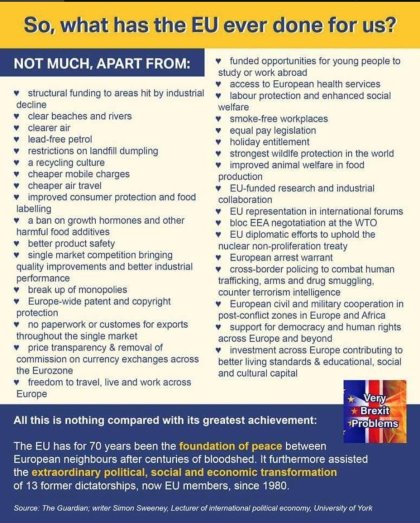
Here’s a reminder of all that the EU has given us, and that we take for granted (obviously) each day:
Je soutiens depuis longtemps que la Russie a un plan à long terme pour “enterrer l’Occident” et que cela fonctionne (Brexit, Trump, les tarifs américains, les intérêts de l’industrie pétrolière avant les intérêts de l’énergie propre, la “monnaie noire” aux campagnes de Le Pen, Salvini, le piratage de Macron avant sa victoire).
Financement de la guerre d’Assad en Syrie = réfugiés en Europe = opportunités pour les politiciens de droite de rallier leur population à des convictions anti-immigration et sceptiques vis-à-vis de l’euro. Et maintenant, avec les élections européennes à l’horizon, les populations ont adhéré à cette rhétorique odieuse et craintive et sont sur le point de voter pour ces nationalistes de droite qui sont l’antithèse de ce que l’Union européenne symbolise et qui vont saper tout le travail accompli. Les électeurs ont-ils appris rien de la débâcle du Brexit et de Trump? Nous sommes plus forts ensemble.
Voici un rappel de tout ce que l’UE nous a donné et que nous tenons pour acquis (évidemment) chaque jour:
Filed under: In Vino Veritas, In Aqua Sanitas | Tags: Bigotry, European Elections, European Union, Excellence, Far Right Politicians, France, humanity, Le Pen, Macron, National Debates, Politics, society, WWII, Xenophobia, Yellow Vests
An excerpt from a letter to a friend today:
 Thank you my dear. Always.
I remember a friend who is a public defender in my home state (another thankless, hard job) telling me that he felt that it often feels like you’re rolling a boulder up a hill over-and-over again in an effort to help humanity, or at least to stave off its inevitable decline. However, if you CAN roll the boulder up the hill, you have a moral obligation to do so.
Which reminds me, I watched Macron give a (long) speech in response to the Yellow Vest protests and at the conclusion of a two-month series of ‘national debates’ in which he had been traveling around France meeting people in small towns in order to hear their views and complaints. I felt like weeping: his grasp of the complicated conceptual elements that make societies function, to thrive, are astounding. And his knowledge of the tedious, practical details of governance are impressive (can you imagine Trump doing this?!). He had notes, but he would ‘go off’ on tangents, addressing each-and-every point (the growing sense that governments seem inaccessible to the general public, for example), and explaining WHY he would not fight for one thing or another (blank votes, for example). I felt like weeping because I thought that I’m so impressed and relieved that there ARE politicians out there like him that DO know something about governing (history, sociology, law, economics, geography, rhetoric, etc.), and are showing accountability by the mere fact that they’re acknowledging the grievances and worries of their citizens; that these leaders seem to be SO few-and-far between, making someone like Macron a surprise; but it should be the standard we hold ALL politicians to! And I also felt like weeping because I know that in general the French don’t like him (they think he’s arrogant and a friend of big money because of his background) and will consequently vote him out in the next election…
I fear, too, for the upcoming European elections, where cynical far-right politicians are exploiting people’s ignorance, impotence and anger – in France, Hungary, Austria, and Italy, for example, where they are promoting anti-immigrant and euro skeptic views – and these political parties will likely gain power in the EU parliament.
Why can’t people learn from history? Or even the recent history of the USA and England and the deteriorating state they’re in culturally and practically?!
That said, Spain did NOT vote for the far-right party that was promoting guns in every household, thank goodness. Hope lives another day. (Even as the far-right party there now has access to parliamentary power – a terrifying global phenomena akin to global politics in the 1930’s).
Am going to watch some good TV programming now and pour myself a large glass of wine. Finished watching “Fleabag” season 2 last night – breathtakingly excellent!
And excellence, to me, in any realm, is like ‘god’ (for want of a better word) – a raison d’être.
Love to you, my excellent friend, v.
Filed under: In Vino Veritas, In Aqua Sanitas | Tags: Brexit, British, England, Europe, European Union, France, history, Ignorance, individualism, Ireland, jobs, propaganda, Putin, racism, refugees, Scotland, ski resort, society, Teresa May, The Guardian, Trump, Wales, war
“No amount of political freedom will satisfy the hungry masses.” Vladimir Lenin
 I went to see Three Men in a Pub the other day in town. They’re three English men who create podcasts about current events that are aptly recorded in pubs. The topic for the evening was Brexit. It was held in an imitation of an Irish pub. Despite having lived in France for ten years, and knowing many of the expatriate community even by sight, as I looked around at the room, I didn’t recognize a single Brit present. There seemed to be none of the families who have homes here and children in local schools. Instead, the room was full of men who were drinking a lot of beer. There were four women, including me and the barmaid (who exclaimed loudly to a customer, “I don’t know what this is about! I don’t know a single thing about politics!” I thought to myself, “I wouldn’t be proudly broadcasting that these days love – it makes you look foolish. But, then again, perhaps, that was the point?”). Unfortunately, there was only one of the three men from the podcast, but he bravely outlined the argument against Brexit and the activism that he and his colleagues have been doing in response to the 2016 referendum. I’ll recount what he said, as well as recreate the environment in the pub as well as I can from the notes I scrawled over the course of the evening:
There is nothing grown or manufactured in the UK that can’t be made elsewhere more cheaply. Most folks don’t realize that Spain takes the UK’s garbage. The Welsh farmers who almost unanimously voted for Brexit don’t realize that Europe can find sheep elsewhere. Moreover, the tariff for Welsh lamb is currently 0%, but with a no trade deal, it will rise to 40%. Great Britain can’t feed itself. It’s possible that the UK could create 75% of the food needed to feed its population, but not the rest. 60% of Great Britain’s overall trade is with the EU. Currently, a single ship has 60k containers on it, and with the UK exiting the EU, each ship and each container on it will need to be checked by customs authorities in Europe. Meanwhile, there isn’t enough space to safely store the goods – particularly perishable goods, while the respective authorities check the shipments, nor are there finances to hire the man power to do this. As a matter of fact, Amazon (as in Jeff Bezos’s company) bought much of the warehouse space left in the UK over the last few years, and with the inability to export to Europe or elsewhere soon, the UK will need the space to store goods and Amazon will be right there to charge a fee for the service.
1.7 TRILLION dollars in trade agreements with 46 countries will be eliminated once the UK is out of the EU. To get back into these agreements, 45 of the countries have to say “Yes” to the UK, and Moldova has already said “No” to the UK joining. By leaving the EU, the UK is pulling out of 759 trade agreements – and by pulling out of these 759 trade agreements, those holding the agreements will sue the UK because they’ll want their money back for investment not realized. Recreating 759 trade agreements will be a “complete palaver.” The biggest hope is a trade deal with India or Paraguay in order to avert a 4% knock on GDP per year, which is “hilarious, given their respective situations.” The government and Leavers claim a trade deal with the USA is “in the works.” At this, the host rolled his eyes and then asked the crowd the likelihood that anything salient would come from that – at least anytime soon – given the man who’s currently in the White House. Leaver hopes that the commonwealth will agree to trade deals with the UK have “little promise” because the commonwealth is poor. In fact, putting all their wealth together, there are less financial possibilities in trade with all of them than through trade with a single country such as the UK, France, or Germany.
“Not everyone who voted to exit is racist, but everyone who’s slightly racist voted to Leave.” Moreover, a referendum is “advisory”– it shouldn’t be taken as legally binding. If a “regulatory election” had happened instead of a referendum, there would have been another election because of all the “irregularities.” For example, what is the source of all the money the Leave campaign had? What part did Cambridge Analytica play in propaganda efforts? There have been 45 years of peace throughout Europe and now this. Putin and Trump want to destabilize Europe and Europeans are falling for it. Already Poland, Hungary, Italy and France (of recent) have strong right-wing movements that want to see their respective countries pull out of the EU. Even so, the Remain campaign garnered 48% of the vote and they were “asleep,” with “shitty leaders,” providing “shitty information,” and there wasn’t a single leader that was popular, nor were any of the Remain activities organized. However, if a referendum was held now, “It’d be another story altogether,” because Brits are actually aware of what the consequences of leaving the EU are. According to the deal that Teresa May has recently negotiated, Brits may be able to stay and live in one country, even retire in that country, but they won’t be able to move to another country or do trade in another country without that country’s permission. The politicians are placating people rather than educating them about the facts.
Adding to the melee, Brits aren’t willing to talk about religion or politics, so no one is talking with each other. A no-deal with the EU means no trade deals with anyone (a few angry, drunk men began muttering that this information is “absolutely fucking false”). The World Trade Organization provides “basic deals” only. In Geneva recently, regardless of whether there is a deal or not, he discovered there would be 12-18 months for the agricultural production in the UK to survive. (At this point, men starting interrupting and arguing with him, and with each other, whilst a fat, greying long-haired English man squished my leg against the bar where I was sitting with a bar stool that he was leaning on for support and didn’t hear my squeal due to his inebriation and his focus on the increased tension in the room. I pushed him physically aside and he didn’t notice).
Before the ‘one man in the pub’ could continue, several men started openly and aggressively arguing with him and with each other. Their arguments were along the lines that farmers in the UK would “Rise to the occasion” and create more agriculture “If needed…” they’d “certainly” rise to the challenge of needing to produce food and trade for the British people (ever wonder why it is that the English seem to be the only ones that say they’re “British?” The Irish and Scots don’t generally use this, opting, instead, to say they’re “Irish” or “Scottish” respectively). There were statements called out that the UK “loses” 140 million a year in subsidies to the EU, to which the speaker replied, “Excuse me sir, but the UK gains much more in subsidies annually…” but he was cut off by more grumbling proclamations straight out of the Leave campaign’s playbook. The “Q & A” that the speaker then proposed essentially involved questions and statements surrounding economic tourism: one man, a builder, worked in Spain, then Italy for another season, and now in France, what would happen to him? Another works as a van transfer driver and is “hoping for the best” regarding Brexit, that he can come out to France “every once in awhile to ski and work…maybe apply for a temporary visa…” (I smothered a chuckle at this, knowing how difficult it is to receive visas to work and live in a given country). The ‘conversation’ then became more unruly, fuelled by beer and testosterone. There were no questions and answers, just men vehemently asserting that the “cost” of being in Europe was much greater than leaving, that the “independence” that the UK will now have outside of the EU is much greater than the dependency they had while in it. (It was grimly amusing to me, too, because before each of these statements, the respective men would begin by saying, “I didn’t vote to leave…BUT…” and then accompanying the aforementioned statements, they argued about the need for an “independent parliament,” and “no more back breaking subsidies paid to Europe,” and less “problems” with the “threat of terrorism” by refugees). An Irish guy reiterated what the speaker had said about the trade options facing the UK after Brexit, then pontificated for a bit about its being “normal” in Ireland for this sort of “political nonsense.” The same men who had been openly snorting and sneering at the information about what the trade deals meant for the UK, were acting as orators at this point and answering questions from the room put to the speaker, who was too polite to cut them off. A few men, always beginning their statements with “And I’m not for Brexit…” went on about how the referendum was “democratic” and that it was “a democratic process” that “needs to be respected.”
At this point, the speaker attempted to focus their contentiousness and get them back ‘on side,’ by saying something about being “banned” from the USA in an attempt to get the audience on board with a common enemy. Meanwhile, the folks around me began giving each other advice about how to stay in a European country, “Get a residence card right now…it’s good for ten years…” One member of the group said that if you apply for a French passport, you’re “automatically” allowed to stay while it’s being processed, to which another replied, “That would be good, ‘cause I don’t know which country I want to go to next.” Another group around me bragged that they still pay their taxes in the UK despite having lived in France for a few years, and that they’ll “just” go back to UK if they need anything just like they always do, and if necessary, they’ll work in the black. (I again wondered where all the Brit folks were who have homes, who have children here who go to school, who pay their taxes in France — sic, as I know that many Brits do not pay French income taxes. They will be effected more than these single men renting apartments if they have to leave, sell their homes, uproot their families, move their pets…).
The speaker again gained control of the room. He said that the UK is an aging population and without immigrants, there aren’t the youth necessary to work and pay taxes. That there are 180k vacancies in the NHS right now, so the NHS will have to rely on ex-commonwealth countries, where corruption and credibility is an issue, “especially with medicine,” to provide doctors and nurses. The same applies with teachers – there are a “raff of vacancies” throughout the UK for teachers, and, again, “We’ll have to rely on ex-commonwealth countries to fill these posts.” (I then couldn’t hear the speaker because the people next to me were discussing what they had for dinner. A woman in their party complained that if she had known she’d be “forced” to listen to “political talk” then she would have stayed at home and watched telly. On the other side of me, there was a ‘discussion’ between men about their various misinformed ideas about what it “really” means for trade, as opposed to what the speaker had said, and how to “dodge” being expelled from the country). A man received ‘the floor’ from the speaker and said that he’s not a Brexiter, “of course,” but he has issues with an EU army, EU regulations, and the lack of a representative in the EU parliament, but he enjoys being in the EU “because we can be.” (He also enjoyed speaking into the microphone a lot during the Q & A. I didn’t hear what the speaker’s response to these erroneous assertions were because the barmaid was laughing very loudly at something a man had said to her). Another guy took the microphone and was talking about patriotism, a “duty” to country and “identity,” to which the speaker responded blandly that we all feel an affinity to our “home country.”
The speaker then took the opportunity to say that the buildings, spaces, parks, etc. in his hometown of Liverpool have all been regenerated and renovated thanks to EU money. To this a man called out that the “Beatles yellow submarine money” (Festival Park) was sponsored by the UK parliament, and not the EU “by the way!” The speaker then talked about a 1947 agreement made by the UK to take refugees, and the fact that the UK did help start war in Syria in the first place. Now, there are no refugees ‘streaming’ into the UK, as the propaganda will have you believe, but there is rising racism. He told us about how he had travelled to Syria and spoke with refugees who are teachers, accountants, lawyers, doctors, and who just want to stay home but it’s too dangerous. (Behind me the men talked about how all the ‘Paki’s’ can just go home. How this guy-the speaker- is a “tosser” because he thinks he knows everything but he hasn’t even mentioned the war in Yemen).
I decided it was time to leave. I supported something different happening in my village. I tried a local beer that was okay and I don’t generally like beer. I have material for a ‘background flavour’ piece on a hot topic that I’ll write up for my blog. And, I see first-hand the men and women who supported Brexit, because these are a micro example of them – a lot of very strong opinions, doggedly held onto in order to support overall constructs of reality, and despite their constructions lack of factual fortification. They’re not concerned with an overall picture of global events, or political and social foresight into how it effects societies as a whole – they’re concerned with how it affects them individually. A problem that we increasingly observe throughout the world, as we see the rise in nationalism and right wing fervour in many countries, and despite these same elements claiming to be collectively oriented. I find myself feeling that it’s an affront that these ‘secret’ Brexiters are in France profiting from the country. I comfort myself that hopefully France is gaining some income from them, even if it’s just their bar bills at pseudo English pubs.
Having spent 13 years in England, and another two years in Scotland, I familiarized myself with pub culture in Great Britain (and then some). My opinion is that one only begins to know a Brit after spending a half-decade or more in their company. Hence the popularity of their pubs and the amount of alcohol they generally consume. I believe it’s in a pub that the very stratified society fractures, the politeness, the ‘chin up’ stoicism dissolves and, in my opinion, it’s where the greatest sense of humour in the world is on display. While this evening at the “Brexit debate,” provided me with further evidence of my assumption that it’s in a pub that the English relax and become more equitable, it did not support my belief that it’s also where their humour shines. Perhaps it’s as Ricky Gervais notes in his stand up show Humanity: “Just because you’re offended doesn’t mean that you’re right about the political opinions you hold; offense is about feelings and feelings are personal. Politics isn’t.” Or it shouldn’t be. But what Brexit has revealed is that there are very deeply entrenched feelings in the UK about what it means to be British and also historic feelings of suspicion towards Europe that are embedded into that identity.
***Just saw this article in The Guardian newspaper today about Brexit & ski resort jobs (though I DO believe there’s a two year transition period after March 2019, so nothing really changes till 2021?):
Filed under: Travel pieces | Tags: alpine, Balmat, Biarritz, Chamonix, France, holidays, mer de glace, mountain cimbing, St. Gervais, Victorian era, winter sports
“O, wind, if winter comes, can spring be far behind?” Percy Bysshe Shelley
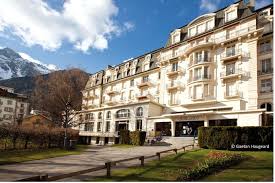 I went to the Musee Alpine in Chamonix yesterday. I had been reluctant to go, given that I don’t like the cold nor winter sports and figured this is what the museum is composed of. But, I went, and it’s good that I did.
The guide enunciated throughout her tour, was charming, informed, and a bonafide Chamonard to boot. What I discovered is that the name of Chamonix had changed perpetually due to boundaries being re drawn and small disputes between nearby communes. For example, St. Gervais had attempted to ‘claim’ Mont Blanc rather than Chamonix, despite its being miles away. And Turin had been a part of the Haute Savoie.
What is particularly interesting to me is how the village evolved over the last two hundred years. It was once solely inhabited by a very rural, agricultural people who were afraid of the mountains, believing them “cursed” by demons. I understand this – at the top of the mountains in the winter the howling of the wind is akin to what monsters might sound like. The residents scratched out a living during the six months of temperate weather with agricultural pursuits, then spent six months making garments out of wool, fur and wood. Now, it’s a place in which most of the residents capitalize on tourism, making it their primary source of income, from becoming mountain guides, ski instructors, and certified sportsmen, to the many shops and restaurants (only really) open during the winter and summer seasons. Additionally, many of the Chamonards have sold homes that have been in their families for generations to the wealthy French, Italians and Swiss who like to holiday in Chamonix.
Indeed, during the turn of the 18th and 19th century, Chamonix was much like Biarritz in that European aristocrats visited in droves, and as a consequence huge, grand hotels were built to accommodate them. These were later destroyed or turned into something else when the same aristocrats went elsewhere and France passed laws to give all French people the opportunity to go on holidays themselves.
From the late 18th century, Chamonix’s mountains also became a site for scientific study during a type of ‘enlightenment’ age. The stories of climbing Mont Blanc are astounding in their arduousness and danger. It’s no wonder the grumpy Jacques Balmat, who made the first ascent of Mont Blanc in the mid 1700’s, wearing wool and leather, is so famous around the valley. This eventually led to the arrival in droves of Victorians to Chamonix for ‘the mountain cure’ and glorious retreat for alpine sports, further cementing its designation as a tourism hot spot.
The culmination of the museum visit is a room that holds a series of paintings of the Mer de Glace, created by various visiting painters over the epochs. What one observes while looking at all of these paintings of the same subject, is that despite each of the paintings being almost identical in their vantage point, each of them looks slightly different. This is arguably not only a matter of perception, but also a metaphor for the dynamic aspects of the mountains and nature itself.
 Victoria Jelinek